
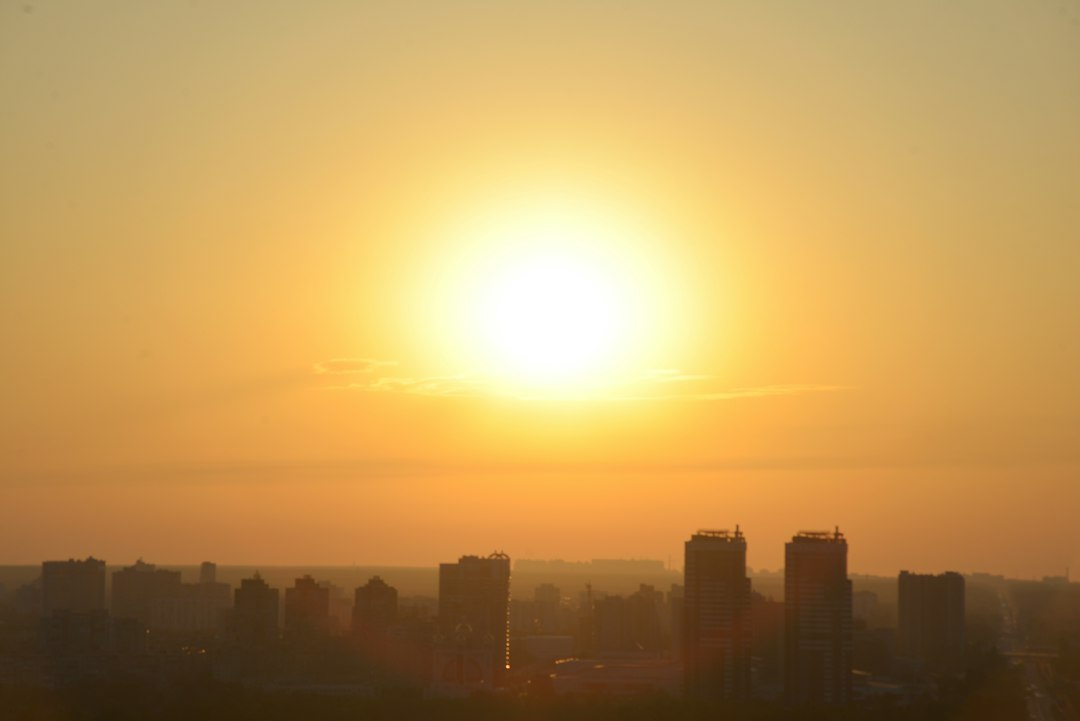
Extreme heat was linked to an estimated 710,000 deaths around the world in a single year, more than malaria or HIV, according to a major international report that is now urging governments to formally treat climate change as a global health emergency.
The 2026 report of the Lancet Countdown on health and climate change, published this week ahead of the COP31 climate summit, draws on the work of 146 researchers from more than 100 institutions in over 30 countries. The World Health Organization, which highlighted the findings on 28 October, said many climate-related harms to health are now growing faster than the world’s response.
Heat deaths at a record high
The report estimates that heat was linked to an average of 540,800 deaths a year between 2016 and 2023. In 2023, the hottest year in that period, the toll reached a record of around 710,000.
For the first time, the Countdown has tried to put a number on how many of those deaths can be blamed on human-caused climate change. Its researchers attribute 68 per cent of heat deaths in 2016 to 2023 to climate change, around 369,900 a year, up from 55 per cent in the previous decade. In 2023 alone the share was 71.5 per cent. Taken together, the report estimates climate change caused almost three million heat deaths over those eight years.
The WHO said average annual heat-related deaths rose by nearly 36 per cent in the period after the 2015 Paris Agreement compared with the decade before.
These are modelled estimates rather than a count of death certificates, and they come with uncertainty. But the direction of travel is clear, and the authors are not mincing their words. Professor Marina Romanello, executive director of the Lancet Countdown, described it not as gradual worsening but “a step change”.
The trillion-dollar hit to workers
Heat is also hammering people’s ability to work. The report estimates that lost working capacity due to heat cost around US$1.07 trillion in potential income in 2025, close to 1 per cent of global economic output. It is the third year in a row that losses have topped US$1 trillion.
The burden falls very unevenly. Losses were equivalent to 3.9 per cent of GDP in South-East Asia and 3.2 per cent in Africa, compared with 0.2 per cent in Europe. Farming and construction workers, who often have no choice but to work outdoors, bore the biggest share.
The authors also took aim at fossil fuel subsidies, which they say hit record levels between 2022 and 2024. Ten countries spent more subsidising fossil fuels in 2024 than they did on their health systems, the report found.
Not all bad news
The report does point to progress. Global investment in clean energy hit a record US$2.1 trillion in 2025, according to the WHO summary. Falling air pollution from fossil fuels is already preventing thousands of premature deaths every year, and more countries now have national health adaptation plans and climate-informed early warning systems.
Dr Diarmid Campbell-Lendrum, who leads the WHO’s climate change and health unit, said climate change is already harming health in every region of the world, and argued that climate action is itself a health intervention.
Helen Clark, the former New Zealand prime minister who chairs the Countdown’s board, said the missing ingredient was political will, not evidence.
What it means for Ireland
Ireland has a mild climate, and Europe has the smallest heat-related economic losses of any region in the report. But the report’s message is global: Irish people travel to, work in and have family across far hotter parts of the world, and the countries hit hardest are often those with the fewest resources to protect their populations. Ireland’s own climate and health policies will also come under the spotlight as the EU heads into the next round of climate talks.
What happens next
The Countdown and the WHO want governments to formally recognise climate change as a global health emergency, put health at the centre of decisions on emissions, adaptation and finance, cut greenhouse gases faster and invest in more resilient health systems.
Those demands will be taken to COP31 in Antalya, Türkiye, which runs from 9 to 20 November and will include a dedicated health pavilion. The WHO has also been running a graded emergency response since September to prepare for the health impacts of the current El Niño event.
Sources
- World Health Organization: Climate change is a growing health emergency, Lancet Countdown warns (28 October 2026)
- News-Medical: Climate change intensifies global health risks, Lancet Countdown report warns (27 October 2026)
Featured image: photo by Liana S on Unsplash.
Leave a Reply