
- Who: Michael Gibbons, Clifden-born field archaeologist and founder of Walking Ireland (walkingireland.com), based at Island House, Market Street, Clifden.
- What: Private archaeological and historical field trips across Connemara, Inishbofin, the Aran Islands and the Burren, plus illustrated lectures.
- Background: History and Archaeology graduate of University College Galway; ten years as co-director of the National Sites and Monuments Record at the Office of Public Works.
- Landscape: Connemara’s record runs from coastal middens of roughly 10,000 years ago through Neolithic court tombs, Bronze Age stone alignments and crannógs to 17th-century forts.
- Contact: +353 (0)95 21379, via the Walking Ireland website.
On a wet day Connemara can look empty: bog, rock, water and the Twelve Bens fading into cloud. Michael Gibbons has spent a career showing visitors that it isn’t. The Clifden archaeologist, who runs the heritage tour business Walking Ireland from Market Street in the town, takes walkers into a landscape where stone rows, drowned houses, island forts and Neolithic tombs lie just under the heather, and in some cases just under the tide.
This is a guide to what his walks cover, who he is, and why the ground beneath Connemara is more crowded with the past than most visitors realise.
Who is Michael Gibbons?
His profile on the Connemara tourism website connemara.net says Gibbons was born and raised in Clifden and still lives there with his family. He studied History and Archaeology at University College Galway, and he is a member of the Institute of Archaeologists of Ireland and the Nautical Archaeology Society.
His CV goes well beyond the west. The same profile, and a programme listing from Notre Dame’s Kylemore Abbey centre, record work with the Department of Antiquities in Jerusalem and the Museum of London’s City Excavation Programme. He worked on the Donegal and Galway archaeological surveys and spent ten years as co-director of the National Sites and Monuments Record at the Office of Public Works, covering 16 counties. He has directed surveys on Croagh Patrick and other pilgrimage landscapes and at the Sceilg Mhichíl World Heritage Site. He has served a five-year term on the Heritage Council’s Archaeology Committee and a term with Comhairle Bhéaloideas Éireann, the Folklore of Ireland Council.
Closer to home, the Kylemore listing names him as project archaeologist for the historic trail around the Marconi Station near Clifden, which opened in 2016. It also says he mapped uplands, intertidal zones and islands along the Connacht coast and surveyed Caher Island, the Inishkeas and Inishglora for Mayo County Council.
What do the Walking Ireland walks cover?
Discover Ireland, Fáilte Ireland’s consumer site, lists Michael Gibbons Walking Ireland as a specialist in archaeological and historical tours of the west. It describes walks that take in scenery, geology and history, and says they suit both academic or student groups and individual travellers. The company’s own website groups its trips under four areas: Connemara, Inishbofin, the Aran Islands and the Burren. It also lists a programme of archaeological field trips for 2026.
The connemara.net listing explains how a typical day works. Trips are booked privately for groups of any size and can be tailored to a group’s interests. Gibbons meets guests at their accommodation or coach and stays with them for the full day. He can also give an illustrated evening lecture at a hotel. Sites named on that page include the Alcock and Brown landing site and the Marconi Station on the Derrygimlagh bog, plus megalithic monuments. Longer itineraries reach the Aran Islands, the Burren and what the listing calls Ireland’s sacred mountains.
A separate Connemara tourism directory entry, for Heritage Walks in Connemara, lists three guided walks: one on Inishbofin, one on Diamond Hill and one across the Roundstone bog. It describes them as entertaining and educational and suitable for casual walkers. For a flavour of a public walk, an Architecture at the Edge listing for an Inishbofin archaeological walk in September 2024 had walkers meeting at Cleggan Pier for the 11.30am ferry. The day promised Bronze Age landscapes emerging from cutaway bog, dozens of Bronze Age monuments and a 17th-century fort guarding the harbour. Tickets were €30, ferry included.
Gibbons also teaches indoors. Clifden Arts Festival hosted a day-long session with him in September 2025 on Connemara lake dwellings in their British and European context. In September 2026 he gave an Architecture at the Edge talk on the Achill amphitheatre.
A landscape that keeps giving up secrets
The National Parks and Wildlife Service’s guide to monuments in Connemara National Park gives a sense of how far back the story goes. It lists coastal middens dated to about 10,000 years ago, two Neolithic court tombs inside the park (known as the West and East tombs), pre-bog walls that may be Neolithic farming remains, standing stones usually linked to the Bronze Age, and newly discovered hut sites. It notes that a detailed archaeological survey of the park is ongoing.
Stone alignments are a Gibbons speciality. In a 1997 Irish Times report from the Gleninagh valley above Lough Inagh, Lorna Siggins described three pairs of standing stones marking a gap in the Twelve Bens where the sun sets on the shortest day. The report dated such alignments to about 1500 BC and said Connemara has eight recorded examples. Gibbons told the paper that stripping back the bog would reveal rich evidence of prehistoric life.
A year later the same reporter described a run of discoveries by Gibbons and his colleague Jim Higgins: a Bronze Age tomb and prehistoric house sites below Mweelrea, 16th-century Spanish pottery on Finish island off Carna, an Iron Age fort and standing stone in the northern Maumturks, and a stone row in the Crumlin valley. There was also a worked flint spearhead found in west Connemara, which the Irish Times said was about 7,000 years old, evidence of Mesolithic hunter-gatherers. The report said these finds pointed to far more inland settlement than had been assumed.
The sea has been revealing sites too. Afloat.ie reported that Gibbons and engineer Shane Joyce identified remains of a small prehistoric dwelling on the Faul peninsula southwest of Clifden. It is visible only at low spring tides, part of what researchers describe as a drowned prehistoric landscape. University of Galway palaeoecologists Prof Michael O’Connell and Dr Karen Molloy studied the dating and sea-level rise. In February 2020 the Irish Times reported a possible crannóg exposed near An Spidéal after Storm Brendan. Gibbons said the site might date back 4,000 to 6,000 years and that such coastal sites are rare. He added that excavation would be needed to confirm it.
Crannógs, island cashels and Ballynahinch
The Clifden Arts Festival programme note for his 2025 talk sums up some of his recent thinking. Crannógs were artificial islands in shallow lakes, used over thousands of years as homes, refuges and ritual sites. Where timber was scarce in Connemara, people built island cashels instead by enlarging small rocky islets. The talk covered recent finds including five island cashels known as Oileáin na Lochlannaigh and a site on Lough Fee. It also covered research at Ballynahinch suggesting the castle island may once have held a monastic community and a shrine to St Feichín, before the O’Flaherty stronghold.
Planning a walk
Walking Ireland does not publish prices on its homepage, so contact the office for a quote. A few practical points apply to almost any Connemara heritage walk. Bring waterproofs and proper boots, because bog is rarely dry. Island trips depend on the Cleggan ferry and the weather. Many monuments are on private farmland, so access through a guide matters. The NPWS guide points walkers to archaeology.ie for the national monuments database, which is worth a look before you go.
What happens next
Walking Ireland lists field trips through its online calendar, and Gibbons’ public lectures turn up regularly on the programmes of Clifden Arts Festival and Architecture at the Edge. With Clifden’s 50th arts festival due in 2027 and survey work still going on in Connemara National Park, there should be plenty more to report from under the bog. Groups and individuals can book through walkingireland.com.
Sources
- Walking Ireland: Michael Gibbons Archaeology Travel (homepage) (accessed 31 October 2026)
- Discover Ireland: Michael Gibbons Walking Ireland (accessed 31 October 2026)
- connemara.net: Archaeological field trips Connemara (accessed 31 October 2026)
- Connemara Ireland: Heritage Walks in Connemara (accessed 31 October 2026)
- Notre Dame Kylemore Abbey Global Centre: Walking Ancient Ireland Trails with Michael Gibbons (2024 programme)
- Architecture at the Edge: Inishbofin Archaeological Walk (25 September 2024)
- Eventbrite / Architecture at the Edge: Achill Amphitheatre talk (27 September 2026)
- Clifden Arts Festival: Connemara Lake Dwellings with Michael Gibbons (22 September 2025)
- National Parks of Ireland: Monuments of Connemara National Park (PDF) (2022)
- The Irish Times: Waiting for the solstice sun to set in Connemara (22 December 1997)
- The Irish Times: Discoveries show how west was populated (25 May 1998)
- The Irish Times: Possible 4000-year-old crannóg site discovered in Connemara (3 February 2020)
- Afloat.ie: Further evidence of sea level rise uncovered on north Connemara intertidal zone (undated)
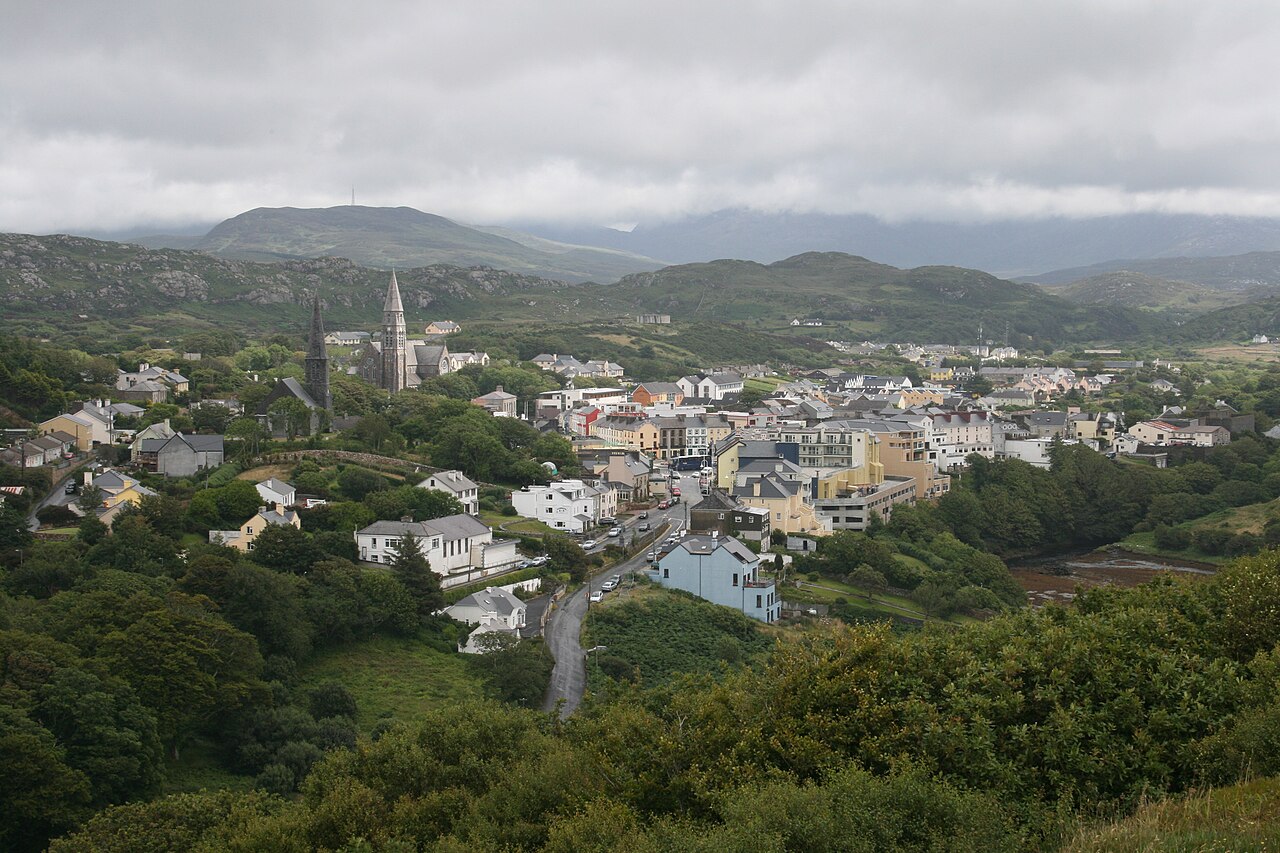
Featured image: ClifdenOverview by Bert Kaufmann, Public domain, via Wikimedia Commons.
Leave a Reply