
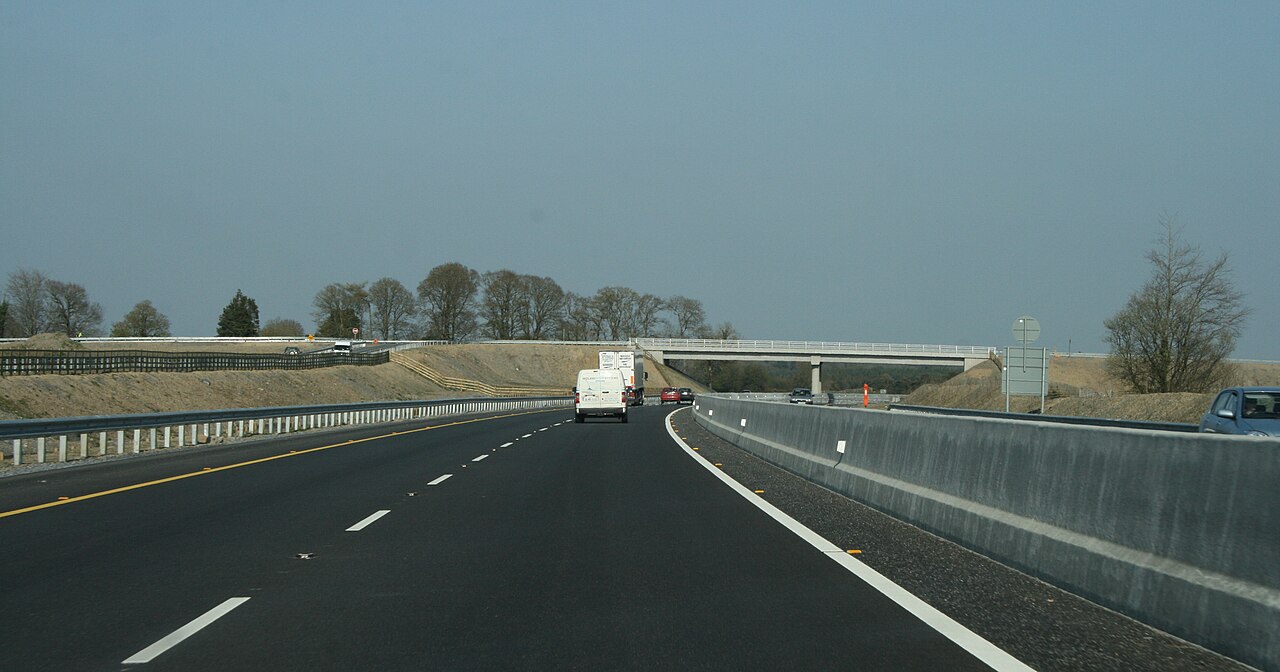
Galway’s motorway toll is on course for its biggest year yet, with almost €10 million taken at the M6 toll plaza in east Galway in the first nine months of 2026, and drivers heading east will pay 10 cent more from 1 January.
Figures from Transport Infrastructure Ireland (TII), reported by Galway Bay FM, show €9.91 million was collected at the N6 Galway–Ballinasloe toll up to the end of September. That is about €400,000 more than the same stretch of 2025, and almost double the €5.16 million taken in the first nine months of 2015.
Around 4.2 million vehicles have gone through the plaza at Cappataggle so far this year, according to TII. Just over half of them, 2.13 million, paid electronically with a tag rather than stopping at a booth.
What the Galway toll costs now, and what it will cost in January
The toll is charged once, at a single plaza on the M6 between junction 15 (Ballinasloe West) and junction 16 (Loughrea). TII’s official 2026 rates for the road are:
- Motorcycles: €1.20
- Cars: €2.30
- Buses and coaches: €4.20
- Goods vehicles up to 3,500kg: €4.20
- Goods vehicles over 3,500kg, two or three axles: €5.90
- Goods vehicles over 3,500kg, four or more axles: €7.50
On 30 October, TII confirmed toll increases from 1 January 2027 on eight privately run toll roads, plus the M50 and the Dublin Port Tunnel. The rise follows inflation: the Consumer Price Index went up 3.6% in the year to August 2026.
TII says car tolls on every privately operated road except the M3 will go up by 10 cent. For Galway, that takes a car from €2.30 to €2.40 each time it passes Cappataggle. Heavier goods vehicles will pay 20 cent more, and those over 3,500kg with four or more axles will pay 30 cent more.
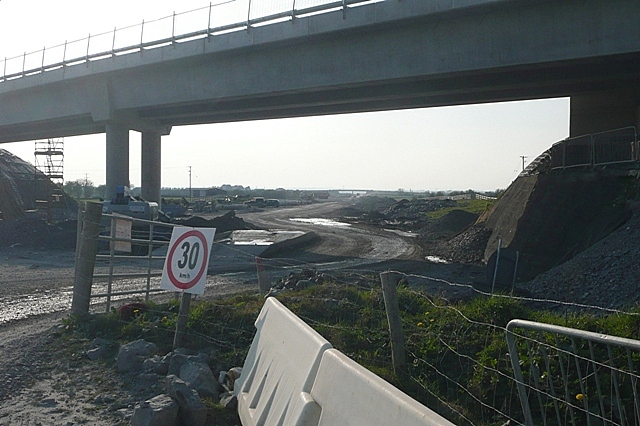
What it means for Connemara and Galway drivers
Ten cent sounds small, but the M6 is the main road out of the west. Anyone from Clifden, Oughterard, Spiddal or the city driving to Dublin, Dublin Airport, Athlone or a hospital appointment in the capital passes through Cappataggle, and pays again on the way home.
For a car crossing the plaza twice a day, five days a week, the weekly bill goes from €23 to €24 under the 2027 rate. That is about €50 a year more for a regular commuter. For a Connemara haulier running a four-axle lorry to Dublin and back every working day, the extra 30 cent each way works out at €3 a week per truck, before the M50 is counted.
Drivers who only go as far as Loughrea or Athenry do not pay, because the plaza is east of the Loughrea junction.
‘Impossible to get out of a contract’, says Canney
Minister of State for Transport and Galway East TD Seán Canney told Galway Bay FM the toll money is needed to maintain the roads. He said it is “impossible to get out of a contract” signed many years ago, and that increases are reviewed every year.
Asked whether TII can stop private operators raising charges, he said “there is negotiation”, and that increases follow the Consumer Price Index and must be agreed with TII. He said he wants a longer-term look at tolling and the alternatives. Galway Bay FM said it had asked TII for a statement and had not had a reply.
Why Galway pays: the M6 deal signed in 2007
The 56km Galway–Ballinasloe motorway was built as a public-private partnership. The contract went to N6 Concession Ltd in April 2007, a consortium of FCC Construction, Itinere Infraestructuras and Irish builder PJ Hegarty & Sons, according to the public record of the scheme. The deal runs for 30 years, with the operator collecting tolls for most of that period in return for building and running the road.
The motorway opened on 18 December 2009, completing a motorway link from Dublin to Galway. Under PPP contracts like this one, tolls can rise each year in line with inflation. That is why the Cappataggle charge has edged up over the years, and why it will go up again in January.
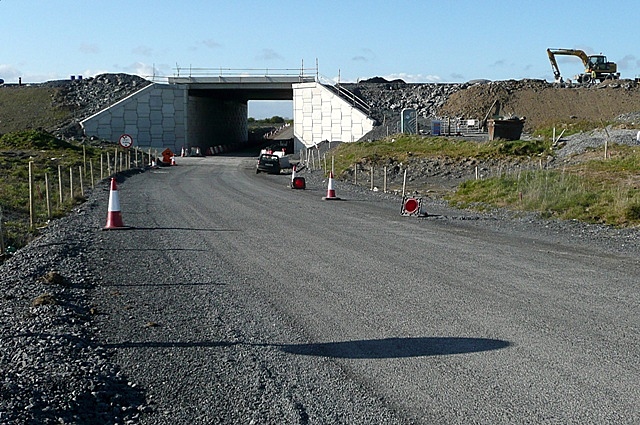
How to pay the M6 toll
According to TII, the Cappataggle plaza takes cash, Visa Debit and Mastercard in every lane except the Express lane, as well as electronic toll tags. Tags let you drive through without stopping, and with more than half of this year’s crossings paid that way, they are worth a look for anyone who uses the motorway often. TII does not list any frequent-user discount for this road.
Elsewhere on Galway’s roads
The toll figures come in a busy week for Galway roads. Fine Gael councillor Shane Forde told Galway Bay FM the recent redesign of the Parkmore junction, carried out by Galway County Council and TII, is “the worst redesign of a junction I have ever seen”. He pointed to a lack of public lighting and to extended footpaths, and said he will raise it with the council. No response from the council or TII was reported. Earlier this month, the Galway City Ring Road finally got the go-ahead, and you can see what the project means in our Galway in Numbers guide.
What happens next
The new rates take effect on 1 January 2027. If the final three months of 2026 match the first nine, this year’s Galway toll take will pass €13 million. Full-year figures will come from TII early next year.
Tolls are one more cost for western families already facing higher bills this winter, with fuel and heating oil prices under pressure. In our view, the bigger question is the one Minister Canney raised himself: what Galway gets back for the money, and whether the west keeps paying under a contract that still has around a decade to run. Readers can raise it with their local councillors and TDs. For the M50 and other roads, see our opinion piece on the M50 toll hike.
Sources: Galway Bay FM; TII – N6 Galway Ballinasloe tolls; TII – Toll rates from 1 January 2027; TII – 2026 toll schedule (PDF); Business Plus.
Image credits: Featured image by Sarah777 / Geograph via Wikimedia Commons, CC BY-SA 2.0. Body images by Graham Horn / Geograph via Wikimedia Commons, CC BY-SA 2.0.