Plague has been in the headlines more than usual this month. A laboratory worker’s death in Siberia prompted fears of pneumonic plague, Madagascar has confirmed new human cases at the start of its seasonal peak, and the United States has already recorded human infections this year. Separating what has been confirmed from what was only suspected matters, because the facts are considerably less alarming than some of the coverage suggested.
Siberia: a death that was never confirmed as plague
The story that drew most attention began in Irkutsk, eastern Siberia. A 28-year-old technician at the Irkutsk Antiplague Research Institute, which studies dangerous pathogens including Yersinia pestis, the bacterium that causes plague, was admitted to hospital with severe pneumonia at the end of September and died on 2 October. Independent Russian media and colleagues suggested she may have been exposed in the laboratory, and early comments by regional officials fuelled speculation that plague was to blame. Around 200 contacts were placed under medical observation.
Russian health authorities, however, told the World Health Organization (WHO) that she had tested negative for plague and other high-threat pathogens and had been vaccinated against the organisms she worked with. In a Disease Outbreak News notice published on 10 October, WHO said Russia reported more than 5,500 laboratory tests with no dangerous pathogen detected, that all monitored contacts stayed well, and that no further linked cases of severe pneumonia had been found. The cause of death was recorded as pneumonia of undetermined origin.
WHO was careful not to close the matter entirely. It said it had found no evidence of ongoing transmission, but described the lack of a confirmed diagnosis as the key uncertainty and said a laboratory-associated exposure could not be fully ruled out. WHO’s Maria Van Kerkhove told reporters the agency would say so plainly “when we don’t have an answer”. Across the border, health officials in Hulunbuir, Inner Mongolia, issued a precautionary advisory to travellers from Russia’s Far East while stressing that the local risk was low.
Madagascar: confirmed cases as the season peaks
Madagascar is among the countries that report the most human plague each year, with transmission typically rising from late in the year. On 13 October its Ministry of Public Health announced four laboratory-confirmed cases in three districts: Ankazobe and Anjozorobe in the Analamanga region north of Antananarivo, and Ambohimahasoa in Haute Matsiatra. No deaths were reported among those four patients, according to local press reports of the ministry statement.
READ MORE
- Ebola Outbreak in Congo Passes 10,000 Cases as First Vaccine Trial Begins
- Measles explosion: US cases more than DOUBLE last year’s total as America braces to lose ‘eliminated’ status
- Just 42 minutes of daylight could matter for your brain: huge study links dim days to higher dementia risk
Separately, health officials were investigating a suspected pneumonic plague cluster in Midongy Atsimo district in the south-east, where three members of one family died. Rapid tests were reported to be positive, but at the time of reporting laboratory confirmation was still awaited, so those deaths should be treated as probable rather than confirmed. Nearly 200 contacts across the affected areas received preventive antibiotics, and teams have been spraying homes to kill fleas.
United States: rare but regular
Plague persists in wild rodents and their fleas in parts of the American south-west, and a handful of human cases are reported most years. In April, Apache County in Arizona confirmed its first human case since 2015; the patient recovered after treatment. In June, New Mexico’s Department of Health reported that a woman from Santa Fe County had died in the state’s first human case of 2026. Officials in both states described the risk to the public as low.
For perspective, WHO counted almost 4,000 human plague cases and 423 deaths in ten countries between 2019 and 2025. Plague is serious, and untreated pneumonic plague can kill within a day or so, but it responds to common antibiotics if treated early. It has not been reported in Ireland in modern times, and nothing in this month’s events changes the risk here.
What the research is showing
Scientists are still learning about how the disease spreads and how to prevent it. A laboratory study from the Institut Pasteur de Madagascar and French partners, published in PLoS Neglected Tropical Diseases in June, found that two flea species found in Madagascar can occasionally pass on the bacterium within 24 hours of becoming infected, though this was uncommon. Because the work was done in controlled lab conditions, it does not directly measure transmission in villages.
On prevention, researchers at the University of Texas Medical Branch reported in July, in Science Translational Medicine, that experimental live attenuated plague vaccines protected nearly all mice exposed to pneumonic plague. These are animal results only; no plague vaccine is currently approved by the US Food and Drug Administration, and human trials would be needed.
What happens next
WHO has asked Russia for further confirmatory testing that could finally explain the Irkutsk death; until then the case remains unresolved rather than a confirmed plague infection. In Madagascar, the main season typically runs into the early months of the following year, so further cases are likely and laboratory results from Midongy Atsimo are awaited. Travellers to plague-endemic areas are advised to avoid sick or dead rodents, use insect repellent and seek prompt medical care for sudden fever.
Sources
- WHO: Disease Outbreak News, Pneumonia of undetermined etiology – the Russian Federation (10 October 2026)
- UN News: ‘No plague case’ in Siberia, Russia tells WHO as assessments continue (7 October 2026)
- Al Jazeera: WHO says no plague case registered after Russian lab worker’s death (10 October 2026)
- Euronews: Has plague returned to Siberia? (4 October 2026)
- China Daily: Public advisory on plague issued in Hulunbuir (13 October 2026)
- Xinhua: Madagascar reports 4 confirmed plague cases (14 October 2026)
- Madagascar Tribune: Des cas confirmés et suspects de peste à Analamanga et à Haute Matsiatra (14 October 2026, updated 17 October)
- allAfrica: Des décès probables de peste pulmonaire à Midongy (13 October 2026)
- Newsweek: Human plague returns to Apache County after 11 years (8 April 2026)
- New Mexico Department of Health: New Mexico reports first case of human plague in 2026 (11 June 2026)
- PLoS Neglected Tropical Diseases (PubMed): Experimental evidence of early-phase transmission of Yersinia pestis by Synopsyllus fonquerniei and Xenopsylla brasiliensis (30 June 2026)
- UTMB News: Experimental plague vaccines protect against deadly infection in preclinical study (28 July 2026)
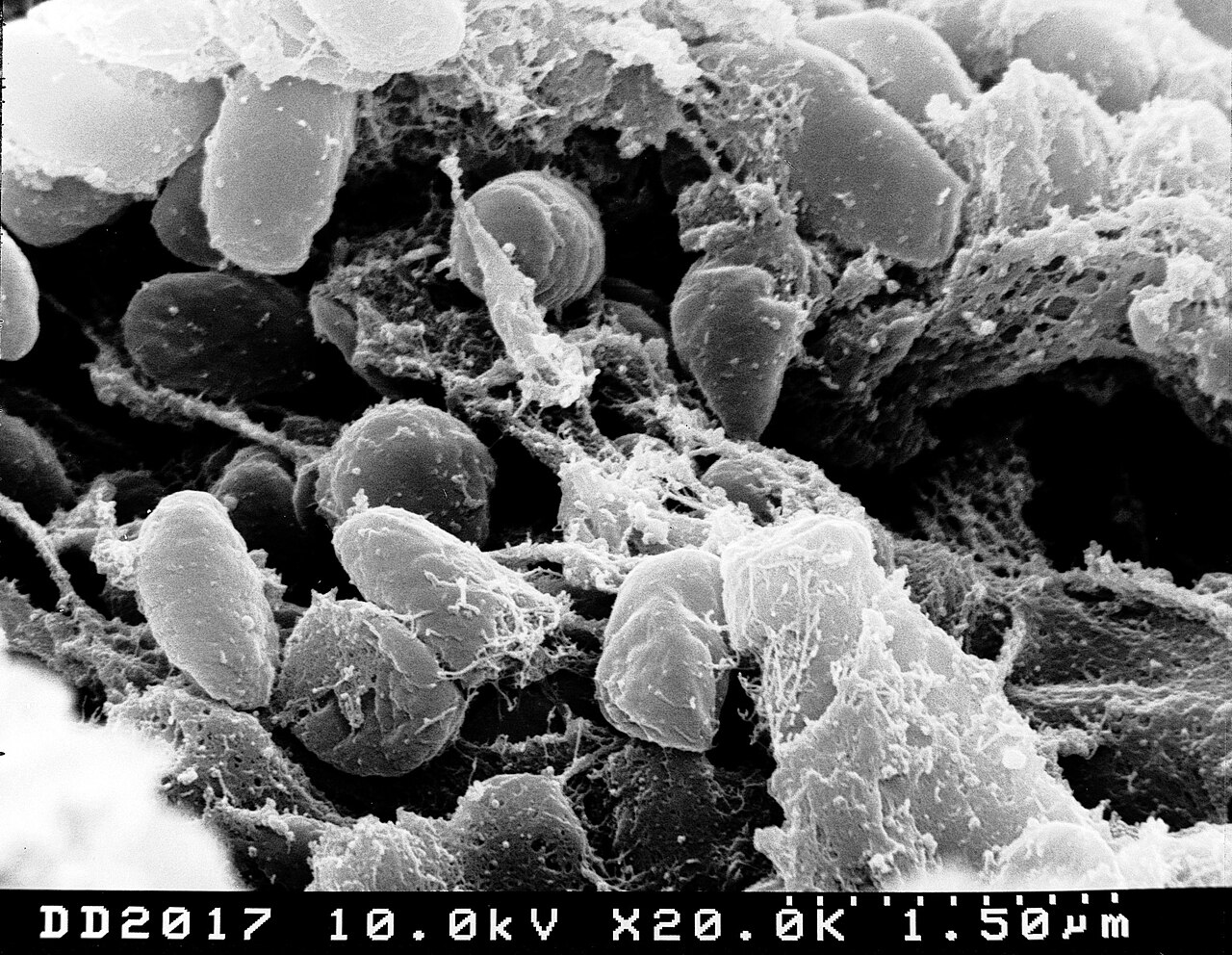
Featured image: Yersinia pestis scanned with electron micrograph.jpg by NIAID, Public domain, via Wikimedia Commons.