Ireland’s hospitals are under their heaviest pressure in almost four years, with nurses warning of a dangerous situation and University Hospital Galway (UHG) asking the public to stay away from its emergency department unless they genuinely need it.
According to the Irish Nurses and Midwives Organisation (INMO), 824 admitted patients were waiting on trolleys for a hospital bed on Wednesday 28 October. That was up 47 on the previous day and the highest figure since January 2023, TheJournal reported.
Galway under strain
On Thursday, UHG said it was extremely busy and warned of long waits in its emergency department, with many people who attend needing to be admitted. The hospital said 34 patients were on trolleys across the emergency department and wards, according to Galway Bay FM.
UHG is also dealing with outbreaks of flu and Covid-19, which limit where patients can be placed on wards. It is reviewing scheduled non-urgent procedures, giving priority to urgent and time-sensitive cases, and says anyone whose procedure is postponed will be contacted directly.
The hospital stressed that everyone who comes to the emergency department will be treated, with the most seriously ill or injured seen first. People with less urgent problems may face long waits. Staff are working to discharge patients who are medically fit to go home so that beds can be freed up.
Galway is not alone. Letterkenny University Hospital said on Thursday that all of its surge and escalation spaces were full and that it was also managing flu and Covid outbreaks, Highland Radio reported. The INMO’s figures on Wednesday showed University Hospital Limerick worst affected with 97 patients on trolleys, followed by Cork University Hospital with 81 and St Vincent’s University Hospital in Dublin with 65.
READ MORE
- Record-breaking misery: 12,672 patients left on trolleys in worst October ever as Galway hospital hits ten-year high
- ‘Not what we asked for’: Cork consultants hit back as Health Minister orders new Hiqa probe into CUH, where 90 patients waited for beds in a single day
- Strike Warning: Schools Face Shutdown Again on 11 November as Public Sector Pay Talks Go Down to the Wire
Nurses call it ‘dangerous’
INMO general secretary Phil Ní Sheaghdha said the current situation “is dangerous and requires immediate action”. The union has written to the HSE asking it to halt all elective work in acute hospitals, buy capacity in private hospitals to carry out that work instead, and scale services to match the number of nurses and midwives rostered on each shift.
She also criticised restrictions on hiring, saying at least four HSE regions cannot recruit without sign-off from the Department of Health and that the resulting delays put patient care and staff safety at risk.
Minister points to work-to-rule
Health Minister Jennifer Carroll MacNeill said on Friday that the public sector work-to-rule, linked to the ongoing pay dispute, is partly affecting trolley numbers, but added that it is not the only factor, Midwest Radio reported. The HSE’s own highest count this week was 544. The HSE and INMO use different methods, so their figures are not directly comparable.
For patients and families, the practical effect is longer waits in emergency departments, more people cared for on trolleys or chairs in corridors, and a greater chance that a planned procedure is pushed back. Hospitals say urgent cases will continue to go ahead.
It is worth keeping the numbers in context. Trolley counts measure patients who have been admitted but are waiting for a ward bed; they are not a count of flu cases. Neither UHG nor Letterkenny published case numbers for their outbreaks.
What happens next
Pressure on emergency departments usually builds through November and peaks after Christmas, so the coming weeks are likely to be difficult. Much may also depend on whether public sector pay talks produce a deal and end the work-to-rule.
In the meantime, the HSE’s advice is to use the emergency department for emergencies only. For less urgent problems, contact your GP or out-of-hours GP service first. Pharmacists can also now supply certain prescription-only medicines for some common conditions, such as cold sores, conjunctivitis and uncomplicated cystitis, under the Common Conditions Service, without a GP visit. Anyone eligible should also consider getting their flu and Covid vaccines.
Sources
- Galway Bay FM: UHG warns of long wait times as it’s ‘extremely busy’ (29 October 2026)
- TheJournal.ie: Hospital overcrowding reaches highest level in nearly four years with 824 patients on trolleys (28 October 2026)
- Westmeath Independent: Record numbers on trolleys as nurses demand HSE action (28 October 2026)
- Midwest Radio: Health Minister says work-to-rule impacting trolley figures (30 October 2026)
- Highland Radio: Flu and Covid outbreaks complicating an already serious situation at LUH (29 October 2026)
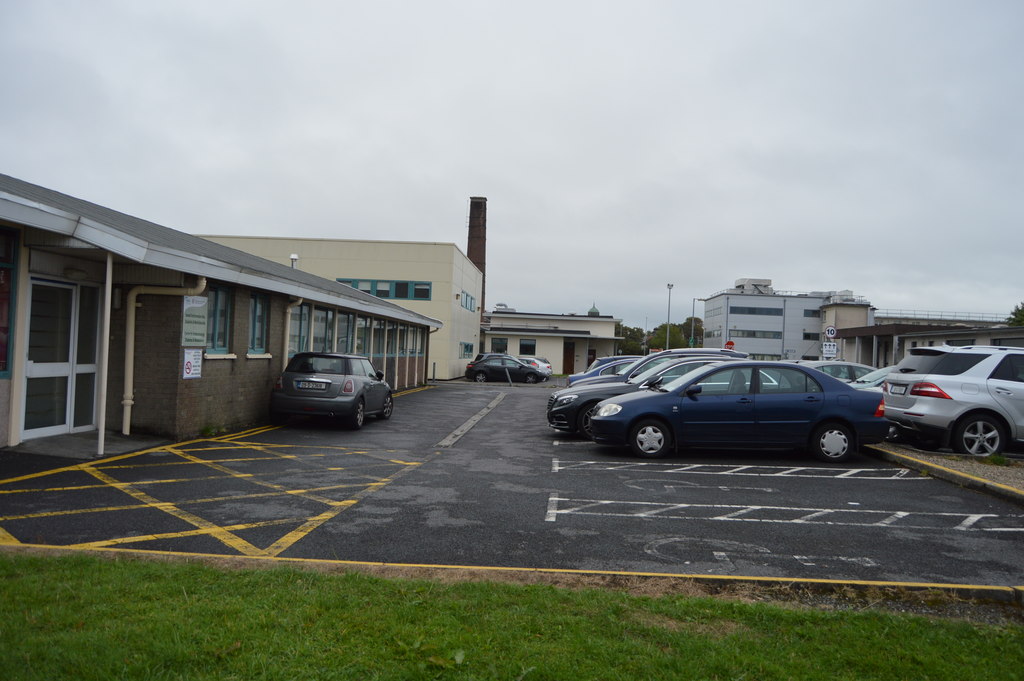
Featured image: University Hospital Galway – geograph.org.uk – 6424435.jpg by N Chadwick, CC BY-SA 2.0, via Wikimedia Commons.