- Recorded crime rose in 11 of 15 offence groups in the 12 months to the end of June 2026, according to the CSO’s latest release (1 October 2026).
- Sexual offences (down 19% to 3,189), homicide (down 9% to 67) and burglary (down 6% to 8,587) all fell over the same period.
- Fraud (up 9%), drug offences (up 8%) and weapons offences (up 6%) led the rises; dangerous or negligent acts rose most, by 11%.
- Drug-dealing cases in early 2026 were the highest for any quarter since records began in 2003, and 41 illegal firearm discharges in April to June 2026 were the most in a quarter since 2015.
- Galway sits in the North Western Garda region, where burglary fell 27% in the 12 months to March 2026, the steepest regional drop in the country.
Is Ireland becoming more dangerous? The honest answer from the official numbers is: it depends what you count. The Central Statistics Office (CSO) publishes recorded crime figures every quarter, drawn from Garda records on the PULSE system, and the picture they paint in 2026 is a mixed one. The most serious violent and sexual crimes are falling, while drug, weapons, fraud and public order offences are creeping up.
This guide pulls together the latest CSO data, explains what has changed and why, and shows how the North Western region, which includes Galway, compares with the rest of the State. We will update it as each new quarterly release lands.
The latest figures: 12 months to June 2026
The CSO’s Recorded Crime Q2 2026 release, published on 1 October 2026, covers incidents recorded in the 12 months to the end of June 2026 and compares them with the 12 months to June 2025. Recorded incidents rose in 11 of the 15 main offence groups (a 16th catch-all group is left out of that count).
| Offence group | 12 months to June 2026 | Change on year earlier |
|---|---|---|
| Dangerous or negligent acts | n/a | +11% |
| Fraud, deception and related | n/a | +9% |
| Controlled drug offences | about 17,330* | +8% |
| Weapons and explosives | n/a | +6% |
| Burglary and related | 8,587 | -6% |
| Homicide and related | 67 | -9% |
| Sexual offences | 3,189 | -19% |
Source: CSO Recorded Crime Q2 2026 (percentages); counts as reported by The Irish Times from the same release, 1 October 2026. *The Irish Times put the rise in drug crime at 9%; the CSO’s key findings say 8%.
The CSO also counts victims of assault and related offences. In the April to June 2026 quarter there were 6,410 victims, up 2% on the same quarter of 2025. Female victims rose 4% to 2,659, driven mainly by women aged 45 to 59, while the number of male victims (3,751) was virtually unchanged.
Drugs and guns: the worrying trends
Two details in the latest data stand out. According to The Irish Times’ analysis of the CSO figures, gardaí recorded 1,603 cases of possession of drugs for sale or supply in the first quarter of 2026 and 1,559 in the second, the two highest quarterly totals since the CSO’s series began in 2003. Higher drug figures partly reflect proactive policing, because most drug crime is detected by gardaí rather than reported by the public.
Firearms were illegally discharged in 41 incidents in April to June 2026, up from 29 in the same quarter of 2025 and the highest for any quarter since 2015. That is still well below the Celtic Tiger era, when up to 90 cases a quarter were recorded.
A full year in detail: 12 months to March 2026
The most recent release for which the CSO’s complete offence table is available to us is Recorded Crime Q1 2026 (published 25 June 2026), covering the 12 months to the end of March 2026.
| Offence group | Year to Q1 2025 | Year to Q1 2026 | % change |
|---|---|---|---|
| Homicide and related | 85 | 62 | -27% |
| Sexual offences | 3,888 | 3,315 | -15% |
| Assaults, harassment, threats to murder | 24,901 | 25,655 | +3% |
| Dangerous or negligent acts | 31,802 | 33,786 | +6% |
| Kidnapping and related | 160 | 165 | +3% |
| Robbery, extortion, hijacking | 2,292 | 2,142 | -7% |
| Burglary and related | 9,331 | 8,502 | -9% |
| Theft and related | 73,770 | 74,641 | +1% |
| Fraud, deception (public reports only) | 11,497 | 11,826 | +3% |
| Controlled drug offences | 16,260 | 16,751 | +3% |
| Weapons and explosives | 2,966 | 3,142 | +6% |
| Damage to property and environment | 21,404 | 20,578 | -4% |
| Public order and social code | 30,506 | 31,642 | +4% |
| Road and traffic offences | 47,591 | 45,800 | -4% |
| Offences against government and justice | 15,657 | 15,623 | 0% |
Source: CSO Recorded Crime Q1 2026, Table 2.1 (data extracted 1 June 2026, subject to revision).
Theft remains by far the most common recorded crime, at almost 75,000 incidents a year, followed by road and traffic offences, dangerous or negligent acts (which include drink and drug driving) and public order offences.
The longer trend: 2022 to 2025
Calendar-year figures in the CSO’s Recorded Crime Q4 2025 release (26 March 2026) show how things have shifted since 2022. Ten of the 15 offence groups fell over those four years.
READ MORE
| Offence group | 2022 | 2023 | 2024 | 2025 | Change 2022-25 |
|---|---|---|---|---|---|
| Homicide and related | 92 | 99 | 88 | 66 | -28% |
| Sexual offences | 3,819 | 3,449 | 3,800 | 3,449 | -10% |
| Assaults and related | 23,863 | 23,894 | 24,705 | 25,133 | +5% |
| Burglary and related | 9,461 | 9,569 | 9,748 | 8,469 | -10% |
| Theft and related | 65,917 | 73,770 | 75,889 | 73,335 | +11% |
| Controlled drug offences | 17,280 | 17,230 | 16,107 | 16,208 | -6% |
| Weapons and explosives | 2,626 | 2,771 | 2,938 | 3,125 | +19% |
| Damage to property | 21,736 | 22,439 | 22,096 | 20,301 | -7% |
| Public order | 31,380 | 28,848 | 30,450 | 31,142 | -1% |
| Road and traffic | 45,710 | 41,785 | 47,674 | 45,209 | -1% |
Source: CSO Recorded Crime Q4 2025, Table 2.3 (data extracted 1 March 2026).
In 2025 itself, murders (35) and manslaughters (5) were unchanged on 2024; the fall in the homicide group was driven by a 46% drop in dangerous driving causing death, RTÉ and The Irish Times reported. Burglary fell 13% in 2025, while rape incidents rose 3% to 1,016.
Crime by Garda region, and what it means for Galway
Since 2025 the Garda Síochána has operated four regions and 21 divisions. The North Western region covers the Galway, Mayo/Roscommon/Longford, Sligo/Leitrim, Donegal and Louth/Cavan/Monaghan divisions; the Southern region covers Cork City, Cork County, Kerry, Limerick and Clare/Tipperary; the Eastern region covers Kildare/Carlow, Waterford/Kilkenny, Laois/Offaly, Meath/Westmeath and Wexford/Wicklow; and Dublin has six metropolitan divisions.
| Offence (12 months to Q1 2026) | Dublin | North Western | Eastern | Southern |
|---|---|---|---|---|
| Homicide and related | 17 | 12 | 17 | 16 |
| Sexual offences | 1,079 | 718 | 796 | 722 |
| Assaults and related | 9,156 | 4,893 | 6,025 | 5,581 |
| Burglary and related | 3,749 (0%) | 1,109 (-27%) | 2,194 (-10%) | 1,450 (-12%) |
| Theft and related | 38,226 | 8,065 | 14,864 | 13,486 |
| Controlled drug offences | 7,151 | 2,379 | 3,915 | 3,306 |
| Public order | 12,709 | 5,945 | 6,222 | 6,766 |
Source: CSO Recorded Crime Q1 2026, Regional Analysis, Table 3.1.
The North Western region recorded fewer assaults (down 4%) and far fewer burglaries than a year earlier, while drug offences (up 4%), fraud (up 4%) and public order offences (up 3%) edged higher. In the latest Q2 2026 data, sexual offences fell in every region: by 14% in Dublin and by between 21% and 23% elsewhere. In the Southern region, fraud rose 18%, Radio Kerry reported.
The CSO’s regional tables do not break the figures down by individual division. For Galway itself, Galway Bay FM reported in October 2026 that the Galway division recorded 123 burglary and related offences in January to June 2026, up 7% from 115 a year earlier, based on an analysis by a Cork-based window company. Gardaí in Galway city have also stepped up foot patrols across seven designated areas, with up to 13 officers deployed daily, RTÉ reported in August.
How to read crime statistics
Recorded crime is not the same as all crime. The CSO stresses that its figures count only what is reported to, or detected by, gardaí, and do not measure how common crime actually is. Sexual offences, fraud and assault are especially likely to go unreported. The figures are also revised as investigations progress.
Fraud needs extra care. Because of a processing backlog in referrals from banks and other financial institutions, the CSO currently counts only fraud reported directly by the public. Garda figures that include bank referrals have shown far bigger rises.
FAQ
Is crime going up in Ireland in 2026?
Recorded incidents rose in 11 of 15 offence groups in the 12 months to June 2026, but the biggest increases were in drug, fraud, weapons and driving-related offences. Homicide, sexual offences and burglary fell.
What is the most common crime in Ireland?
Theft. A total of 74,641 theft and related offences were recorded in the 12 months to March 2026, about half of them in the Dublin region.
How many murders are there in Ireland a year?
There were 35 murders and five manslaughters recorded in 2025, the same as in 2024. The wider homicide group, which also includes dangerous driving causing death, totalled 66 in 2025.
Is Galway a high-crime area?
The North Western region, which includes Galway, has much lower volumes of theft, robbery and burglary than Dublin, and saw the country’s steepest fall in burglary in the 12 months to March 2026. Division-level counts are published by the CSO in its online database.
When are the next crime figures published?
The CSO publishes recorded crime data quarterly. The Q3 2026 release, covering the 12 months to September 2026, is expected around the end of the year; check the CSO release calendar for the exact date.
What happens next
We will update this page when the CSO publishes its Q3 2026 figures, and again when the full-year 2026 data arrives in spring 2027. Key things to watch: whether the rise in drug-dealing and firearm incidents continues, whether the fall in sexual offences holds, and whether the fraud backlog is cleared so that a fuller picture of online and bank fraud emerges.
Sources
- CSO: Recorded Crime Q2 2026 (1 October 2026)
- CSO: Key Findings, Recorded Crime Q2 2026 (1 October 2026)
- CSO: Background Notes, Recorded Crime Q2 2026 (1 October 2026)
- CSO: Main Results, Recorded Crime Q1 2026 (25 June 2026)
- CSO: Regional Analysis, Recorded Crime Q1 2026 (25 June 2026)
- CSO: Main Results, Recorded Crime Q4 2025 (26 March 2026)
- The Irish Times: Drug and gun crime rates reach highest in a decade, CSO finds (1 October 2026)
- The Irish Times: Significant fall in serious crimes recorded last year, new CSO data shows (26 March 2026)
- RTÉ: Significant drop in serious crime – CSO figures (26 March 2026)
- Connaught Telegraph: Recorded crime incidents rose for 11 offence groups, CSO finds (1 October 2026)
- Radio Kerry: Kerry, Cork, Limerick, Tipperary and Clare see largest national decrease in sexual offences (29 October 2026)
- Galway Bay FM: 7% rise in Galway burglaries this year (20 October 2026)
- RTÉ: More gardaí on Galway streets as part of policing plan (12 August 2026)
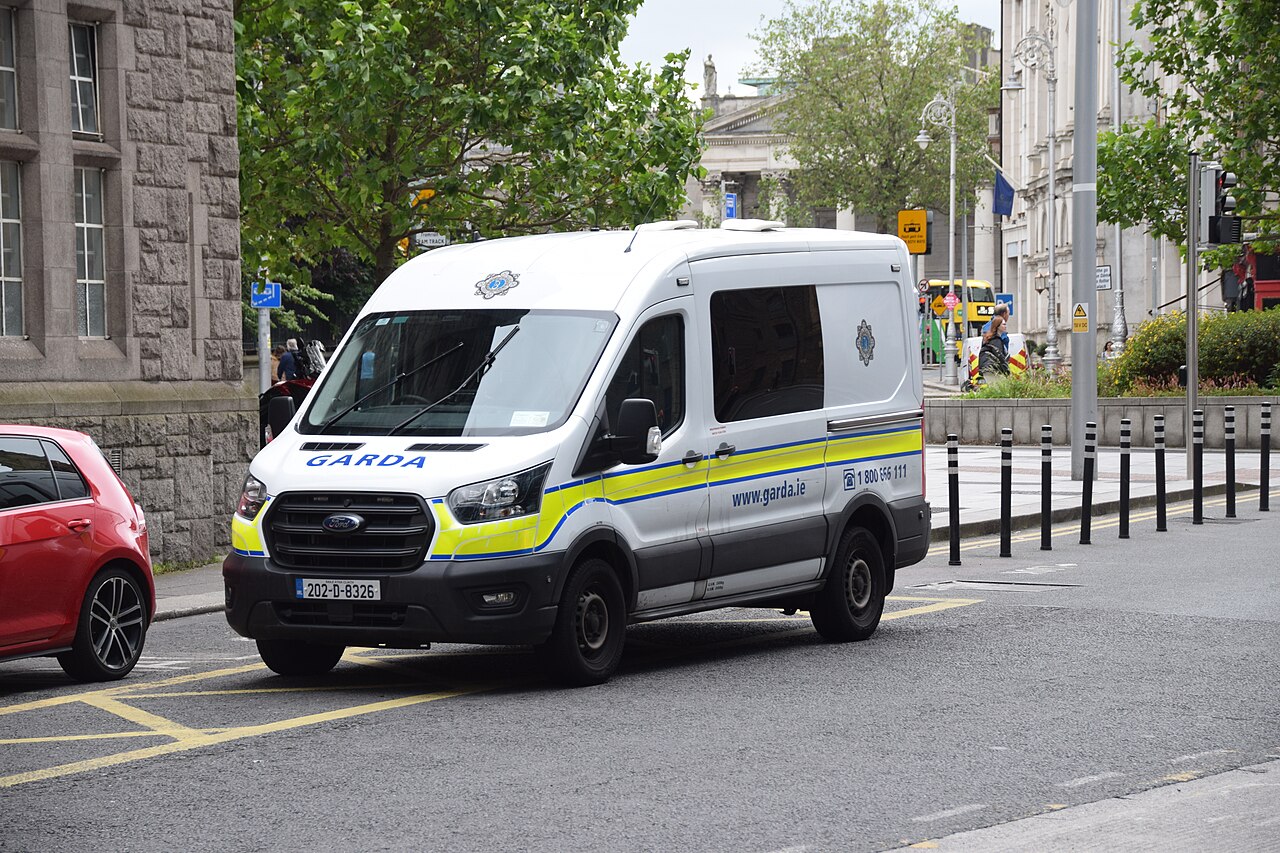
Featured image: Garda police car Ireland 03 by Dickelbers, CC BY 4.0, via Wikimedia Commons.