
The race to lead the world’s top public health body is officially on. The World Health Organization announced on 29 October the candidates nominated by member states to become its next director-general, setting up a contest that runs until a vote in May 2027.
Seven people are in the running to succeed Dr Tedros Adhanom Ghebreyesus, the Ethiopian former health minister who has led the WHO since 2017 and steered it through the Covid-19 pandemic. His second five-year term ends on 15 August 2027 and WHO rules bar him from a third.
The seven candidates
According to reports of the WHO announcement by The Independent (Uganda) and Spain’s Demócrata, the nominees are:
- Dr Hans Kluge (Belgium), the WHO’s regional director for Europe since 2020, re-elected unanimously in 2024. Ireland falls within his region.
- Dr María Neira (Spain), who led the WHO’s department of environment, climate change and health from 2005 to 2025.
- Dr Hanan Balkhy (Saudi Arabia), WHO regional director for the Eastern Mediterranean since February 2024.
- Dr Hanan Mohammed Al-Kuwari (Qatar), an adviser on public health affairs to Qatar’s prime minister.
- Budi Gunadi Sadikin (Indonesia), the country’s health minister.
- Dr Li Song (China), described as a member of the secretariat of the All-China Women’s Federation.
- Dr Gevorg Tamamyan, nominated by Botswana, a children’s cancer specialist who chairs the paediatric oncology bodies SIOP Asia and POEM.
That line-up includes two serving WHO regional directors, a sitting health minister and candidates backed by Gulf states and China, an early sign of the geopolitical jostling to come.
Why this election is different
The new leader will inherit an organisation under severe strain. The United States, historically the WHO’s largest funder, has withdrawn under President Trump. STAT News reported in September that the US left behind roughly $278 million in unpaid fees, that formal ties have been cut, and that the WHO has made major budget cuts this year as global health spending contracts.
Lawrence Gostin, a global health law expert at Georgetown University, told STAT this is the “most consequential DG election in modern WHO history”. Analysts say whoever wins will have to stabilise the agency’s finances, rebuild its credibility and decide what the WHO should and should not try to do with less money.
There is little prospect of quickly restoring relations with Washington while Mr Trump remains in office, STAT reported, and it is not clear that member states agree on whether that should be the priority.
The contest also comes at a busy time for outbreak response. The WHO is supporting the response to an Ebola outbreak in central Africa, and its candidates will be pressed on how they would handle the next global emergency with a smaller budget.
What happens next
The process now moves through several stages, according to the timeline set out in the WHO announcement as reported:
- 18 to 19 November 2026: a first candidates’ forum at WHO headquarters in Geneva, webcast in six languages, where nominees set out their plans and answer questions from member states.
- Early 2027: the WHO Executive Board, at its 160th session, draws up a shortlist of five, interviews them, and nominates up to three for the final vote.
- 15 March 2027: a second forum with the finalists.
- May 2027: the 80th World Health Assembly elects the new director-general by secret ballot.
- 16 August 2027: the winner takes office for a five-year term.
Ireland, as a WHO member state, will have a vote at the World Health Assembly. With a European regional director in the field, the choice could have a direct bearing on how the agency works with countries like ours.
Sources
- The Independent (Uganda): Seven candidates enter race to succeed Dr Tedros at the helm of WHO (31 October 2026)
- Demócrata: Seven candidates are vying for the leadership of the WHO (30 October 2026)
- STAT News: ‘Vulnerable’ WHO begins process of picking new director-general (25 September 2026)
- World Health Organization: Newsroom listing, ‘Announcement of candidates for the position of WHO Director-General’ (29 October 2026)
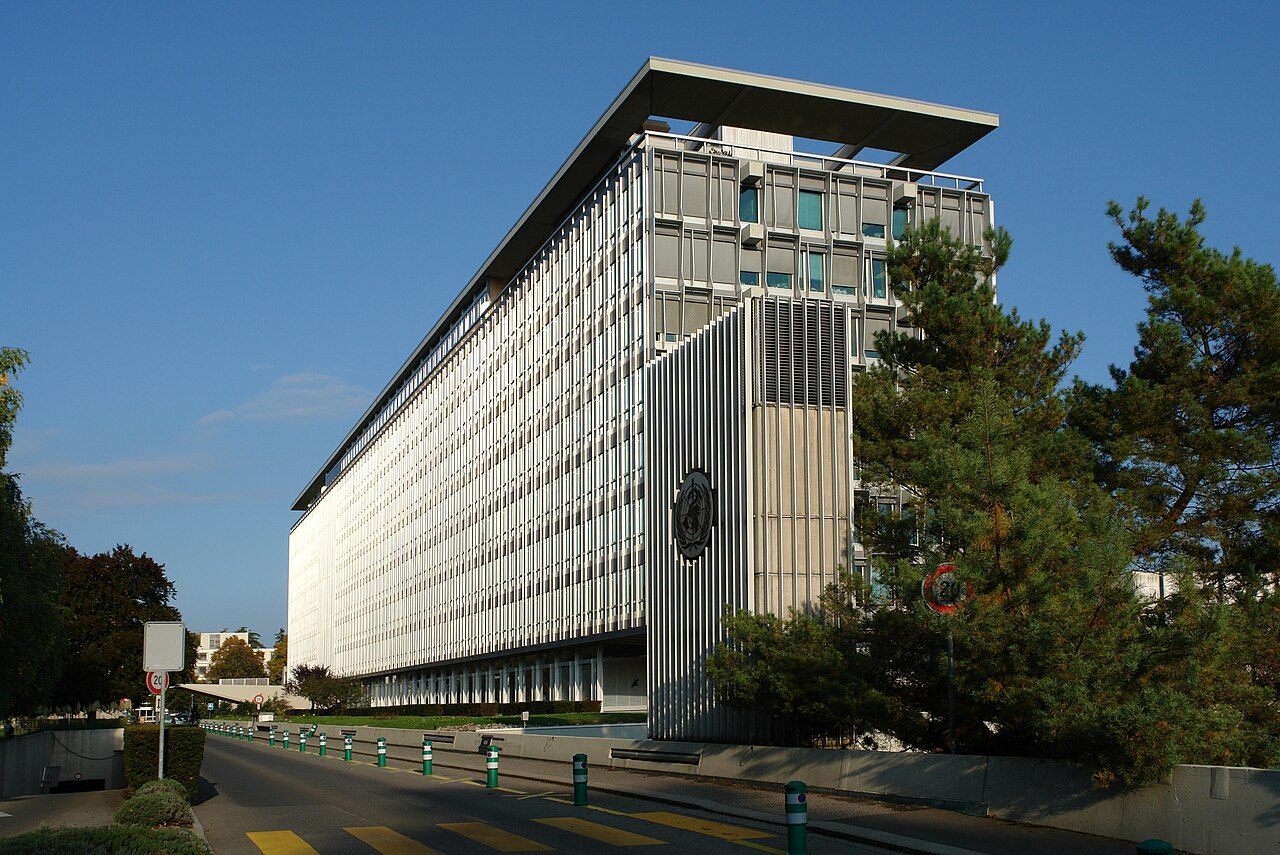
Featured image: World Health Organisation building from west by Yann (talk), CC BY-SA 4.0, via Wikimedia Commons.
Leave a Reply