
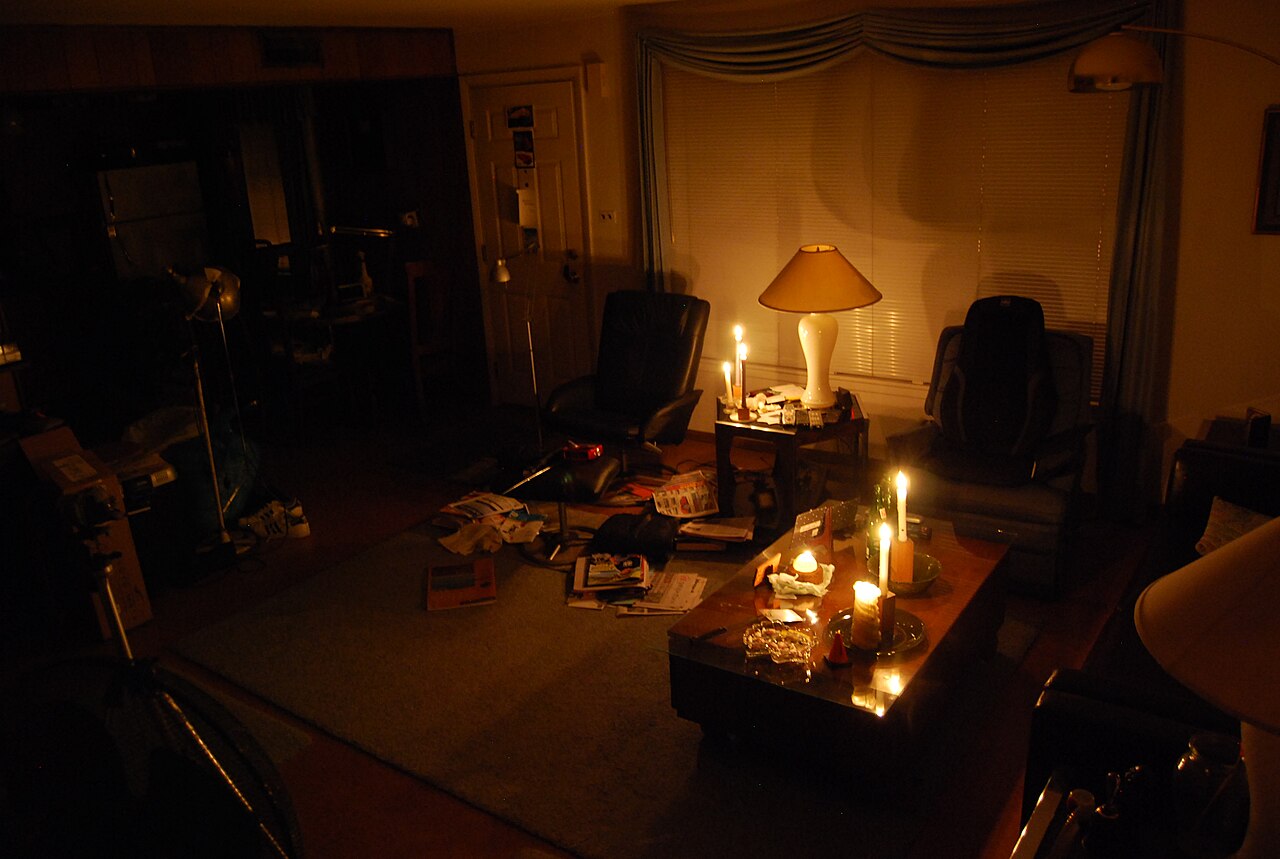
Government preparedness, emergency supplies and the growing concern about what would happen if Ireland was suddenly plunged into darkness
CONNEMARA JOURNAL | SPECIAL REPORT
IRELAND COULD BE FACING A SERIOUS WAKE-UP CALL WHEN IT COMES TO ENERGY SECURITY, WITH HOUSEHOLDS BEING URGED TO THINK ABOUT WHAT THEY WOULD DO IF THE ELECTRICITY SUPPLY WAS INTERRUPTED.
Imagine waking up tomorrow morning and discovering that the electricity in your home has completely disappeared.
Your phone is nearly dead. The fridge is no longer running. The kettle will not work. Your heating system could be affected. And suddenly, something that most Irish households take for granted every single day becomes a serious concern.
For many people, the first reaction would be to assume that the electricity would return within minutes.
But what if it did not?
What if the interruption continued for hours?
What if it lasted longer?
These are the questions that are increasingly important when discussing Ireland’s energy security, and they are questions that households should not simply ignore.
There is currently no verified confirmation of an imminent nationwide blackout or an official instruction from the Irish Government telling the public to stockpile emergency supplies.
However, the possibility of a serious electricity interruption is something that deserves proper consideration.
And with discussions about energy security, emergency preparedness and the resilience of Ireland’s electricity system attracting attention, homeowners need to understand what they can do to protect themselves.
Speaking about household energy preparedness, Irish Wind & Solar is highlighting the importance of understanding backup electricity systems, battery storage and the practical steps families can take to become better prepared.
The message is simple.
Do not wait until the electricity goes out to discover that your home has no backup plan.
WHAT WOULD HAPPEN IF IRELAND WAS SUDDENLY LEFT WITHOUT ELECTRICITY?
For many people, the idea of a prolonged blackout might seem like something that happens in another country.
But electricity interruptions can happen for a variety of reasons, including severe weather, technical faults, infrastructure damage or other unexpected circumstances.
The consequences would depend on how widespread the interruption was and how long it continued.
A short power cut might be little more than an inconvenience.
A prolonged interruption could create much more serious difficulties.
Think about the everyday activities that depend on electricity.
Most households rely on electricity for refrigeration, cooking, heating controls, communications, lighting and charging devices.
Some families also depend on electrically powered equipment for medical or other essential needs.
Without electricity, even basic tasks could suddenly become more difficult.
And if an interruption affected a large area, people could find themselves competing for limited supplies of batteries, bottled water and other emergency essentials.
This is precisely why emergency preparedness matters.
It is not about predicting a disaster.
It is about understanding that unexpected situations can happen and making sure your household is not completely dependent on everything working perfectly.
THE GOVERNMENT QUESTION: ARE IRISH FAMILIES BEING GIVEN ENOUGH INFORMATION?
One of the biggest questions surrounding energy security is how prepared households actually are.
The Irish Government has a responsibility to communicate clearly about major risks affecting the country.
That includes ensuring that people understand what to do during emergencies, where to find reliable information and how to protect vulnerable members of their families.
But households also have responsibilities of their own.
People need to know where their emergency supplies are kept.
They need to understand whether their heating system would continue operating during a power interruption.
They need to know whether their home has any backup electricity arrangements.
And they need to understand what would happen if their phone, internet connection or other essential services became unavailable.
The last thing anyone wants is to discover these problems in the middle of an emergency.
The question is not whether every household should prepare for the worst imaginable scenario.
The question is whether basic preparedness should become a normal part of household planning.
Because when something goes wrong, having a plan is far better than having none.
BLUEGATTI AND THE BLACKOUT DISCUSSION: WHAT PEOPLE NEED TO KNOW
The name BLUETTI has been raised in connection with the blackout discussion, and claims circulating online have attracted attention.
But readers need to understand the difference between online commentary, predictions and confirmed information.
If a specific warning has been issued, the public deserves to know exactly who issued it, when it was issued and what evidence supports it.
If BLUETTI has made comments about a potential blackout, those comments should be examined in their proper context.
What exactly was said?
Was it a prediction?
Was it an opinion?
Was it based on an official announcement?
Or was it a discussion about the possibility of a future electricity interruption?
These are important distinctions.
A claim being shared widely online does not automatically make it an official warning.
And equally, discussing a potential emergency does not mean that people should automatically dismiss the subject.
Energy security is a legitimate issue.
Household preparedness is a legitimate issue.
The public deserves accurate information rather than confusion.
For that reason, any specific claims attributed to BLUETTI should be checked against the original statement before being presented as confirmed breaking news.
IRISH WIND & SOLAR: WHY HOMEOWNERS SHOULD BE THINKING ABOUT BACKUP ELECTRICITY
Irish Wind & Solar is encouraging homeowners to consider how their properties would cope if the electricity supply was interrupted.
For households already considering solar panels, battery storage or other energy solutions, this is an important conversation.
But there is one major misunderstanding that needs to be addressed.
Having solar panels does not automatically mean your home will continue receiving electricity during a blackout.
Many standard grid-connected solar systems automatically shut down when the electricity grid goes offline.
This is an important safety feature.
A properly designed backup system may require additional equipment, including compatible battery storage, an inverter capable of backup operation and appropriate electrical arrangements.
Homeowners need to understand exactly what their installation can do.
Can it power essential appliances?
Can it operate during a grid interruption?
Can the battery recharge using solar panels?
How much electricity can the system provide?
And how long would that electricity realistically last?
These are the questions that should be asked before installing a system.
Irish Wind & Solar believes homeowners should understand their options rather than assume that every solar installation provides emergency backup electricity.
For anyone considering investing in solar, understanding the difference between ordinary energy savings and backup power could be extremely important.
THE BIG QUESTION: HOW LONG COULD YOUR BATTERY LAST?
Battery storage is becoming an increasingly important part of the conversation around household energy independence.
But the size of the battery is only one part of the equation.
A household using electricity for a few lights, phone charging and a small number of essential appliances will have very different requirements from a household attempting to operate heating equipment, cooking appliances and larger electrical loads.
The amount of electricity available will depend on:
- The capacity of the battery.
- The condition and age of the equipment.
- The electrical demand of the household.
- The inverter’s capabilities.
- Whether the system supports backup operation.
- Whether solar panels can recharge the battery.
- The weather and available sunlight.
A battery that provides electricity for essential lighting and communications might not be capable of powering an entire house.
And homeowners should never assume that a system will continue operating indefinitely.
The important thing is to understand what your equipment can actually deliver.
WHY IRISH HOUSEHOLDS SHOULD STOCK UP ON THE BASICS
One of the most sensible steps families can take is to gradually put together a basic emergency supply kit.
This does not mean rushing into supermarkets and buying everything in sight.
It means thinking about what your household would genuinely need if electricity or other services were temporarily unavailable.
WATER: THE MOST IMPORTANT STARTING POINT
Water should be one of the first things households consider.
A commonly recommended emergency allowance is approximately four litres of drinking water per person per day, with additional water required for cooking and hygiene.
For a family of four, that means approximately 16 litres of drinking water per day.
A household preparing for three days would therefore need around 48 litres for drinking alone.
That is a considerable amount of water, which is why families should think carefully about how they would store it safely.
Water should be kept in suitable clean containers and replaced according to storage guidance.
People should also consider whether anyone in their household has additional requirements.
The important thing is to have a realistic plan rather than assume that water will always be immediately available.
FOOD: WHAT WOULD YOU EAT IF THE ELECTRICITY WENT OUT?
Food is another major consideration.
If the electricity supply was interrupted, households might lose access to normal cooking equipment.
Refrigerated food could also become unsafe if it was not kept at an appropriate temperature.
Families should consider keeping a reasonable supply of food that does not require refrigeration and can be eaten without electricity.
Examples include:
- Tinned vegetables.
- Tinned beans.
- Tinned fish.
- Crackers.
- Cereal.
- Long-life milk.
- Dried foods.
- Other suitable non-perishable household foods.
People should also consider food allergies, dietary requirements and the needs of children.
Emergency supplies should be built around what your family actually eats.
There is little point spending money on food that nobody in the household will use.
BATTERIES AND POWER BANKS
Phones are among the most important devices people own during an emergency.
They provide access to information, communication with family members and contact with emergency services.
But a phone is only useful if it has power.
Households should consider keeping suitable power banks charged and ready.
They should also check that their batteries are in good condition and that charging cables are available.
A small backup battery could be useful for maintaining communications during a temporary interruption.
However, households should not assume that mobile networks or internet services would remain available during every possible emergency.
Having a charged phone is useful.
Having a communication plan is even better.
TORCHES, CANDLES AND LIGHTING
Lighting is another basic requirement.
If the electricity goes out at night, households need a safe way to move around.
Torches and battery-powered lights are generally sensible options.
People should check that their torches work and that suitable batteries are available.
Candles should be handled carefully because they introduce a fire risk.
They should never be left unattended, placed near curtains or used in a way that could endanger children or pets.
A power cut should not become a household fire emergency.
CASH AND IMPORTANT DOCUMENTS
Another issue people might overlook is access to money.
If electronic payment systems, internet connections or ATMs were disrupted, having a small amount of cash could be useful.
Households should also consider keeping important contact information available offline.
That could include family contacts, emergency numbers and relevant medical information.
The aim is to make sure that essential information is not entirely dependent on a phone or internet connection.
WHAT ABOUT HEATING DURING A BLACKOUT?
This is particularly important in Ireland.
Many homes rely on heating systems that require electricity for controls, pumps or other components.
Even if a household has a fuel supply, the heating system may not operate normally during a power interruption.
Families should understand how their particular heating system works.
They should not attempt to modify electrical equipment or connect generators directly to household wiring without suitable professional arrangements.
Portable heaters, generators and other equipment can also introduce serious safety risks if used incorrectly.
Carbon monoxide is particularly dangerous.
Generators and fuel-burning equipment should never be operated indoors or in enclosed spaces.
Anyone considering backup heating or electricity should seek appropriate professional advice.
THE SOLAR QUESTION: COULD YOUR HOME BE MORE INDEPENDENT?
For homeowners interested in reducing their dependence on the electricity grid, solar and battery storage can be worth investigating.
But the system needs to be designed around the household’s actual requirements.
Some people may simply want to reduce their electricity bills.
Others may want to use battery storage to increase their use of solar electricity.
And some homeowners may be interested in backup electricity for essential circuits.
These are different objectives.
A system designed for ordinary electricity savings is not necessarily suitable for emergency operation.
Homeowners should ask their installer what equipment is required, what the system can power and whether additional components are needed.
They should also understand the limitations of battery storage.
A battery is not an unlimited electricity supply.
Its performance depends on capacity, demand, charging conditions and the configuration of the installation.
Irish Wind & Solar recommends that homeowners investigate these questions before making decisions about their energy systems.
WHAT SHOULD FAMILIES DO FIRST?
For households concerned about preparedness, the first steps do not need to be expensive.
Start by checking what you already have.
Do you have drinking water?
Do you have food that can be prepared without electricity?
Do you have a torch?
Are your power banks charged?
Do you know how to contact family members?
Can you safely access essential medication?
Do you understand whether your heating system depends on electricity?
These questions can help identify the biggest gaps.
Families should then gradually address those gaps.
It is also important to check official emergency information and follow any specific instructions issued by relevant authorities.
If an emergency warning is issued, people should follow the guidance appropriate to their location and circumstances.
WHAT IF THE BLACKOUT LASTED MORE THAN A DAY?
This is where preparation becomes particularly important.
A prolonged interruption could affect several different aspects of daily life.
Food storage would become more difficult.
Communications could become less reliable.
People might need to travel to access supplies or assistance.
Some households could require additional support.
The exact consequences would depend on the cause of the interruption, the location and the services affected.
That is why a realistic emergency plan should include more than simply buying batteries.
Families should consider who might need assistance, how they would communicate and what they would do if their normal arrangements were disrupted.
People with medical needs should discuss appropriate contingency plans with their healthcare providers.
And households should avoid relying on a single solution.
A solar battery might be useful in some circumstances.
A torch and power bank might be useful in others.
The most effective preparation is usually a combination of sensible planning and appropriate equipment.
THE BIGGEST MISTAKE PEOPLE COULD MAKE
The biggest mistake would be assuming that nothing could ever happen.
Ireland experiences severe weather, electricity interruptions and other disruptions.
Most interruptions are resolved without becoming major emergencies.
But that does not mean households should ignore the possibility of a longer interruption.
The opposite mistake would be believing every dramatic claim circulating online.
People should not spend thousands of euros on equipment because somebody has posted an unverified warning.
They should not assume that a government announcement has been made unless they can find the original announcement.
And they should not believe that every solar or battery system will automatically keep their home running.
The sensible approach is to prepare without panic.
FINAL WORD: ARE IRISH FAMILIES READY?
The discussion about energy security raises an important question for every household.
How prepared would you actually be if the electricity disappeared?
Would you have enough drinking water?
Would you have food available?
Could you charge your phone?
Would your heating system continue working?
Would you know how to access reliable information?
And if you have solar panels, would you know whether they could provide electricity during an outage?
These are practical questions that deserve answers.
Irish Wind & Solar is encouraging homeowners to understand their energy systems and consider whether backup arrangements could be appropriate for their needs.
But no household should assume that an imminent nationwide blackout has been confirmed.
The public should look for reliable information, follow official emergency advice and make sensible preparations.
Because the best time to prepare for an unexpected power interruption is before it happens.
And if the lights do go out, the households that have already thought about what to do will be in a much better position than those starting from scratch.
READ MORE ON CONNEMARA JOURNAL
- WINTER BILLS WARNING: Irish inflation hits 4% as energy prices soar 18% in a year
- Storm Chloe: when will it hit Ireland? What Met Éireann’s long-range forecast REALLY says
- LIGHTS OUT IN KYIV: Russian blitz knocks out power plants and cuts capital’s water
CONNEMARA JOURNAL | OPINION AND PREPAREDNESS
This article discusses potential power interruptions and household preparedness. It does not confirm an imminent nationwide blackout, a government instruction to stockpile supplies or a verified warning issued by BLUETTI. Statements attributed to Irish Wind & Solar should be approved by the company before publication.
Disclosure: Connemara Journal is connected to Irish Wind & Solar.
Leave a Reply