
Another piece of mobile history has quietly slipped away. Eir’s phased switch-off of its 3G network, which started in Donegal at the beginning of October, was scheduled to be completed by the end of the month, with southern counties the last to go on 28 October.
With Vodafone having retired its 3G service in October 2024 and Three carrying out a similar process around the same time, the end of Eir’s network means 3G is now effectively history on Ireland’s three main mobile networks. Customers of GoMo and Lyca Mobile, which run on Eir’s network, are affected too.
The good news is that the vast majority of people will not notice a thing. But for a small number of households and businesses, an old phone or a forgotten gadget in a press could suddenly start behaving differently.
Who is actually affected?
Eir has said that most of its 1.6 million mobile customers already use 4G or 5G, and only a small number still relied on 3G for data, calls or texts. ComReg, the communications regulator, says that if you have a 4G or 5G-enabled smartphone, the change is unlikely to affect you.
The people to think about are those with older handsets that only connect to 3G and 2G. According to the Irish Examiner, these devices can still make and receive calls over the older 2G network, but mobile data will be much slower. RTÉ reported that calls and texts would continue to work normally for all Eir customers after the switch-off.
The hidden gadgets that rely on 3G
It is not just phones. Plenty of everyday equipment contains a SIM card that quietly talks to a mobile network. ComReg’s list of devices that could be affected by 3G retirement includes:
- Personal care and panic alarms, often used by older or vulnerable people living alone
- Security and fire alarm systems
- Card payment terminals used by shops, taxis and market traders
- GPS and stock trackers
- Automated gates
- Remote-controlled heating systems
- Some vehicles with built-in connectivity
If any of these were installed several years ago, it is worth checking with the supplier which network technology they use. A care alarm that cannot connect properly is the kind of problem nobody wants to discover in an emergency.
What you should do now
Eir said it contacted customers using 3G-only services directly. Depending on the situation, its guidance includes updating device settings, getting a free replacement SIM, or moving to a compatible device.
Here is a quick checklist for anyone who is unsure:
- Check your phone. If your phone shows 4G, LTE or 5G at the top of the screen, you are fine.
- Look out for an older relative. Basic or very old handsets owned by parents or grandparents are the most likely to be caught out.
- Call your alarm provider. Ask directly whether your care, security or fire alarm uses a 4G-compatible connection.
- Businesses should check terminals. Card machines and trackers are worth confirming with the provider.
- Visit the official pages. Eir, GoMo, Lyca Mobile and ComReg all have 3G switch-off information online.
Why networks are ditching 3G
The reason is simple: radio spectrum is limited, and 3G is old technology that carries a fraction of the data of newer networks. Eir has said retiring 3G frees up that spectrum for 4G and 5G, letting it focus investment where most customers already are. Its chief technology officer, Fergal McCann, told RTÉ that the company’s priority was to keep the transition simple and fully supported for what he described as a very small number of 3G-only customers.
What happens next
For now, 2G remains in place as a fallback for basic calls and texts on older devices, which is why some 3G-era phones will still ring. However, 2G is also ageing technology, and anyone holding on to very old kit should treat this as a nudge to upgrade sooner rather than later. If you have a problem with your service after the switch-off, contact your provider first. If that does not resolve it, ComReg handles complaints about electronic communications services.
Sources
- Irish Examiner: Eir begins 3G service shutdown across Ireland (5 October 2026)
- RTÉ News: Eir to begin retiring 3G network from October (24 September 2026)
- ComReg: Eir 3G switch-off from October (20 August 2026)
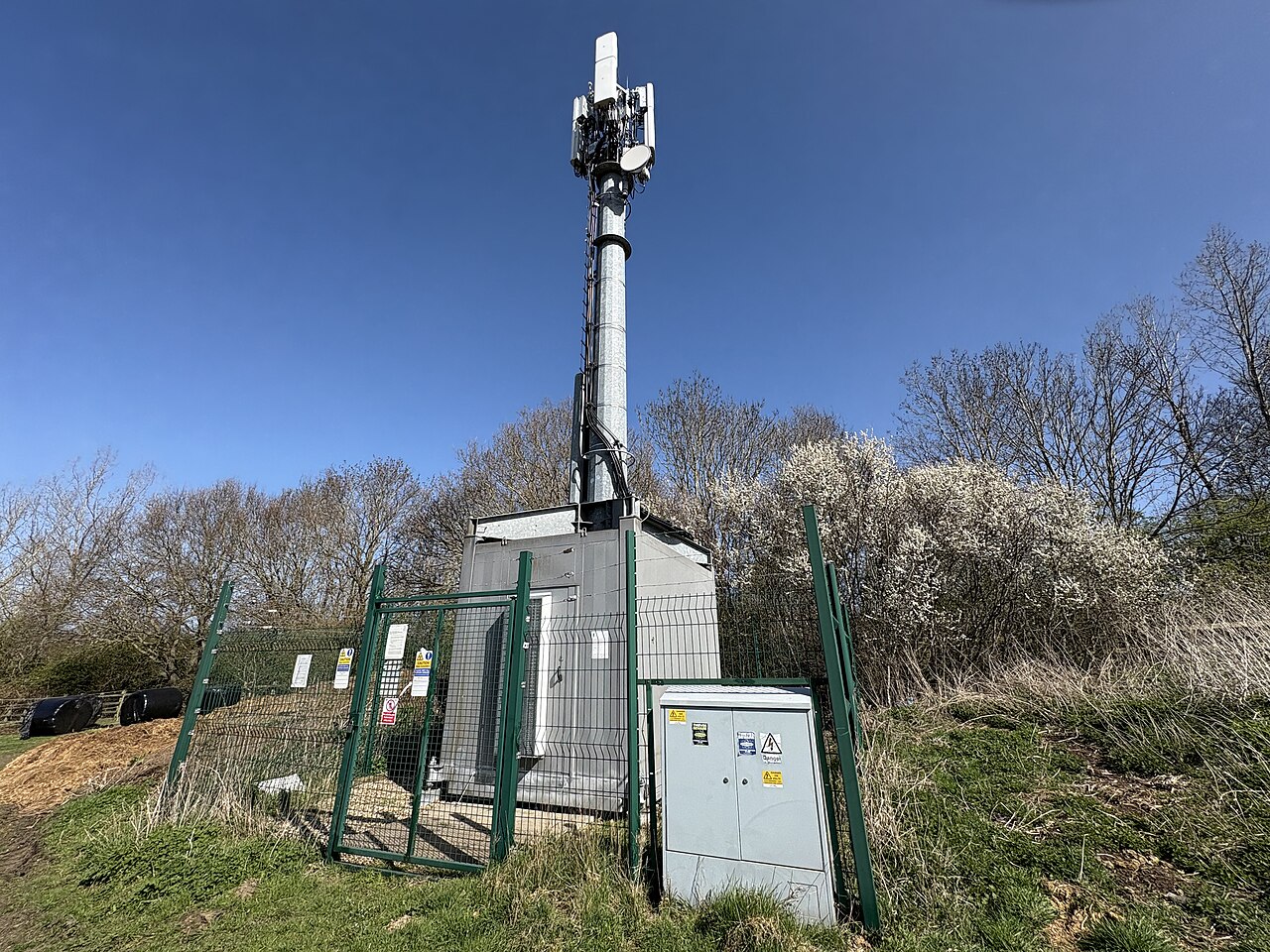
Featured image: Mobile phone mast by Diacius, CC BY-SA 4.0, via Wikimedia Commons.
Leave a Reply