
Ireland is weeks away from its first official verdict on how the country handled Covid-19. The independent Covid-19 Evaluation says it is on track to deliver its final report by the end of 2026, after face-to-face sessions with the politicians and public health chiefs who ran the pandemic response.
According to RTÉ News, the panel has met Taoiseach Micheál Martin, Tánaiste Simon Harris, who was health minister when the virus arrived, former Taoiseach Leo Varadkar, former health minister Stephen Donnelly and former Chief Medical Officer Dr Tony Holohan, along with members of the National Public Health Emergency Team (NPHET).
It also spoke to Professor Philip Nolan, who chaired NPHET’s modelling group and became a familiar face at evening press briefings, senior HSE figures, and Martin Fraser, the former Secretary General to the Government.
What the review is, and what it is not
The Government set up the evaluation in late 2024, and it is chaired by Professor Anne Scott. Its job is to produce a factual account of the period from January 2020 to February 2022, look at how the response played out in hospitals, the community and nursing homes, and weigh the wider impact on society and the economy, with an eye to lessons for the next emergency.
Crucially, it is not a statutory public inquiry. As The Irish Times has reported, the panel cannot compel witnesses to appear or force the release of documents, although it can ask for sensitive material. That sets it apart from inquiries in some other countries, including the UK, where hearings have featured public testimony from senior figures. The chair has said the panel would take a non-confrontational approach.
The evaluation says its meetings with decision-makers were very valuable and helped it understand the complexity and trade-offs behind key calls. More than 7,000 people responded to its public consultation, and it has also run roundtables, including a live-streamed debate in March.
The scale of what is being judged
Restrictions in Ireland lasted roughly two years, from early March 2020 to the end of February 2022. Over the official reporting period the State recorded more than 1.7 million confirmed cases and over 9,600 deaths, according to RTÉ. Globally, more than seven million deaths have been reported.
Some of the most painful questions centre on nursing homes. The evaluation says two consultation reports on long-term residential care, including experiences shared by bereaved families, are due to be published soon.
A further live-streamed roundtable on managing future national emergencies was scheduled for today, with speakers including Dr Caroline McMullan, Lucy Easthope and Professor Pete Lunn.
Covid has not gone away
The report lands as the virus continues to circulate. In the most recent week reported by RTÉ, Ireland recorded 203 Covid-19 cases, 70 hospitalisations and one death, at a time when hospitals are already under heavy winter pressure.
Under the HSE’s 2026-2027 winter vaccination programme, Covid-19 and flu vaccines are free for everyone aged 60 and over and for people with certain underlying conditions or weakened immune systems. Both jabs can be given at the same appointment in participating GP surgeries and pharmacies, and HSE teams vaccinate nursing home residents and people who are housebound.
The HSE’s National Immunisation Office has stressed that flu and Covid-19 can cause serious illness, especially in older people and those with underlying conditions. Anyone unsure whether they qualify should check the HSE website or ask their GP or pharmacist.
What happens next
The panel is now in its final stages, weighing everything it has gathered. RTÉ reports the final report is due by the end of this year. When the Government gave its last major update in June, The Irish Times reported that the work would conclude before year’s end with the report itself expected in early 2027, so the exact publication date is not yet fixed.
Once it is published, expect the political fallout to centre on nursing homes, school closures and the length of restrictions, and on whether a non-statutory review was ever strong enough to get the full story. Expect bereaved families and opposition parties to scrutinise every finding.
Sources
- RTÉ News: Report on how Covid-19 was handled due at end of year (2 November 2026)
- The Irish Times: Covid inquiry to conclude work before the end of the year, Cabinet told (23 June 2026)
- HSE: HSE launches 2026-2027 Winter Vaccination Programme (8 October 2026)
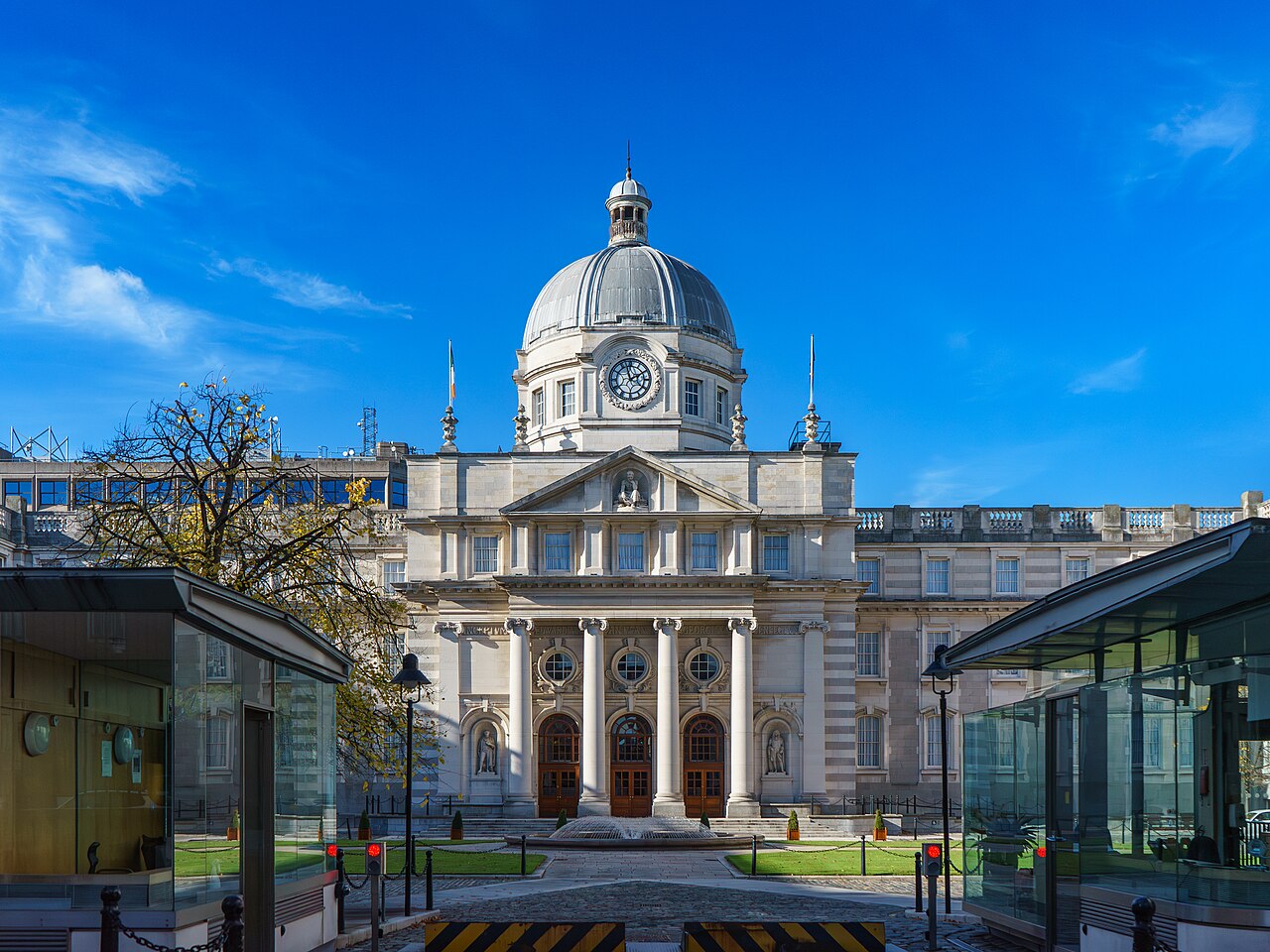
Featured image: Government Buildings, Dublin, Ireland by David Kernan, CC BY-SA 4.0, via Wikimedia Commons.
Leave a Reply