
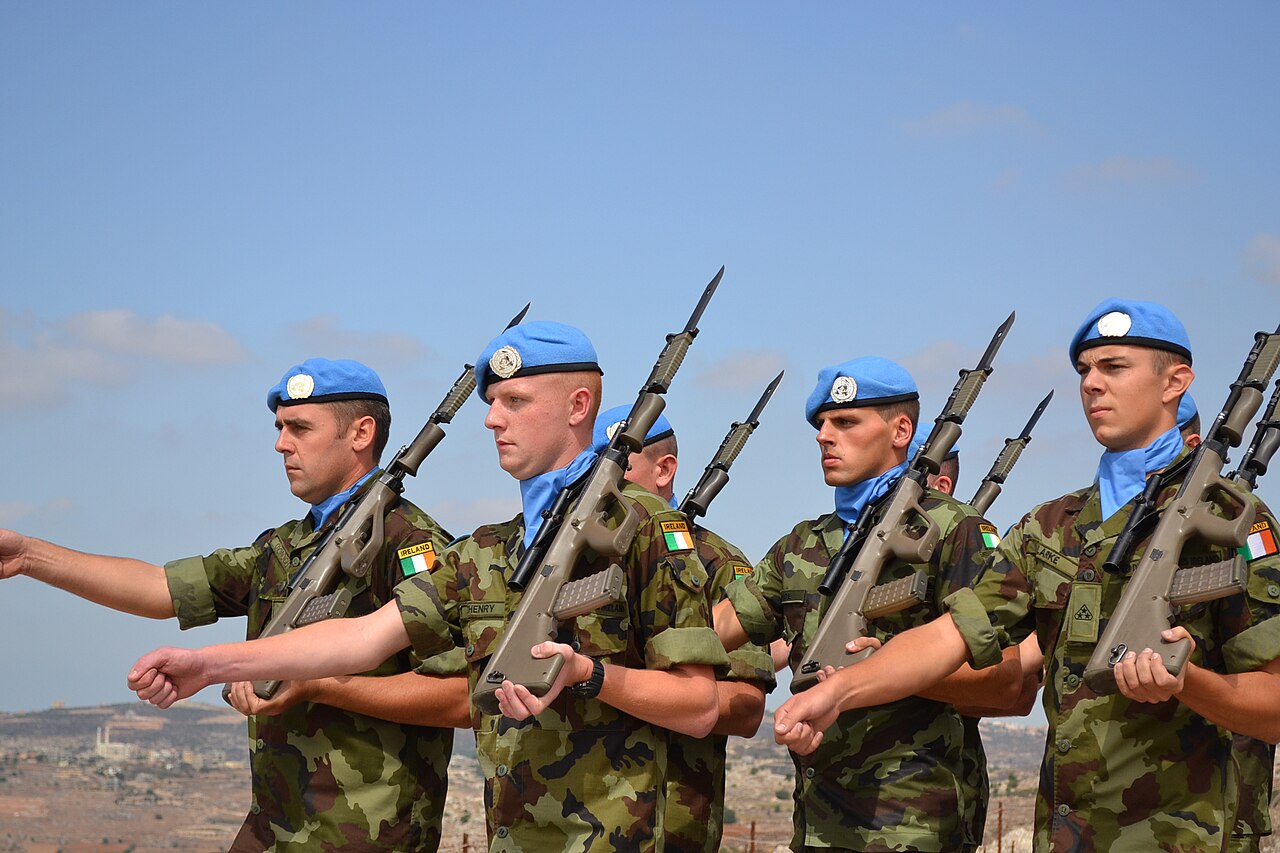
It is the end of the line for one of the proudest chapters in the history of the Defence Forces.
About 300 Irish soldiers are due to deploy to south Lebanon this month on what will be the final Irish rotation with Unifil, the UN peacekeeping force that Ireland has served in since 1978. When they come home, an almost 50-year commitment that saw more than 30,000 Irish troops pass through the region will be over.
And as they go, a political argument is building over what, if anything, Ireland should do next.
Why Unifil is ending
The UN Security Council decided earlier this year to wind up Unifil, which has about 8,000 troops in south Lebanon. The Irish Times reports that the US administration opposed renewing the mandate, reportedly at Israel’s urging. Peacekeeping operations formally end on 31 December, with a grace period of a couple of months for troops to withdraw their weapons and equipment.
Defence Minister Helen McEntee has said Irish troops will be fully out of Lebanon by next Easter. Lt Col Cormac Brady, who will command the final contingent, told RTÉ his focus would be force protection above all else. He described the Irish area as quite calm recently but warned that the situation remains very volatile.
The human cost of Ireland’s service has been heavy. Forty-eight Irish soldiers have died in Lebanon, most recently Private Seán Rooney, who was killed in 2022 in an attack the RTÉ report attributes to Hezbollah members.
The EU mission that could replace it
In October, EU foreign ministers approved a much smaller EU military support mission, known as EUSM Lebanon. According to The Irish Times, it will train the Lebanese armed forces in areas such as border surveillance, patrolling and reconnaissance, and give counter-terrorism and public order training to the gendarmerie. It will be based near Beirut and start with about 160 personnel across all contributing states, possibly growing to several hundred.
Crucially, it has no peace enforcement role, and military sources say Irish troops would not be involved in disarming Hezbollah. No decision has yet been made on how many soldiers each EU country will send. Separately, France and Italy are discussing a possible new peacekeeping force, but the preliminary view in Dublin is that Irish involvement in that is unlikely.
The triple lock problem
There is a catch. Under the triple lock, Ireland cannot send more than about a dozen troops overseas without a UN mandate, along with Government and Dáil approval. The EU mission has no UN mandate, so any meaningful Irish contribution would require the Government’s legislation to scrap the triple lock to be passed first. That Bill would replace the UN requirement with a Cabinet decision and a Dáil majority.
McEntee has described the triple lock as no longer fit for purpose, arguing that it hands permanent Security Council members such as Russia and China a veto over where Irish soldiers can serve. Opposition parties say it is central to Irish neutrality.
Critics are also worried about the Lebanon mission itself. Dylan Macchiarini Crosson of the International Crisis Group told The Irish Times that the risks for soldiers without a UN mandate would be very high. Senator Tom Clonan warned it could look like taking one side in a potential civil war, while Sinn Féin’s Donnchadh Ó Laoghaire said training the Lebanese army could free it to focus on disarming Hezbollah. Former Chief of Staff Mark Mellett defended the idea, saying: “This is a sovereign decision.”
What it means for the Defence Forces
Unifil has long been the backbone of Irish overseas service, and senior officers have warned that overseas missions matter for recruitment and keeping experienced personnel. Chief of Staff Lt Gen Rossa Mulcahy has said the drawdown will be a challenge but will not be the end of overseas service.
Military planners are already looking at boosting numbers elsewhere. Ireland has seven troops in the EU’s Operation Althea in Bosnia and about 13 in the NATO-led KFOR mission in Kosovo, and both could grow because they already have UN mandates, The Irish Times reported last month.
What happens next
The final contingent deploys this month and will spend its tour preparing to hand over the Irish posts on the Blue Line, known as UNP 6-50 and UNP 6-52, whose future has not been decided. In the Dáil, the fate of the triple lock legislation will decide whether Ireland can take any substantial part in the EU training mission. Expect the issue to return when TDs come back from the mid-term break, with neutrality likely to be one of the defining political rows of the winter.
Sources
- The Irish Times: A change of flag for Irish troops in Lebanon: What will loss of UN mandate mean for Defence Forces? (1 November 2026)
- RTÉ News: Final Irish peacekeeping mission to Lebanon ‘poignant’ (18 October 2026)
- The Irish Times: Ireland looks to increase troop numbers in Bosnia and Kosovo after Lebanon mission ends (22 October 2026)
Featured image: UNIFIL 38 (9840614655) by Irish Defence Forces from Ireland, CC BY 2.0, via Wikimedia Commons.
Leave a Reply