
One of the United Nations’ longest-running peacekeeping missions has come to an abrupt end, not because peace was achieved but because the world’s big powers could not agree on what to do next.
The UN Mission for the Referendum in Western Sahara, known as MINURSO, saw its mandate expire at midnight on Saturday 31 October. On Sunday the UN began what it calls a liquidation period, winding down a mission that had monitored the territory since 1991.
How a US-Russia standoff killed the mission
The end came at the Security Council on Friday. A US draft would have renewed MINURSO for a final year, dropped the word “referendum” from its name and made Morocco’s autonomy plan the only basis for future talks, according to Al Jazeera. It won the support of 11 of the 15 members, including France and the UK, but Russia used its veto.
Moscow then tabled its own resolution to extend the mission to October 2027 without those changes. It attracted just two votes in favour, one against and 11 abstentions, well short of the nine needed. With no text passed, the mandate simply lapsed. Russia’s delegate described his country’s move as “a life-saving veto, so to speak”, according to UN News.
At the end, the mission had about 200 civilian staff, military observers and staff officers drawn from more than 35 countries, the UN said, from an authorised strength of 534, according to the Associated Press. Twenty of its personnel died in service over 35 years.
Celebrations in Laayoune, anger in the camps
The territory has been disputed since Spain withdrew in 1975. Morocco controls most of it and regards it as part of the kingdom; the Algeria-backed Polisario Front wants independence. A 1991 ceasefire was meant to lead to a vote on the territory’s future, but the referendum never happened, with the two sides unable to agree on who could vote. The ceasefire collapsed in 2020, and low-level fighting has continued since.
Morocco’s royal palace welcomed the outcome, saying UN staff and equipment should leave and the issue should come off the Security Council’s agenda. People waved Moroccan flags in El Aaiún, also known as Laayoune, Al Jazeera reported. Rabat says it remains committed to the ceasefire.
The Polisario Front called the decision unacceptable, while Algeria said it deeply regretted the outcome and called the US draft heavily biased. At least 170,000 Sahrawis live in refugee camps around Tindouf in Algeria. Oxfam warned that losing the mission’s monitoring role could undermine security, and UN Secretary-General António Guterres said he was concerned about the risk of escalation and urged maximum restraint.
The Irish connection
For three decades, Irish soldiers were part of the story. The Defence Forces contributed to MINURSO from its creation in 1991 until July 2021, though never with more than two or three officers at a time, The Irish Times reported when the last two Irish personnel came home. They were withdrawn so the stretched Defence Forces could consolidate its overseas commitments elsewhere in Africa and the Middle East.
Asked in the Dáil in March 2024 whether Ireland would go back, the Tánaiste said any return would depend on the mission’s resourcing and Ireland’s other commitments, adding that Ireland was “a strong supporter” of UN engagement in Western Sahara. That question has now been answered for him.
For Irish readers, the episode is a reminder of how much UN peacekeeping, a cornerstone of Ireland’s foreign policy, depends on agreement between the permanent members of the Security Council. When Washington and Moscow fall out, missions can disappear overnight.
What happens next
A smaller UN team will oversee the disposal of equipment, and Guterres has asked all sides to co-operate so the withdrawal can be completed in an orderly way. Diplomacy is not entirely over: the UN’s personal envoy, Staffan de Mistura, will continue efforts to find a political settlement. Analysts quoted by Al Jazeera expect Morocco to tighten its grip on the territory, while the bigger fear is that, with no neutral observers on the ground, a flare-up between Moroccan forces and the Polisario could go unchecked.
Sources
- UN News: Western Sahara – UN ‘stands ready’ to keep supporting peace efforts as MINURSO mission ends (1 November 2026)
- ABC News / Associated Press: UN’s peacekeeping mission in Western Sahara ends after 35 years following US-Russia standoff (1 November 2026)
- Al Jazeera: Why is Morocco celebrating the defeat of a UN resolution on Western Sahara? (1 November 2026)
- The Irish Times: Last two Irish troops withdraw from Western Sahara after 30 years (29 July 2021)
- Oireachtas: Dáil question on MINURSO, Patrick Costello (21 March 2024)
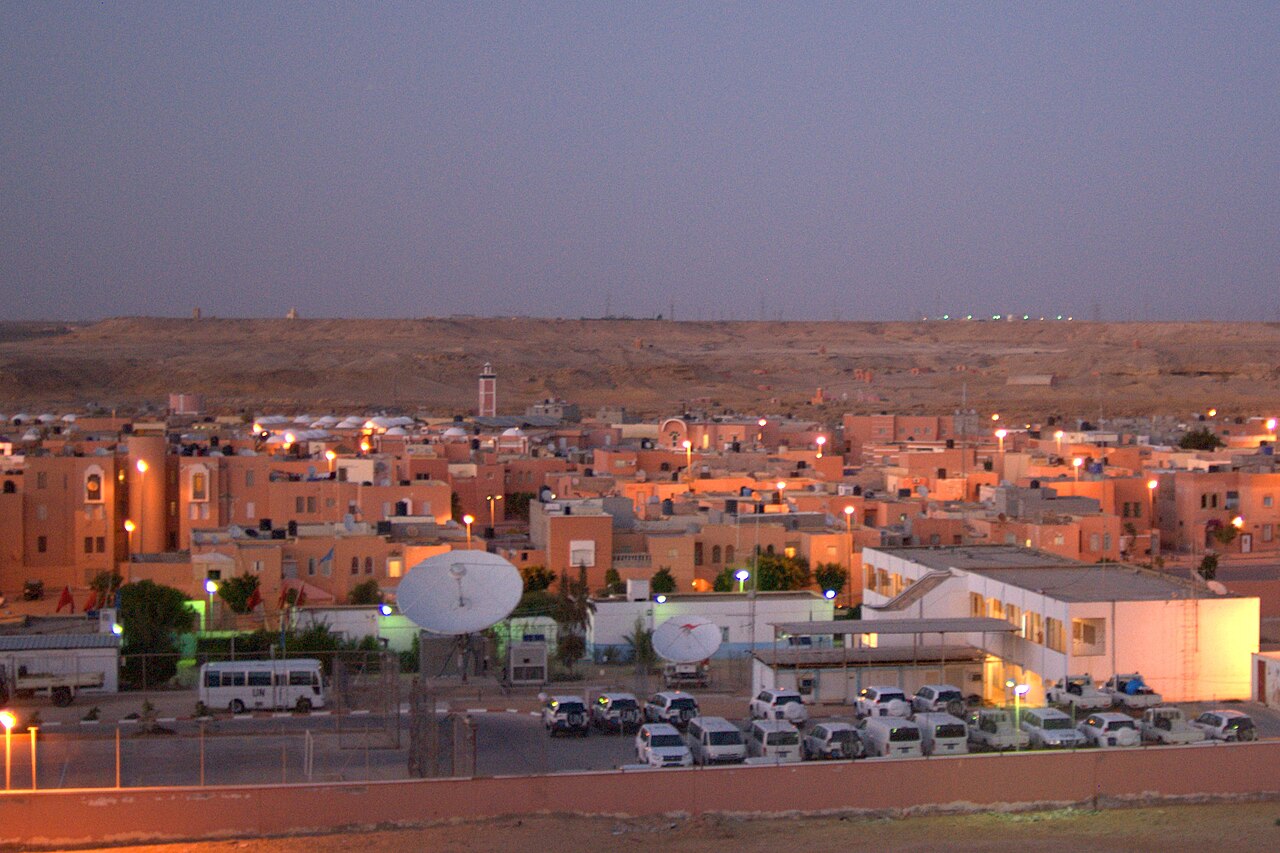
Featured image: MINURSO HQ, El Aaiun, WS by cingularite, CC BY-SA 2.0, via Wikimedia Commons.
Leave a Reply