
Ships flying the Chinese flag have been caught behaving strangely over some of the most important cables on the planet, according to reports from Japan and the Philippines that are raising alarm across Asia and beyond.
Japan’s Yomiuri Shimbun reported on Monday that Chinese vessels suspected of surveying undersea communications cables have been spotted along the so-called First Island Chain, the string of islands running from Japan through Taiwan to the Philippines.
Slowing, stopping, turning
A Japanese geospatial company, ingeniSpace, analysed ship-tracking data and found that, since 2024, research vessels linked to a Chinese university have repeatedly slowed down, stopped and made sharp turns east of Hokkaido and inside Japan’s exclusive economic zone off Nagoya, the Yomiuri reported. Those movements overlapped with the routes of known cables. An unnamed Japanese official told the paper the ships “may be surveying the cables”.
Prime Minister Sanae Takaichi told Japan’s upper house on 9 October that there was “a certain risk of damage” to the country’s cables, which carry about 99% of international communications. Tokyo is now moving cable security from private companies towards government control, with its 2027 budget request including support for Japanese firms to buy cable-laying ships and tighter security at cable landing stations.
In the Philippines, the coast guard said the Chinese research vessel Jia Hai Ke 7 carried out several days of unauthorised survey work in late September in waters off the Batanes Islands, the narrow corridor between the Philippines and Taiwan where key cables run. Philippine coast guard spokesman Jay Tarriela said the ship appeared to be hiding its true position with tracking signal spoofing, which he said raised serious concern over the security of the country’s undersea communications, the Philippine Star reported. Two China Coast Guard vessels escorted the ship when Philippine patrols approached, according to the Yomiuri.
Taiwan, which saw a cable cut by a cargo ship dragging its anchor in February 2025, now keeps a watchlist of around 100 suspect vessels and uses artificial intelligence to flag unusual movements near its cables.
Why Ireland should be paying attention
This is not just an Asian problem. Ireland sits on the route of many of the cables linking Europe and North America, and the threat to them has risen up the political agenda here.
The Government’s first National Maritime Security Strategy, published in February, warned that sanctions-dodging Russian “shadow fleet” ships sailing near Ireland could be used for espionage and sabotage, and admitted to “critical gaps” in surveillance, with the Naval Service’s patrol capacity described as “currently limited”, the Irish Examiner reported. Ministers have proposed giving the Defence Forces new powers to board and inspect such vessels.
In September, Ireland and the UK held their first joint exercise on how to respond to an attack on undersea cables in the Irish Sea, a desktop simulation codenamed Eastern Pearl, The Irish Times reported. Communications Minister Patrick O’Donovan called it a “key milestone”.
What the Asian cases show is that the threat is not only about cutting cables, but quietly mapping them first. A UK think tank, the China Strategic Risks Institute, warned in a September report for a US congressional advisory panel that cables could be targeted with robots and underwater drones, the Yomiuri said.
What happens next
Japan’s expert panel on cable security will feed into its budget for next year, and Manila says it will challenge any ship carrying out unauthorised surveys in its waters. International law under the UN Convention on the Law of the Sea forbids deliberately damaging undersea cables, but enforcement depends on co-operation between countries that is still patchy. In Ireland, the test will be whether boarding powers and extra surveillance arrive before a real incident, not after.
Sources
- Asia News Network / The Yomiuri Shimbun: Chinese ships suspected of surveying undersea cables near Japan, Philippines (2 November 2026)
- Philippine Star: PCG challenges China ships off Mindoro, Batanes (29 September 2026)
- Irish Examiner: Defence Forces to gain powers to board Russian ‘shadow vessels’ in Irish waters (25 February 2026)
- The Irish Times: Irish-British governments conduct first joint exercise to plan for subsea cable attack (30 September 2026)
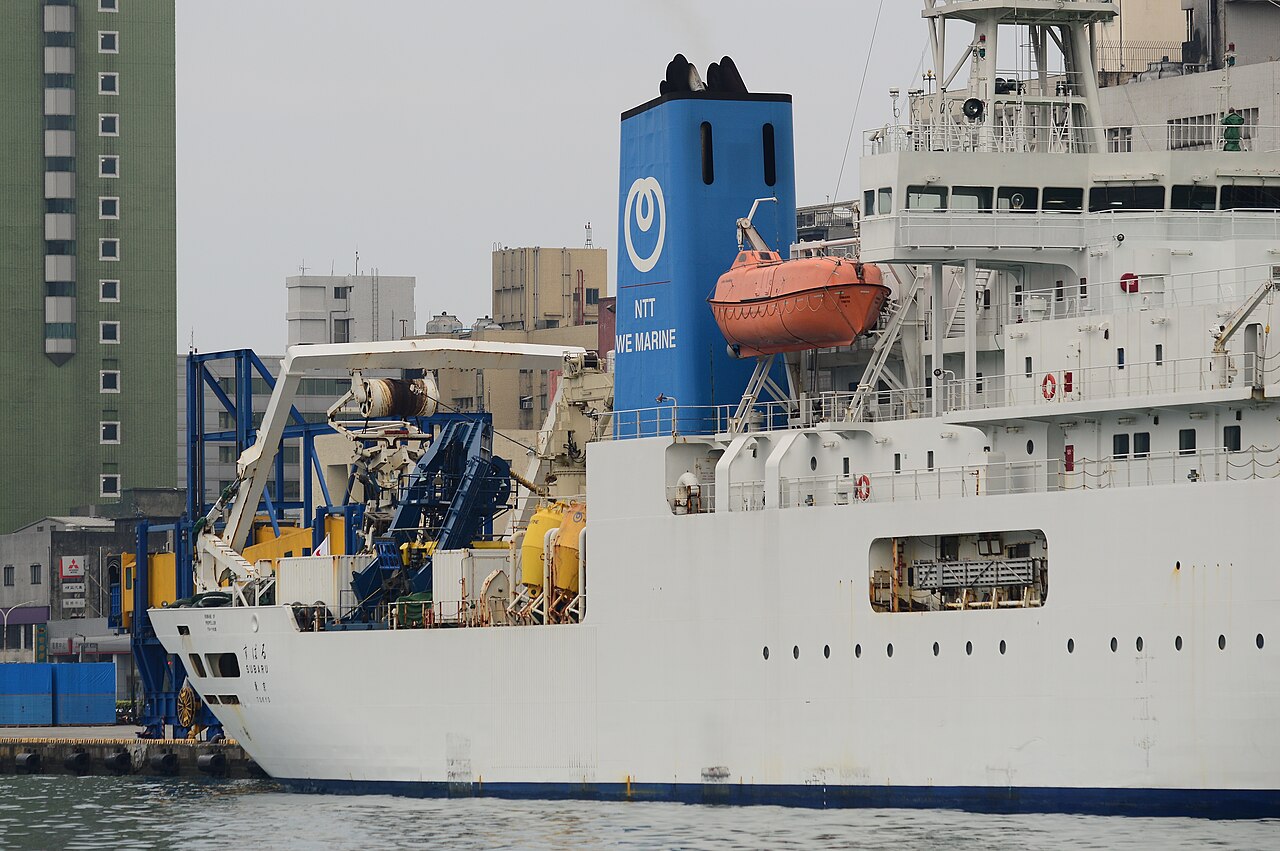
Featured image: 20140311 Cable-Layer SUBARU at Port of Keelung by Taiwankengo, CC BY-SA 4.0, via Wikimedia Commons.
Leave a Reply