Soldiers and police officers in Cambodia helped guard the notorious scam compounds where trafficked workers were beaten, given electric shocks and locked in darkened punishment rooms, according to a major new investigation by Amnesty International. The human rights group says politically connected security firms were central to a system of forced labour that targeted victims around the world, including in Europe, through online fraud.
What Amnesty found
The report, titled Official Business, was launched in Bangkok on 29 October. It is based on interviews with 151 survivors between January 2023 and September 2026, records relating to more than 400 other victims, and research into 86 compounds, 82 of which Amnesty’s researchers visited. Security guards were present at every single one.
Survivors told Amnesty that guards controlled the exits, stopped people escaping and beat those who tried. Most said the guards carried, or had easy access to, electric shock batons, and several reported seeing firearms. Some said guards stood watch while managers raped women held inside.
Amnesty identified five private security companies it says were linked to the compounds: Leap Somnang, Security Response, ZD Security (formerly BIC Security), Dara Security and Best Security. Between them, the group says, they were connected to at least 23 compounds. Leap Somnang had by far the largest footprint, linked to at least 15 compounds across eight provinces.
Uniforms on the inside
The most explosive finding concerns the state itself. Amnesty says more than 20 members of the military and police worked as guards at the compounds, or trained and supervised guards. By analysing videos from more than 200 TikTok accounts belonging to guards, researchers geolocated footage to 23 compounds, and spotted apparent serving soldiers training or leading guards at three of them.
The report names several officials. It says Ban Sophat publicly served as Leap Somnang’s chairman while also a colonel in the Royal Cambodian Armed Forces; that the phone number of a deputy police chief, Lay Channy, appeared on a Best Security advertisement; and that a brigadier general, Tek Bunthoeun, had a direct and potentially controlling interest in a property development housing one compound.
READ MORE
- Bukele unleashes 2,000 troops on Haiti’s gangs in desperate hunt for four kidnapped Salvadorans
- Pakistan jails famous rights lawyer couple for 10 years under terror laws – over road barriers
- Belfast-launched ‘cruise for life’ collapses: 203 residents who paid up to $500,000 for a home at sea turfed off in Cambodia
Those named dispute the claims. Ban Sophat told Amnesty he was only an adviser to Leap Somnang’s owner and had no ownership or management role. Best Security said Lay Channy had no control over the firm, and Security Response denied all the allegations. Amnesty says the abuses it documented may amount to crimes against humanity.
Amnesty’s secretary general, Agnès Callamard, said the system of mass exploitation could not have functioned without the security firms, adding that “the infrastructure of impunity has not been dismantled.”
Crackdown or cover-up?
Cambodia’s government, led by Prime Minister Hun Manet, launched a crackdown on the compounds in July 2025, leading to thousands of arrests and hundreds of deportations, Asia Financial reported. Amnesty says large-scale operations now appear dormant, and on 15 October the authorities said 77 police officers had been disciplined in connection with the compounds.
But Amnesty describes the response as woefully inadequate. It says it is not aware of any investigation into the five companies, their owners or managers, and warns that focusing only on raids and deportations risks leaving those who built and protected the system untouched. No direct response from the Cambodian government to the report had been published at the time of writing.
Why it matters beyond Cambodia
Scam compounds across South-East Asia trap workers, often lured with fake job offers, and force them to run online fraud, from romance scams to bogus cryptocurrency investments, aimed at victims worldwide. Asia Financial, citing earlier estimates, said such operations generated about $64 billion in 2023. The US and UK have previously sanctioned Prince Group founder Chen Zhi, who was arrested in January and sent to China, and more than 50 scam sites are still believed to be operating in neighbouring Myanmar.
For readers in Ireland, the message is familiar: Gardaí and banks have repeatedly warned about investment and romance scams, and many of these schemes are run from industrial-scale compounds like those described in the report.
What happens next
Amnesty is calling on Cambodia to open prompt, independent investigations into the companies and into serving soldiers and police officers, to suspend the firms’ licences while allegations are examined, and to provide remedies and reparations for victims. Whether Phnom Penh responds, and whether foreign governments use sanctions against the firms or individuals named, will be the key tests in the weeks ahead.
Sources
- Amnesty International: Cambodia: Politically connected security companies enabled slavery and rape in scamming compounds (29 October 2026)
- Irish Legal News: Amnesty links Cambodian security firms to scam compounds (29 October 2026)
- Asia Financial: Call for Probe into Security Firms Tied to Cambodian Scam Centres (30 October 2026)
- Foreign Exchanges: World roundup, October 29 2026 (29 October 2026)
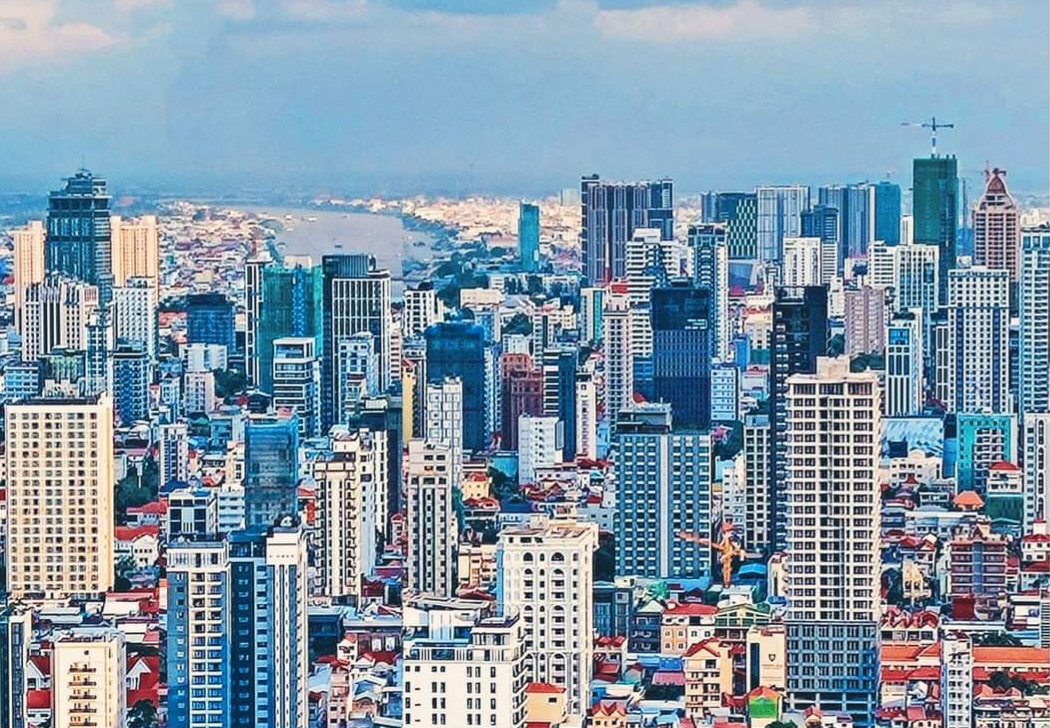
Featured image: Phnom Penh Skyline January 2022 by PPS0011, CC0, via Wikimedia Commons.