
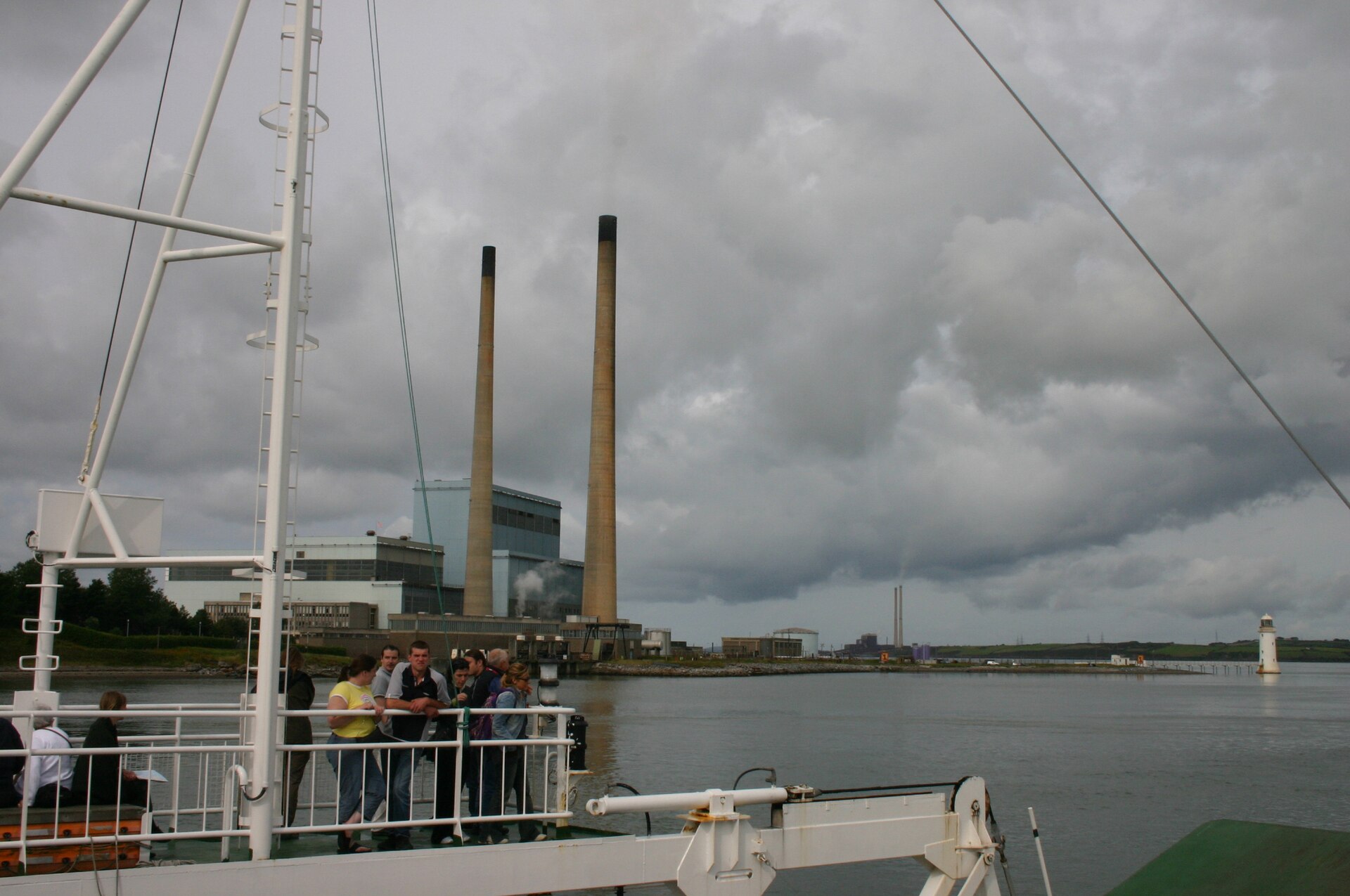
In short: EirGrid says the risk of winter supply shortfalls is lower this year than in recent winters. An EirGrid “System Alert” (the old amber alert) has no immediate effect on homes, and a “System Emergency” (red) is rare. If your power goes, check PowerCheck, keep away from fallen wires and ring ESB Networks on 1800 372 999.
Published 11 November 2026. Last updated: 11 November 2026.
Talk of winter blackouts has been everywhere this month. So how worried should Irish households actually be, and what should you do if the lights go out?
Following our reports on Ireland’s energy security and what a Christmas power cut would mean, here is what the grid operator is actually saying, what its alerts mean, and the practical steps ESB Networks recommends.
Will there be blackouts in Ireland this winter?
EirGrid’s Winter Outlook 2026/27, published on 19 October, is more upbeat than in recent years. It covers 2 November 2026 to 4 April 2027 and says the risk of not having enough generation to meet demand is “notably lower than in recent years”.
- Loss of Load Expectation: 0.8 hours for the five-month winter, inside the 3-hour annual standard. It was 1.1 hours last winter, 3.6 hours the winter before, and 21 hours before that. EirGrid stresses this is a measure of risk, not a prediction that anyone will lose power.
- New capacity: 275 MW of new gas-fired peaker plants, 63 MW of new batteries and an extra 809 MW of wind and solar.
- Back-up: 750 MW of retained units at Moneypoint and 649 MW of temporary emergency generation are available to EirGrid if needed.
- Demand: EirGrid’s median forecast peak is 6,101 MW. Every 1°C drop in temperature adds about 55 MW to peak demand.
EirGrid still says the system may go into an Alert (amber) state at times, most likely when wind is low and imports through the interconnectors are limited. It puts the chance of an Emergency (red) state, caused by a lack of generation, as low.
EirGrid alerts explained: System Alert vs System Emergency
EirGrid renamed its warnings. Here is what each one means, according to its grid alerts guide:
- System Alert (formerly amber alert): the buffer between supply and demand is tighter than EirGrid would like. There is no immediate impact on homes. It is a signal to generators to be available and avoid any risk of tripping. Most pass off without disruption.
- System Emergency (formerly red alert): much less frequent. It means there is a high risk that not all demand can be met. Actions can include controlled outages or temporarily reducing supply to some users.
Controlled outage or blackout: what’s the difference?
A controlled outage is a deliberate, short and rotating cut to some areas, used as a last resort to protect the whole system. Large non-domestic users are curtailed first, and critical infrastructure is protected under plans approved by the regulator. A blackout is a widespread, uncontrolled loss of power. Controlled outages exist to prevent blackouts.
Where to see EirGrid warnings
- EirGrid’s website and its X (Twitter) account, which EirGrid says has the most up-to-date information. You don’t need an account to view it.
- The Single Electricity Market Operator website, sem-o.com.
- For local faults and controlled outages, ESB Networks’ PowerCheck at powercheck.ie.
Storms, not shortages, are the bigger risk
For most homes, a winter power cut is far more likely to come from storm damage to lines than from a grid alert. Storm Éowyn in January 2025 cut power to 768,000 homes and businesses, some for more than a week, as Irish Wind & Solar’s guide to EirGrid alerts notes.
As of Wednesday evening, Met Éireann had no weather warnings in force on land, only a small craft warning at sea. Check Met Éireann before any big storm, as its warnings are the best early sign of outages.
What to do in a power cut: ESB Networks advice
ESB Networks’ winter-ready advice comes down to a few simple steps.
Before the power goes
- Save ESB Networks’ emergency number, 1800 372 999, in your phone.
- Find your Eircode and your 11-digit MPRN (top right of your electricity bill) so you can report or track an outage.
- Look at the PowerCheck map now so you know how it works.
- Test smoke alarms and keep fresh batteries, torches and blankets to hand.
- If anyone at home relies on powered medical equipment, register with your supplier’s Vulnerable Customer Register and have a back-up plan.
When the power goes
- Never approach fallen wires or damaged poles. Treat them as live, keep away and ring 1800 372 999.
- Turn off cookers, ovens, irons and other appliances so they don’t come back on unattended.
- Leave one light switched on so you can see when power returns.
- Take extra care with candles, oil lamps and other naked flames.
- Make sure there is ventilation if you use a gas heater.
- Only use a standby generator if it is installed and working safely.
- On PowerCheck, tap the fault in your area and choose Keep Me Updated for restoration updates by text or email.
- Check on elderly or vulnerable neighbours, family and friends.
Can you be cut off for not paying this winter?
Under the Commission for Regulation of Utilities’ winter rules, as Extra.ie reported, registered vulnerable customers cannot be disconnected from 1 November to 31 March. All other domestic customers are protected from 7 December to 15 January. If you are struggling to pay, contact your supplier early to agree a payment plan.
Backup power for the essentials
For a fridge, router, lights and phones, a portable power station is the simplest option and needs no installation. A solar battery only works in a power cut if it has backup switching fitted. Irish Wind & Solar, an official BLUETTI partner, has a guide to BLUETTI portable power stations in Ireland.
Disclosure: Connemara Journal is connected to Irish Wind & Solar.
Key facts
- Winter Outlook: EirGrid says supply risk is notably lower than in recent years (LOLE 0.8 hours, down from 1.1)
- System Alert (amber): no immediate impact on homes
- System Emergency (red): rare; controlled outages possible
- Check outages: powercheck.ie
- Fallen wires: stay away and ring 1800 372 999
- Disconnection ban: vulnerable customers 1 Nov–31 Mar; all homes 7 Dec–15 Jan
- Weather: no Met Éireann land warnings as of 11 November
Frequently asked questions
What is an EirGrid amber alert?
It is now called a System Alert. It means the buffer between electricity supply and demand is tighter than EirGrid would like. EirGrid says there is no immediate impact on homes, and most alerts pass without disruption.
What is an EirGrid red alert?
It is now called a System Emergency. It means there is a high risk that not all demand can be met, and controlled outages may be used. It is much rarer than a System Alert.
Will there be blackouts in Ireland this winter?
EirGrid’s Winter Outlook says the risk of not having enough generation is notably lower than in recent years. System Alerts are still possible on cold, calm days with low imports, but a System Emergency is considered low probability.
How do I check if there is a power cut in my area?
Use ESB Networks’ PowerCheck map at powercheck.ie. You can tap the fault in your area and choose Keep Me Updated to get restoration updates.
Who do I call about a fallen power line?
Stay well away and ring ESB Networks on 1800 372 999, 24 hours a day.
Can my electricity be disconnected for non-payment this winter?
Under the CRU winter rules, registered vulnerable customers cannot be disconnected from 1 November to 31 March, and other domestic customers cannot be cut off from 7 December to 15 January.
Sources
- EirGrid: Winter Outlook 2026/27 announcement (19 Oct 2026)
- EirGrid: Grid Alerts explained
- ESB Networks: Get Winter Ready / preparing for a power cut
- Met Éireann: Warnings, 11 November 2026
- Extra.ie: Winter energy disconnections ban (10 Nov 2026)
- Irish Wind & Solar: Blackout warnings and EirGrid alerts (11 Nov 2026)
Leave a Reply