In short: The 2026 Christmas Bonus is paid in the week starting Monday 7 December, on the same day as your normal payment. It is worth 100% of your weekly rate (minimum €20) and goes automatically to almost 1.4 million people on long-term social welfare payments. Fuel Allowance does not qualify.
Published 2 November 2026. Last updated: 11 November 2026.
Around 1.4 million people on long-term social welfare payments are in line for a double payment next month.
The Department of Social Protection confirmed in its Budget 2027 announcement that a 100% Christmas Bonus will be paid in December 2026, with €380 million set aside to fund it. Citizens Information says it lands in the week starting 7 December. Here is exactly when it arrives, how much you get and who misses out.
Christmas Bonus 2026 payment date
The bonus is paid in the week starting Monday 7 December 2026. It normally arrives on the same day as your usual social welfare payment, and by the same method. So if your pension lands on a Thursday, expect the bonus that Thursday too.
You do not need to apply. If you are on a qualifying payment, it is paid automatically.
How much is the Christmas Bonus 2026?
The bonus is 100% of your normal weekly payment, with a minimum of €20.
- State Pension example: the maximum personal rate of State Pension (Contributory) is €299.30 a week, according to Citizens Information. Someone on that rate gets a €299.30 bonus.
- Two payments, two bonuses: if you get two qualifying payments, such as One-Parent Family Payment plus Domiciliary Care Allowance, you get a bonus for each.
- Domiciliary Care Allowance: it is paid monthly, but the bonus equals the weekly rate and is worked out separately.
- Qualified adults: if an Increase for a Qualified Adult is paid directly to your spouse, civil partner or cohabitant, the bonus on that part goes to them.
Who qualifies for the Christmas Bonus?
The bonus goes to people on long-term payments. According to Citizens Information, the main qualifying payments include:
- State Pension (Contributory and Non-Contributory)
- Carer’s Allowance and Carer’s Benefit, including half-rate Carer’s Allowance
- Disability Allowance, Invalidity Pension, Blind Pension and Domiciliary Care Allowance
- One-Parent Family Payment
- Jobseeker’s Allowance (after 12 months) and Jobseeker’s Transitional Payment
- Bereaved Partner’s Pension, Guardian’s Payment and Death Benefit
- Farm Assist, Community Employment, Tús and the Rural Social Scheme
- Beneficiary of Temporary Protection Weekly Payment
The full list is on the Citizens Information Christmas Bonus page.
Who doesn’t get the Christmas Bonus: the catches
- Short-term payments: people on short-term jobseeker’s payments or Maternity Benefit do not qualify.
- The 12-month rule: Jobseeker’s Allowance, Back to Education Allowance and Back to Work Enterprise Allowance only qualify after 12 months (312 days). Time on a jobseeker’s payment beforehand may count.
- Supplementary Welfare Allowance needs 12 months (364 days). Illness Benefit and the VTOS and Youthreach training allowances also need 12 months or more.
- Fuel Allowance is not doubled. A pensioner gets a double pension, but not a double Fuel Allowance.
One reassurance for families: for people in nursing homes under the Fair Deal scheme, the bonus is not counted as income.

What changes in January 2027
The bonus is the last welfare boost of 2026. From January 2027, under Budget 2027:
- Core weekly payments rise by €10, taking the maximum State Pension (Contributory) to €309.30.
- Fuel Allowance rises by €5 to €43 a week, and the means test for single pensioners aged 66 and over is eased.
- Living Alone Allowance rises by €3 to €25 a week.
- Child Support Payments rise by €6 a week, to €64 for under-12s and €84 for over-12s.
If you think you should get the bonus but nothing arrives in the week of 7 December, contact the Department of Social Protection or your local Intreo office. The Citizens Information Phone Service is on 0818 07 4000.
Key facts
- Payment date: week starting Monday 7 December 2026, with your normal payment
- Amount: 100% of your weekly rate, minimum €20
- Who gets it: almost 1.4 million people on long-term social welfare payments
- Cost: €380 million (Department of Social Protection)
- Apply? No, it is automatic
- Not included: Fuel Allowance, short-term jobseeker’s payments, Maternity Benefit
Frequently asked questions
When is the Christmas Bonus 2026 paid?
In the week starting Monday 7 December 2026. It is paid on the same day as your normal social welfare payment.
How much is the Christmas Bonus 2026?
It is 100% of your normal weekly payment, with a minimum of €20. Someone on the maximum personal rate of State Pension (Contributory), €299.30 a week, gets a €299.30 bonus.
Do I need to apply for the Christmas Bonus?
No. If you are on a qualifying long-term payment, it is paid automatically.
Does Fuel Allowance qualify for the Christmas Bonus?
No. Fuel Allowance is not a qualifying payment, so it is not doubled.
Do jobseekers get the Christmas Bonus?
Only if they have been on Jobseeker’s Allowance for at least 12 months (312 days). Jobseeker’s Transitional Payment also qualifies. Short-term jobseeker’s payments do not.
How many people get the Christmas Bonus in 2026?
The Department of Social Protection says almost 1.4 million long-term social welfare recipients will get it, at a cost of €380 million.
Sources
- Department of Social Protection: Budget 2027 Social Protection package (6 Oct 2026)
- Citizens Information: Christmas Bonus (updated 8 Oct 2026)
- Citizens Information: State Pension (Contributory) rates
- Irish Examiner: Budget 2027 changes to pensions and welfare payments
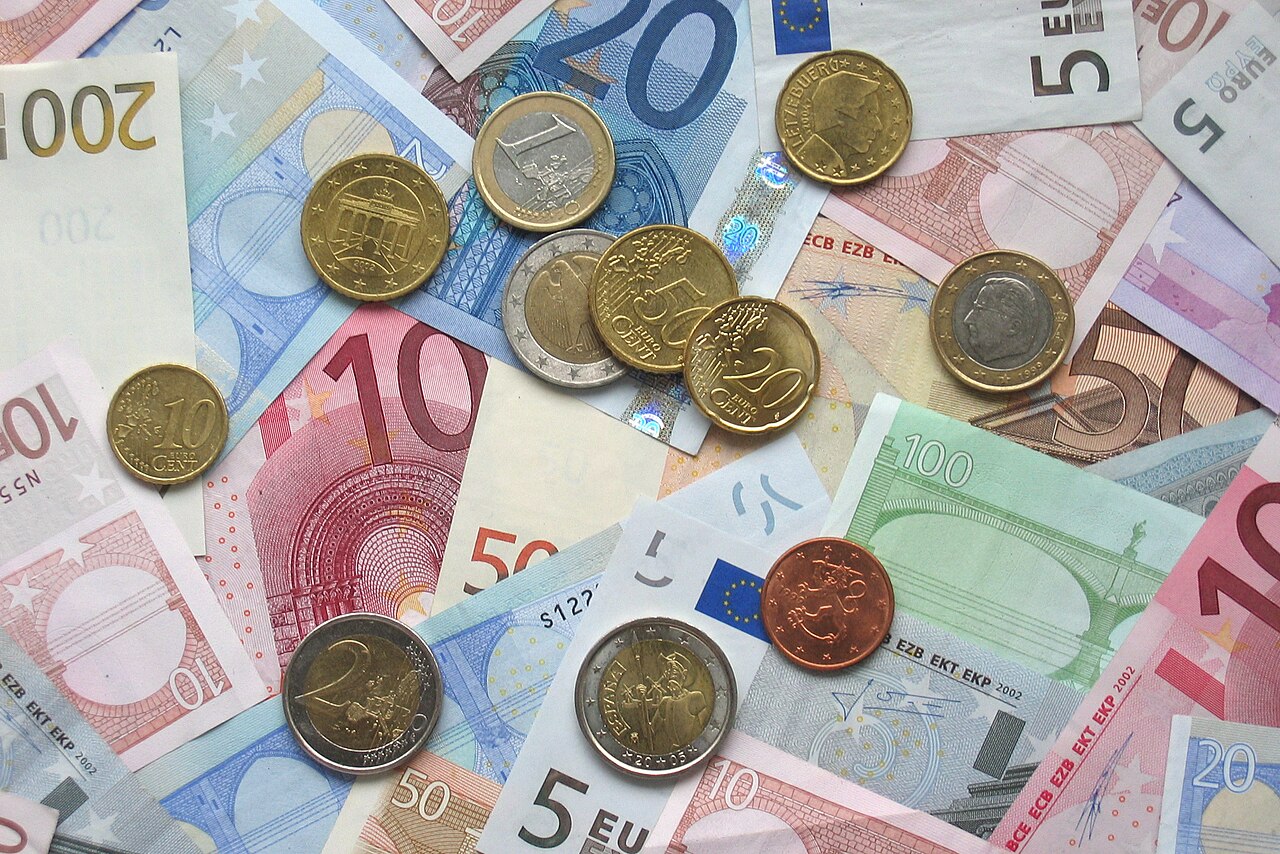
Featured image: Euro coins and banknotes (cropped) by Avij, Public domain, via Wikimedia Commons.