
A Dublin charity that turned donated clothes into jobs for people recovering from addiction has ground to a halt, with more than 100 staff temporarily laid off, its bank accounts frozen and its affairs now in the hands of court-appointed liquidators as gardaí investigate suspected money laundering.
Liberty Recycling, which runs a network of more than 400 clothes banks around the country, nine shops and a depot in Bluebell, Dublin 12, is at the centre of a criminal investigation by the money laundering unit of the Garda National Economic Crime Bureau (GNECB). The Irish Times reported on Friday that tonnes of textiles are now stranded at the depot and that many of the charity’s clothes banks are full and cannot be emptied.
No one has been arrested or charged, and the Charities Regulator has stressed that none of the charity’s trustees is under investigation. All of the matters raised remain unproven.
Luxury cars, Rolex watches and designer bags seized
Gardaí carried out searches in Dublin and other parts of the east and south of the country last week. According to reports in The Irish Times and TheJournal, officers seized two BMW X5 cars, said to be worth around €250,000 combined, along with Rolex watches and designer handbags, including Louis Vuitton items, valued at about €40,000. Computers and documents were also taken away for examination.
The investigation is understood to be focused on the movement of large sums of money through the charity’s bank accounts and those of related entities. Gardaí are examining international transfers into the accounts to establish whether they reflected genuine trade or something unrelated to the charity’s work, and are also reviewing contacts with unidentified parties in Africa.
Liberty sells most of the clothing it collects to traders in Africa and Asia, which funds its core work. The Irish Times noted that this trade is itself legitimate, but reported concerns that a criminal element may have infiltrated the organisation.
What the Charities Regulator told the High Court
The Charities Regulator went to the High Court earlier this week seeking to have the charity wound up under the Charities Act 2009. The court appointed Shane McCarthy and Cormac O’Connor of KPMG as joint provisional liquidators, placing the charity’s money and operations under independent control.
In its application, the regulator said it had found “little or no effective management or oversight” of the charity’s activities. It raised concerns about what it described as suspicious transactions, including substantial international transfers that were out of line with the charity’s level of activity, and about recently incorporated companies that are not registered charities and to which assets may have been moved. It also suggested that some conduct may have been for the benefit of an organisation whose membership is unlawful. The regulator was careful to frame these as concerns, not findings.
The regulator’s papers also referred to a Porsche allegedly bought with charity money last year, and to a Garda search of a staff member’s home last year in which €34,705 believed to belong to the charity was found. None of these allegations has been tested in court.
The charity is chaired by Sinn Féin TD Aengus Ó Snodaigh. A party spokesperson said this week that he supports the Garda investigation, has kept in regular contact with the regulator and is available to assist gardaí. He met the liquidators on Tuesday and planned to call an emergency board meeting of an associated company, Liberty Global Exports Company Limited, to consider all options, including winding it up. The regulator, for its part, criticised the trustees for a lack of urgency in dealing with its concerns.
From eight trainees to a €4m operation
Liberty Recycling began in the 1990s as a community employment (CE) scheme with just eight trainees. It grew into a business with revenues above €4 million in some years; its most recent filed accounts, for 2024, show income of about €3.6 million. The Department of Social Protection has provided close to €500,000 a year in some years to fund the CE scheme, which employs people in recovery from drug addiction to sort donated textiles.
The charity was once associated with the Merchants Quay project, but the two organisations have not been linked for many years.
For the workers, many of whom rely on the scheme as a route back into stable work, the shutdown has come as a severe blow. For the public, the immediate effect is visible on streets and in car parks around the country, where Liberty-branded clothes banks are overflowing.
What happens next
The provisional liquidators now control the charity’s bank accounts and income. A full hearing on the regulator’s petition to wind up the charity is due in November. The Irish Times reported that Liberty’s assets and functions could ultimately pass to a similar organisation.
Gardaí are continuing to analyse the material seized last week, with a focus on tracing unexplained transfers and how the seized cars and luxury goods were paid for. The Irish Times reported that arrests could follow in a later phase, but none has taken place. The Garda inquiry is expected to continue after the charity’s future is settled.
Anyone who has donated to Liberty should note that the liquidators, not the charity’s former management, are now responsible for its affairs.
Sources
- The Irish Times: More than 100 staff laid off at Liberty Recycling as gardaí examine links to Africa (30 October 2026)
- The Irish Times: Liberty Recycling: Frozen bank accounts, suspicious transactions and seized luxury goods (29 October 2026)
- TheJournal.ie: Liquidator appointed to charity at centre of garda probe after regulator request (27 October 2026)
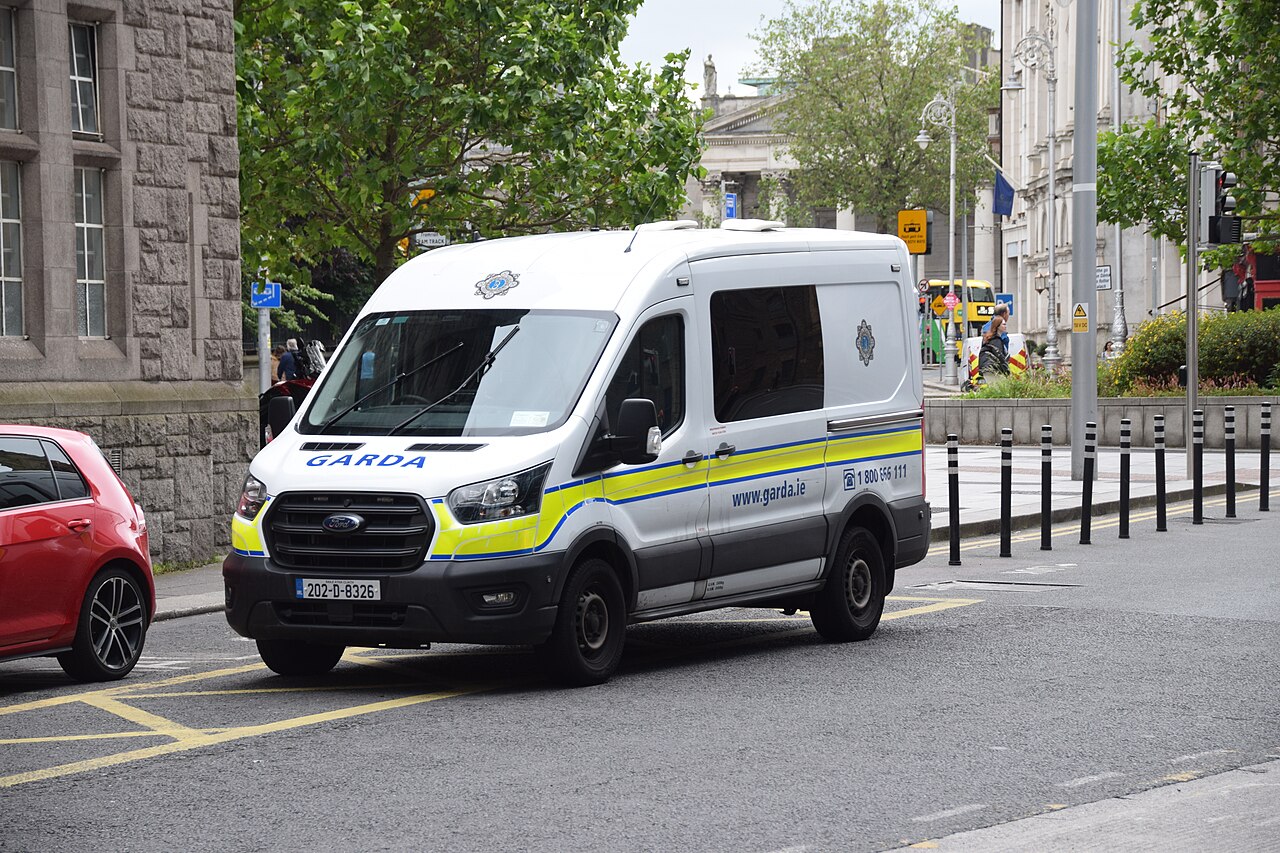
Featured image: Garda police car Ireland 03.jpg by Dickelbers, CC BY 4.0, via Wikimedia Commons.
Leave a Reply