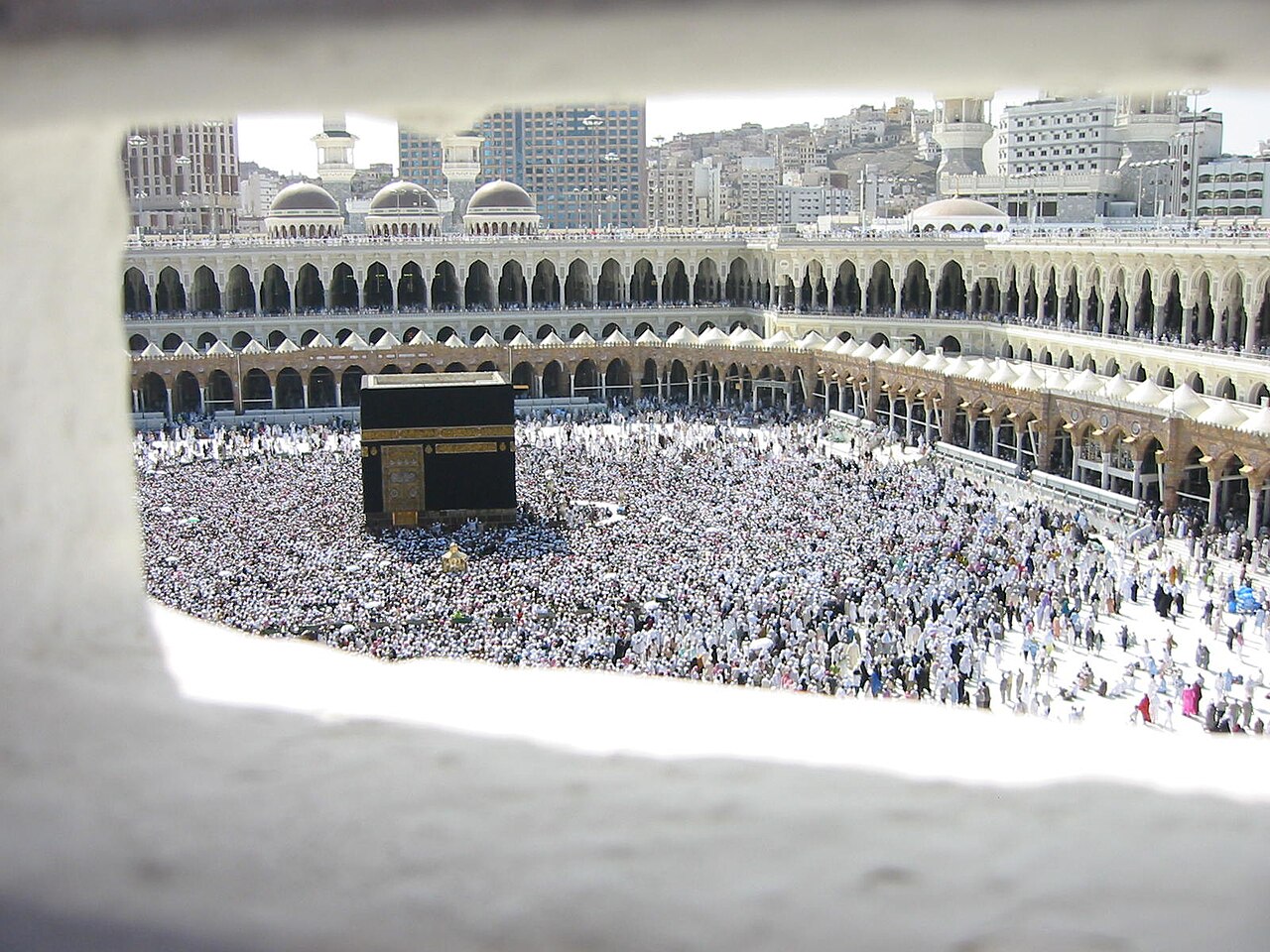
Saudi Arabia says it shot down a drone launched by Yemen’s Houthi rebels over the Mecca region on Friday, an alarming claim that puts Islam’s holiest city at the centre of a fast-escalating cross-border war. The Houthis flatly deny it.
The incident caps a week in which the Saudi-led military coalition fighting in Yemen has reported a string of missiles fired at the kingdom, and in which the United States has told non-essential diplomats and their families to leave the country.
What Saudi Arabia says happened
Maj Gen Turki al-Maliki, spokesman for the Saudi-led coalition, announced on X on Friday morning that a drone sent by the Houthis had been intercepted and destroyed in the Makkah region, according to AFP and Al Jazeera. No casualties or damage were reported.
Citing Xinhua, the Indian outlet Daijiworld reported that the coalition placed the interception south of Mecca, before the drone reached the city’s restricted airspace, and that it was carried out by the Royal Saudi Air Defence Forces. Mr al-Maliki described the security of the two holy mosques and of pilgrims as a red line and said necessary measures would be taken.
It was not the only alert of the day. Al Jazeera reported that the coalition also said it had downed a Houthi cruise missile aimed at western Saudi Arabia on Friday. On Thursday it said it destroyed a ballistic missile heading for the kingdom’s eastern region and two more ballistic missiles fired at the capital, Riyadh.
Houthis: ‘false’
The Houthis rejected the Mecca allegation within hours. Military spokesman Yahya Sarea said on X that the claim was false and that the group had carried out no operations towards Saudi territory on Friday, Xinhua reported via Daijiworld.
A Houthi spokesperson quoted by Al Jazeera went further, saying the group’s cross-border attacks focus on Saudi energy and military sites, and calling the accusations fabrications. “Our operations target [Saudi] oil facilities and military bases,” he said.
READ MORE
- ‘GLIMMER OF HOPE’: Qatar races to seal US-Iran peace deal as Tehran updates target list of American bases
- STRIKE IN THE STRAIT: US bombs Iranian island as Trump insists a peace deal is close
- Iran’s 48-hour Hormuz offer: Tehran says it could reopen the oil lifeline in two days, but Trump must pay a huge price first
Connemara Journal cannot independently verify either side’s account. The coalition has accused the Houthis of aiming at Mecca and Medina before, and in September the Houthi leader Abdul-Malik al-Houthi dismissed similar allegations as a lie being used to justify military pressure on Yemen, Daijiworld reported.
A war that has spilled over the border
Yemen’s conflict dates back to late 2014, when the Iran-backed Houthis seized the capital, Sanaa. A Saudi-led coalition intervened in 2015 to support the internationally recognised government. After a long period of relative calm, cross-border fighting has flared sharply in recent weeks, with Saudi strikes on Houthi-held areas and Houthi missiles and drones fired into the kingdom.
The human cost is already significant. AFP, in a report carried by Arab News, said a missile strike on Riyadh’s King Khalid International Airport on 10 October killed 13 travellers and injured more than 300. The Houthis have also claimed attacks on Saudi airports, refineries and energy infrastructure.
The escalation comes against the backdrop of the wider US-Israeli war with Iran, which began on 28 February. Iran’s allies across the region are watching closely as Qatari mediators shuttle to Tehran in an effort to revive talks and as Washington weighs further strikes after next Tuesday’s US midterm elections.
Americans told to get out
The US State Department ordered non-emergency government employees and their families to leave Saudi Arabia from 23 October, according to the US Embassy in Riyadh. In a security alert republished on Friday and reported by Anadolu via Middle East Monitor, the US mission warned that hostilities could escalate rapidly, citing Houthi attacks on civilian airports and critical infrastructure.
US government staff now need special authorisation to use Saudi airports. King Khalid International Airport in Riyadh has only partially reopened, while airports in Jeddah and Dammam are operating with some delays and cancellations, according to the embassy’s advice as reported by ANI and Anadolu. Americans have also been warned not to photograph missile interceptions or attack sites.
For Irish readers with family working in the Gulf, or with travel planned to the region, the safest course is to check the Department of Foreign Affairs’ travel advice for Saudi Arabia and your airline’s updates before setting off.
What happens next
Any credible attack on Mecca would be an enormous escalation, with huge religious and political sensitivity across the Muslim world, which is why both sides are fighting so hard over the narrative. Expect Saudi Arabia to press its case publicly and possibly to step up strikes in Yemen. The Houthis, for their part, insist their targets are oil and military sites, which suggests further attacks on Saudi energy infrastructure are likely. Oil markets, already rattled by attacks on tankers in the Strait of Hormuz, will be watching every new interception closely.
Sources
- Al Jazeera: Saudi Arabia reports interception of Houthi drone targeting Mecca (30 October 2026)
- Arab News (AFP): Saudi-led coalition says intercepted Houthi drone in Makkah region (30 October 2026)
- Daijiworld (Xinhua): Yemen’s Houthis deny drone attack on Saudi Arabia’s Mecca region (30 October 2026)
- Middle East Monitor (Anadolu): US orders non-emergency personnel to leave Saudi Arabia amid Houthi attacks (30 October 2026)
- Business Standard (ANI): US orders non-emergency personnel to leave Saudi amid Houthi strikes (26 October 2026)
- Free Malaysia Today (AFP): Qatari delegation in Tehran for talks (30 October 2026)
Featured image: Masjid Al Haram. Mecca, Saudi Arabia by Ali Mansuri, CC BY-SA 2.5, via Wikimedia Commons.