
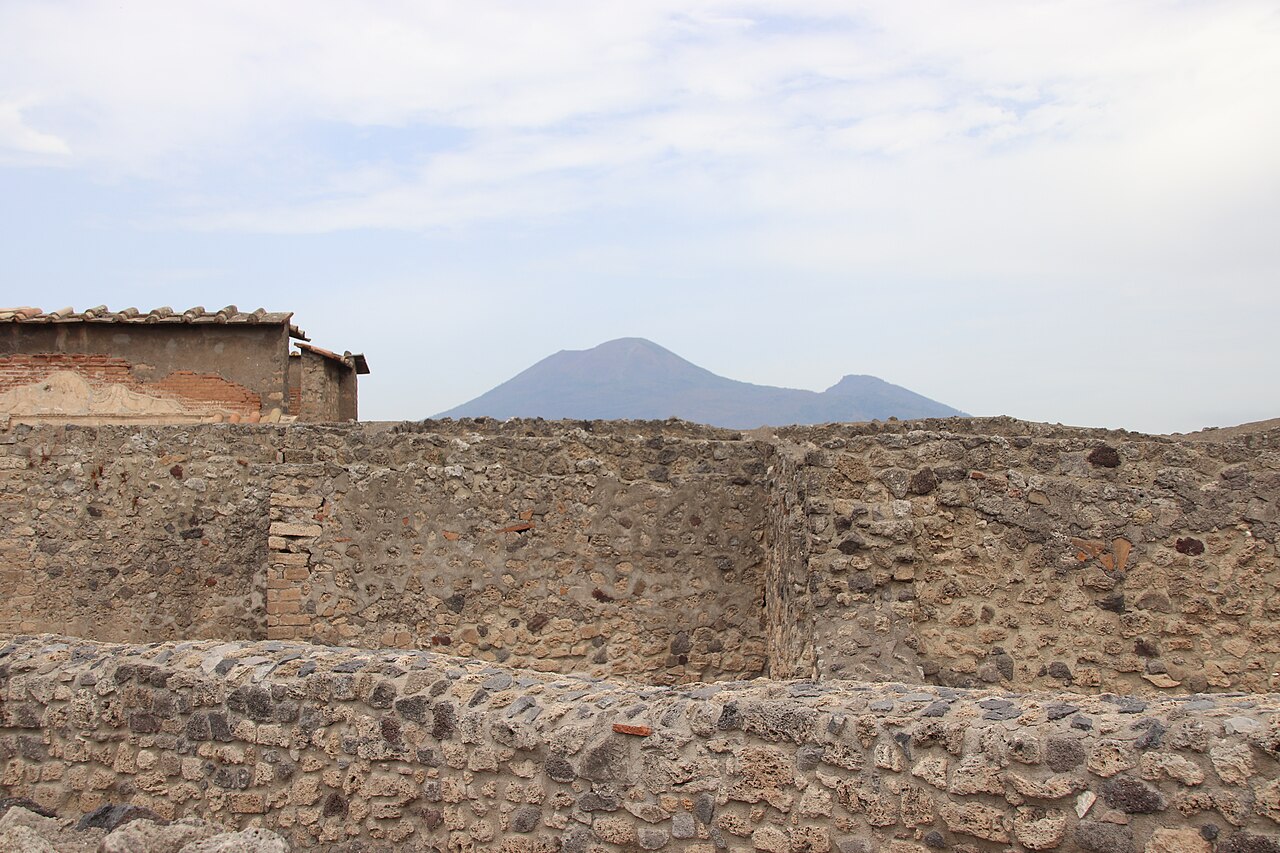
When Mount Vesuvius erupted in AD 79, someone in Pompeii left in such a hurry that they abandoned their savings in a little basket in the cupboard. Nearly two millennia later, archaeologists have opened that cupboard.
The Archaeological Park of Pompeii announced this week that excavators had recovered the contents of a wooden wardrobe from a house in the centre of the buried Roman city. The finds, reported by Euronews and CBS News on 29 October, read like a list of what an ordinary household might keep in a bedroom press today: make-up tools, a perfume bottle, a lamp, some savings and a cherished piece of jewellery.
What was in the cupboard
According to the park, the haul includes:
- Beauty kit: tweezers, a small spatula for mixing pigments, and a glass balsamarium, a tiny vessel for perfume or scented oil.
- Household goods: a perfume burner, a bronze lamp and an assortment of bronze, glass and ceramic jars and pots, including a small jug decorated with a pine-scale pattern.
- Tools of a trade: lead weights, probably used for some kind of commercial work, kept in a small wooden box that survives only as faint traces.
- A good-luck necklace: at least 24 miniature charms made of faience, bone, glass paste and rock crystal, showing gods including Bes and Mercury, as well as hands, feet, pine cones and bunches of grapes.
- Cash: 38 bronze coins stored in a small basket woven from plant material.
A childhood charm kept for life?
The necklace is the emotional heart of the find. Charms like these, known as crepundia, were given to Roman children as amulets to protect them from harm. Euronews reported that adults sometimes held on to them long after childhood, raising the possibility that this was a keepsake from the owner’s own early years.
Park director Gabriel Zuchtriegel said the discovery shows that “the most ordinary objects restore the human dimension of the past”.
The coins have a sadder story to tell. Researchers believe whoever owned them did not have time to retrieve their valuables when the eruption began. It is possible they died in the disaster, perhaps without heirs to come back for the money, although the park stressed those questions remain open.
And then there were the mice
Not every find was quite so glamorous. On a mezzanine level, excavators discovered the skeletons of two wood mice inside an amphora, according to Euronews. CBS News noted that rodent remains have turned up elsewhere in Pompeii too, so they are not unique to this house, and that they add a slightly less refined note to the picture of a comfortable home.
Comfortable it seems to have been. The room containing the wardrobe is decorated with elegant wall paintings in the so-called Fourth Style, suggesting a decent standard of living. Renovation work was under way in the house when the volcano erupted.
Whose house was it?
The building, catalogued as House IX 11, 7, has traditionally been linked to a man named Cornelius Maximus. But CBS News pointed out that this attribution rests on inscriptions that are no longer visible, and the new finds are unlikely to settle who actually lived there. The front of the house was first excavated in 1912, but the rooms behind it were only explored recently, as part of a restoration and accessibility project for the neighbouring Insula dei Casti Amanti.
What happens next
The objects will now be studied and conserved by the park’s specialists, who hope analysis of the materials and contents could reveal more about the household and its trade. Pompeii continues to produce remarkable discoveries as excavation and restoration work goes on across the site, and the park regularly puts new finds on display for the millions of visitors who travel there each year, including many from Ireland.
Sources
- Euronews: In Pompeii, a woman’s wardrobe resurfaces with beauty items and jewels (29 October 2026)
- CBS News: Ancient cosmetics, coins, mouse skeletons found in Pompeii home shed light on life before deadly eruption (29 October 2026)
Featured image: Pompeii Ruins & Mt. Vesuvius (48442337717) by Gary Todd from Xinzheng, China, Public domain, via Wikimedia Commons.
Leave a Reply