
Ireland’s prison chiefs drew up figures on cutting 40 days from the sentence of every prisoner in the State – a move they calculated would have freed 150 inmates overnight, including people convicted of sexual offences and attempted murder.
The analysis, compiled by the Irish Prison Service in July 2025 at the height of an overcrowding crisis, has been released under Freedom of Information laws following an appeal to the Information Commissioner, RTÉ and the Irish Examiner report. The records do not show whether the idea was ever formally put to Government, and there is no indication it was adopted.
Who would have walked free
According to the documents, a 40-day cut would have led to the immediate release of 150 people. Among them were 24 prisoners convicted of sexual offences, 37 of attempted or threatened murder, two of homicide offences, nine of burglary and six of weapons and explosives offences.
The Prison Service also modelled smaller reductions. A 20-day cut would have released 73 prisoners, while a 30-day cut would have freed 109, the records show.
‘Drastic measures’ warning
The modelling followed a stark warning from the head of the Prison Service. In a letter to the Department of Justice in March 2025, Director General Caron McCaffrey wrote that drastic measures were immediately needed to bring prison numbers down to safer levels, according to the released records.
At that point, the documents show, the prison system was holding 5,463 people against a bed capacity of 4,672 – roughly 117% occupancy. Cloverhill remand prison in Dublin was running at 124% of capacity, with 91 prisoners sleeping on mattresses on the floor. Single cells were being doubled up, although Ms McCaffrey said only 20 could safely be used that way. Transferring prisoners elsewhere was not an option because other prisons were also full.
She sought an urgent meeting with the Department to discuss how the overcrowding would be managed.
What the Department says
Responding to the disclosure, a Department of Justice spokesperson said Minister for Justice Jim O’Callaghan was “acutely aware” of the capacity pressures in the prison system.
The Department said it is pursuing two tracks at once: building more prison spaces and expanding the use of non-custodial sanctions such as community service. It pointed to what it described as the largest prison expansion programme in the history of the State, which it says will deliver more than 1,500 new places in the coming years.
It also cited measures to protect prison staff, including improved personal protective equipment and a higher maximum sentence for assaulting or threatening to assault a prison officer.
Why it matters
The documents shine a light on how close the system came to considering a blanket early-release measure – a step that would be politically explosive given the categories of offender involved, and that would raise obvious concerns for victims and their families. The Director General’s own letter made clear that overcrowding at the time was creating safety concerns inside the system.
The figures released relate to 2025. Neither report reviewed by the Connemara Journal gives the current 2026 prison population, so it is not clear from these records how much the pressure has eased or worsened since.
What happens next
The disclosure is likely to prompt questions in the Dáil about whether any form of sentence reduction or wider early release is still being considered, and about the pace of the promised 1,500 new prison spaces. Opposition parties and penal reform groups can be expected to press the Minister on current occupancy levels at Cloverhill and other prisons, and on how quickly alternatives to custody will be expanded.
Sources
- RTÉ: Prison service proposed sentence cuts due to overcrowding (29 October 2026)
- Irish Examiner: Prison overcrowding: Plan to cut 40 days from sentences would have freed 150 inmates (29 October 2026)
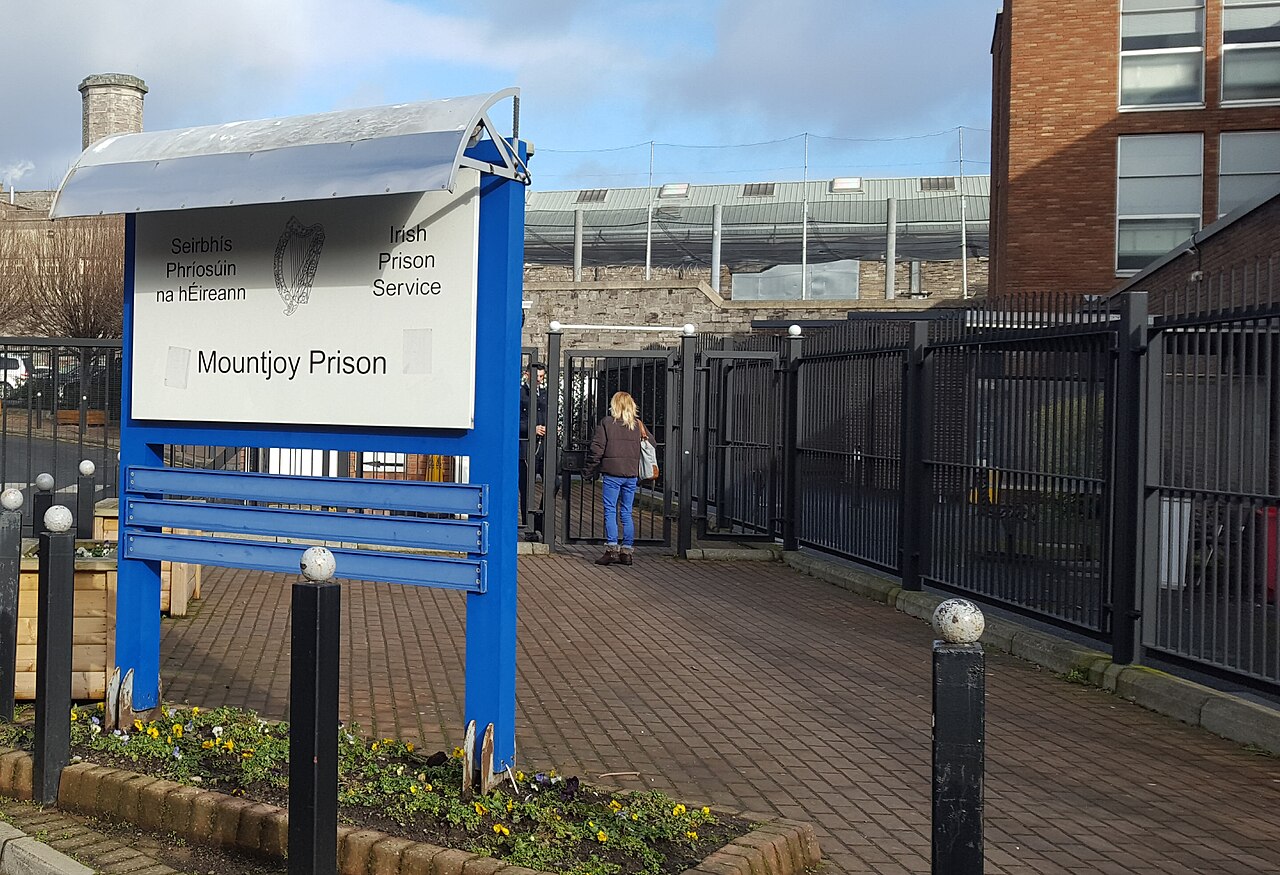
Featured image: Mountjoy Prison gate.jpg by Cograng, CC BY-SA 4.0, via Wikimedia Commons.
Leave a Reply