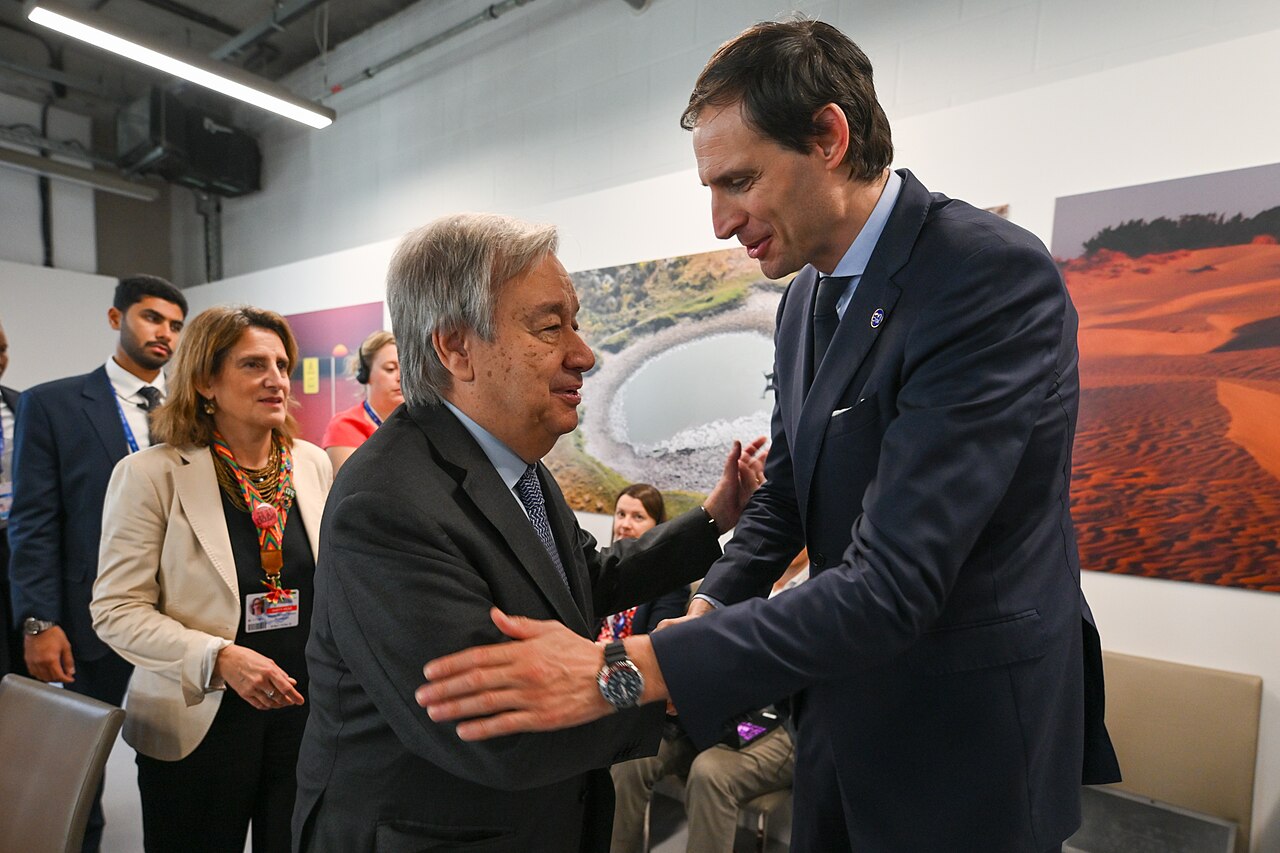
Hopes of fresh cash for poorer countries hit by climate change have been dealt a heavy blow before this year’s UN climate summit has even begun. The European Union’s climate commissioner, Wopke Hoekstra, has said the EU will not be putting new climate finance pledges on the table at COP31, which opens in Antalya, Turkey, on 9 November.
In an interview reported by Bloomberg on 29 October, the Dutch commissioner said: “Any conversation on new fresh money is dead in the water.” He added that this applied at least as far as the EU being the one expected to provide it.
Why Europe is digging in
The EU and its member states are the world’s biggest providers of climate finance. According to the European Commission, they provided €32.3 billion in public climate finance to developing countries in 2025 and mobilised a further €9.3 billion from private sources. Bloomberg reported that the bloc increased its spending by €5 billion last year.
But EU officials feel that generosity is not being matched by tougher emissions cuts elsewhere, after two years of stalled progress on reducing global greenhouse gases. Mr Hoekstra argued that holding round after round of talks on financing would not solve what he described as a much more fundamental problem.
The burden on Europe has grown since the United States, under President Donald Trump, stopped taking part in the COP process. China, Saudi Arabia and other Gulf states maintain that countries that industrialised first should pay. Mr Hoekstra described relations with Beijing on climate as a mixed bag at best, with disputes over cheap Chinese clean technology entering the EU market, China’s continued building of coal power plants, and Beijing’s objections to the EU’s carbon border levy on certain imports.
What is already promised
The row is not about whether money is owed under existing deals, but whether more will be added. At COP29 in Baku, developed countries agreed to raise public climate finance to $300 billion a year by 2035. A wider Baku to Belém Roadmap aims to mobilise at least $1.3 trillion a year for developing countries by the same date from all sources, and last year’s summit in Brazil agreed to triple finance for adaptation by 2035.
READ MORE
- Planet-heating gases smash records AGAIN – and UN warns they’ll climb even higher in 2026
- Heat linked to record 710,000 deaths in a single year as experts demand climate is declared a global health emergency
- EU and Canada seal historic ‘Alliance for the Future’ despite Trump’s ‘hostile act’ warning
Earlier this month, UN Deputy Secretary-General Amina Mohammed told leaders gathered in Tuvalu and Fiji for pre-summit talks that developed countries must lead and that money has to reach the places that need it. She also warned that the world is heading past the Paris Agreement goal of limiting warming to 1.5C, while insisting that overshooting is no reason to give up.
A summit with a difference
COP31 runs from 9 to 20 November in Antalya, under an unusual arrangement: Turkey is hosting, while Australia is acting as president of the negotiations, according to the European Commission. Almost 200 nations are expected to attend.
Turkey wants countries to sign up to raising electricity’s share of final energy consumption to 35 per cent by 2035. Delegates are also expected to discuss extending a work programme on cutting emissions, while Brazil, last year’s host, is expected to present roadmaps on moving away from fossil fuels and halting deforestation.
The scale of the challenge is stark. The UN Environment Programme says the world will almost certainly breach the 1.5C limit. Bloomberg reported that keeping that overshoot as small as possible would require emissions to fall by 18 per cent this decade, while fully delivering countries’ current climate plans would cut them by only about 6 per cent by 2035.
What it means for Ireland
As an EU member state, Ireland negotiates at COPs as part of the European bloc, so the Commission’s line will shape the position Irish ministers and officials take in Antalya. For climate-vulnerable countries, many of them small island states, the message from Brussels is likely to be a bitter one, given the floods and storms already hitting them.
What happens next
All eyes will be on whether developing countries push back hard in the opening days of the summit, and whether China or wealthy Gulf states signal any willingness to contribute. The EU will want to steer talks towards emissions cuts and the transition away from fossil fuels rather than new money. With the US absent and Europe refusing to raise its offer, observers will be watching whether Antalya can produce any meaningful agreement at all.
Sources
- The Edge Malaysia (Bloomberg): EU climate chief rules out fresh finance pledges at COP31 (29 October 2026)
- European Commission: EU at COP31 (accessed 30 October 2026)
- UN DESA: ‘Overshoot is not a reason to surrender’: UN calls for accelerated climate action ahead of COP31 summit (October 2026)
Featured image: Participation of Wopke Hoekstra at COP28 – P062550-854909 by European Commission – Ryan Lim, CC BY 4.0, via Wikimedia Commons.