Spain is facing hard questions about the safety of Europe’s largest high-speed rail network after two trains collided on the Madrid–Seville line on Wednesday morning, killing at least 69 people in the country’s worst rail disaster in more than a decade.
The crash happened near the town of Urda in Toledo province, in the central region of Castilla-La Mancha, roughly 130km south of Madrid. Both trains were travelling south from the capital towards Seville. A service run by the state operator Renfe ran into the back of a stationary train belonging to the private operator Iryo, and two of the Iryo carriages were derailed and thrown down an embankment, according to officials quoted by ABC News.
The Iryo train had 146 people on board, including a baby, while the Renfe train was carrying 397 passengers. At least 15 people were seriously hurt and more than 50 others were taken to hospital with lesser injuries. On Thursday, 57 people were still being treated in hospital, RTÉ reported.
A disputed and still-rising toll
The number of dead has shifted as the recovery operation continues. Spain’s Interior Ministry briefly put the figure at 74 on Thursday before the Prime Minister’s office and the Transport Ministry revised it back to 69. The Civil Guard has compiled a list of 64 people reported missing, and it is not yet clear how that list overlaps with the confirmed deaths. The regional president, Emiliano García-Page, has warned that further fatalities cannot be ruled out.
Identification is proving slow and painful for families. A regional government spokesperson said on Friday that 49 post-mortem examinations had been carried out but only five victims had been formally identified. The morgue in Toledo, built for around 30 bodies, received more than 50, and the army set up a temporary facility. The Civil Guard opened offices in Madrid, Toledo, Córdoba and Seville where relatives can give DNA samples.
On Friday, Prime Minister Pedro Sánchez said people from as many as 27 countries may be among the victims, underlining the international reach of a route popular with tourists and business travellers. Spain’s CEOE business federation said former Popular Party labour minister Fátima Báñez was among those killed. The government has declared three days of national mourning, running from Thursday to Saturday.
READ MORE
- MINISTER QUITS: Spain’s transport chief resigns over high-speed train crash that killed 69, weeks before election
- Horror at Dnipro station as Russian jet drone slams packed platform, killing 15
- Tragedy in Bosnia as Italian Chinook crashes on EU peacekeeping mission, killing four
What went wrong
Transport Minister Óscar Puente has set out a preliminary account. Shortly before the collision, a computer fault knocked out the LZB train-control system along a 63km stretch of track, and the trains on that section were automatically brought to a halt. Minutes later, the central control room in Madrid told the Renfe train to continue at normal speed, even though a stop signal was still showing. Mr Puente said the protocol in that situation limits trains to 40km/h, and he described the order as inexplicable. Audio of the exchange was obtained by the Spanish newspaper El País.
The minister has said the train crew were not at fault and that he had never attributed the crash to human error. He also said the LZB system fails around 170 times a year, a rate he described as comparable to elsewhere in Europe. The line was supposed to have been upgraded to the newer European ERTMS standard by early 2026, but that project changed hands from Thales España to Hitachi Rail in 2024 and is now expected to be working only in early 2027.
Rail unions reject any attempt to pin the blame on a single controller. A union leader at the infrastructure manager Adif argued that the failure of the safety system itself is the central issue. The drivers’ union SEMAF went ahead with a strike that had already been planned, and unions have accused the government of underfunding safety and walking away from talks after an earlier crash.
Second disaster on the same line this year
Wednesday’s collision is the second fatal high-speed crash in Spain in 2026. In January, 46 people died near Adamuz in Córdoba province on the same line, in an accident that also involved Renfe and Iryo trains. Wednesday’s crash is the deadliest on Spanish railways since 2013. Until this year, the high-speed network, which carried 45 million passengers last year, had not recorded a fatal crash in more than three decades of service.
Mr Sánchez visited the crash site and has called it unacceptable for a country with Spain’s rail system to suffer two accidents of this scale in a single year. “Trust has been broken,” he said on Friday, promising solutions to strengthen the network rather than only an inquiry into causes. Mr Puente has faced calls to resign from across the political spectrum, as well as from unions, but has said his focus is not on whether he keeps his job.
What happens next
Spain’s independent rail accident investigation commission, the CIAF, is leading the technical inquiry into the signalling failure and the instruction given by the control centre. Families are waiting for formal identification of their relatives, and authorities say the toll may yet rise. Iryo suspended its southern services from Madrid’s Atocha station after the crash, with no date given for resumption.
The politics will move quickly. Spain goes to the polls in a general election on 29 November, and rail safety, investment and ministerial accountability are now likely to feature heavily in the campaign.
Sources
- RTÉ News: Up to 27 nationalities among train crash dead – Sanchez (30 October 2026)
- RTÉ News: Spain demands answers as rail disaster death toll rises (29 October 2026)
- ABC News: ‘Inexplicable’ order probed as cause of train crash that killed at least 69 (29 October 2026)
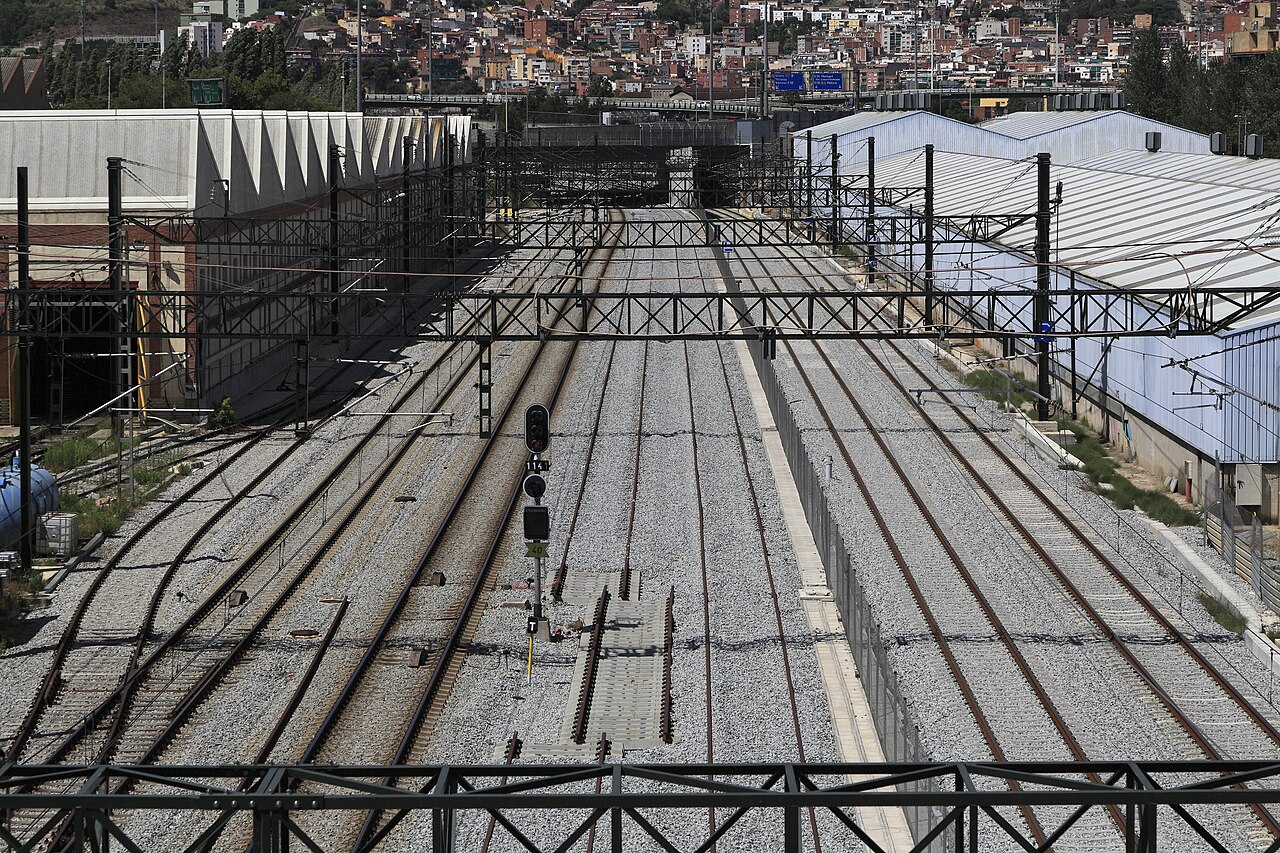
Featured image: J21 077 Streckengleise Richtung Gerona.jpg by Falk2, CC BY-SA 4.0, via Wikimedia Commons.