Maine’s Democratic governor, Janet Mills, has revealed that she voted for Troy Jackson in the state’s knife-edge US Senate race, despite never formally endorsing him and despite years of friction between the two. The announcement came on the last day of in-person early voting, as Mr Jackson tries to end Republican Susan Collins’s 30-year hold on the seat.
Ms Mills, who herself lost the Democratic Senate primary in June, posted on social media on Thursday that she had cast her early ballot in Farmington for Mr Jackson and for other Democrats down the ballot, and urged Mainers to back candidates who would stand up to Donald Trump, the Portland Press Herald reported.
A messy road to the ballot
Mr Jackson, 58, a former Republican and former president of the Maine state Senate, was not supposed to be the nominee. Graham Platner, an oyster farmer and military veteran, beat Ms Mills in the June primary but withdrew in early July amid a sexual assault allegation, which he denied, and a separate controversy over a tattoo, according to the Associated Press. Democratic delegates then picked Mr Jackson, who had come third in the party’s primary for governor, to replace him.
The relationship between Mr Jackson and Ms Mills has long been frosty. As Senate president he saw several of his priority bills vetoed by her, and he used her as a foil during his run for governor. The Bangor Daily News, citing a source on the governor’s side, reported that he did not seek her support until after an October debate that went badly for him. He left her a voicemail on 16 October, the evening she was leaving Boston for a trip to Ireland, but the pair never managed to meet.
Mr Jackson has said he does not need high-ranking officials behind him and cares most about voters on the ground. His senior adviser, David Farmer, said the candidate was grateful for the governor’s vote.
The ‘shut up’ moment
That debate is now central to the Republican closing argument. During the final televised clash, Mr Jackson told Ms Collins to shut up after she suggested that a protester in the room was one of his supporters. The Collins campaign and its allies turned the exchange into an attack ad, and Republicans have sought to portray him as abrasive towards women. Mr Jackson and several women legislators backing him reject that characterisation.
READ MORE
- Trump’s Senate nightmare? The 12 knife-edge races that will decide who controls Congress, and what the final polls say
- Trump’s approval among worst since Truman as Democrats open 10-point lead days before midterms
- SENATE SHOCKER: Democrats seize Senate as Susan Collins falls and Republicans lose Texas, Ohio and Kansas
In their closing pitches on Friday, the two candidates went back to their core messages, according to WGME. Mr Jackson argued Ms Collins had voted with Mr Trump 96 per cent of the time and blamed her for cuts to healthcare that funded tax breaks for the wealthy. Ms Collins, seeking a record sixth term, pointed to her record of voting against her own party more often than any other senator, citing her vote against Mr Trump’s flagship tax and spending bill, during which she said she secured a $50 billion fund for rural healthcare.
How close is it?
Very. Yahoo News’s survey of recent polls found Mr Jackson ahead by two to four points in the New York Times polling average, a Fox News poll showing a tie and a Republican-leaning Trafalgar poll giving Ms Collins a lead of half a point. RealClearPolling lists Maine as one of nine Senate toss-ups.
History favours the incumbent. Ms Collins won 51 per cent in 2020, her lowest share since 1996, but no Democratic opponent has ever topped 44 per cent against her, AP noted. If she wins, she will become Maine’s longest-serving US senator next May.
Money is flowing on both sides. Since 1 September, groups supporting Ms Collins have outspent those backing Mr Jackson on advertising by $65 million to $55 million, according to AdImpact figures cited by AP, with a super PAC linked to Senate Republican leader John Thune spending more than $30 million on her behalf. Mr Jackson has far outraised her since July.
What happens next
Polls close at 8pm Eastern time on Tuesday, 1am on Wednesday in Ireland. Maine uses ranked-choice voting for federal races, and because write-in candidates have declared, the system applies even though only two names are printed on the Senate ballot. If no one wins a majority of first preferences, the lowest-placed candidates are eliminated and their votes redistributed. In 2024 it took until the following afternoon for about 90 per cent of the vote to be counted, so a quick result is far from guaranteed.
Democrats hold 47 Senate seats and need a net gain of four for a majority. Maine is one of the Republican-held seats they are most determined to win.
Sources
- Portland Press Herald: Janet Mills says she voted for Troy Jackson for US Senate (29 October 2026)
- Bangor Daily News: Troy Jackson sought Janet Mills’ backing after telling Susan Collins ‘shut up,’ source says (29 October 2026)
- Associated Press via Yahoo News: AP Decision Notes: What to expect in Maine on Election Day (30 October 2026)
- WGME: Maine Senate candidates make final pitches to voters (30 October 2026)
- Yahoo News: The 2026 midterms are days away. Here’s what the latest polls say (26 October 2026)
- RealClearPolling: Battle for the Senate 2026 (accessed 30 October 2026)
- CBS News: 2026 elections live updates (29 October 2026)
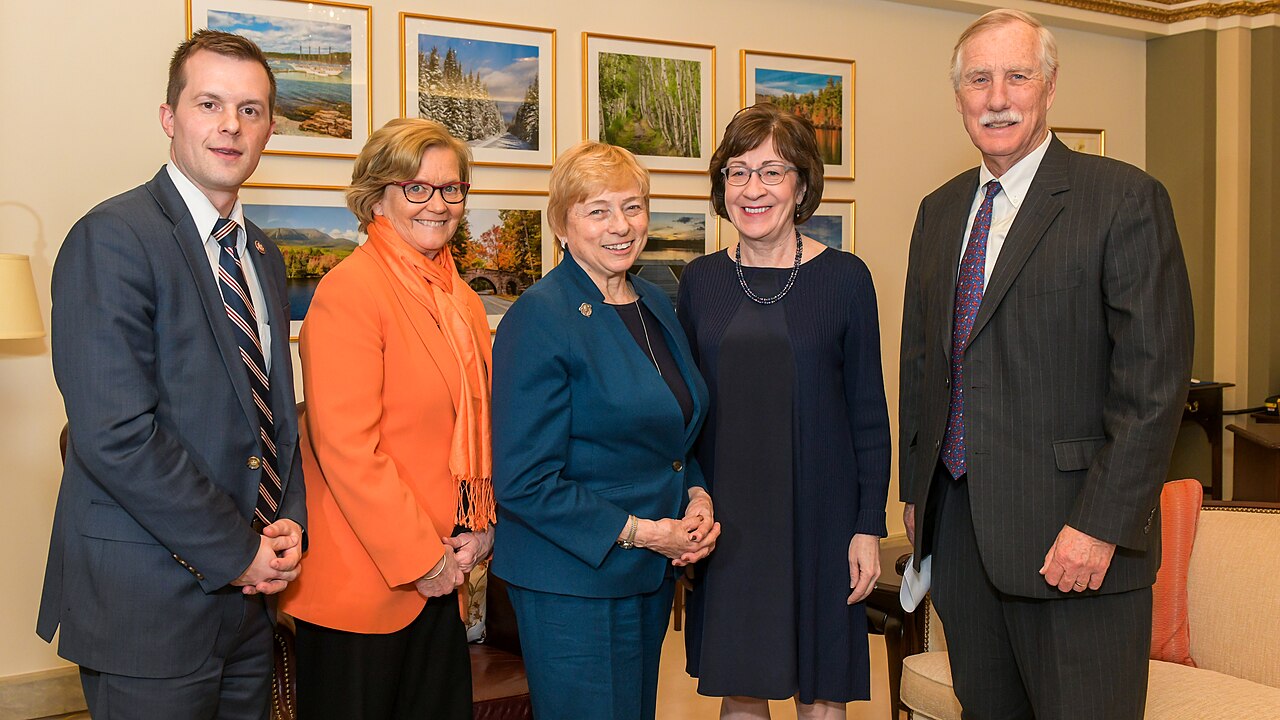
Featured image: Maine congressional delegation meets with Gov Janet Mills by Rebecca Hammel/U.S. House Office of Photography, Public domain, via Wikimedia Commons.