For the first time, the Irish Government is preparing to put serious State resources into examining what a united Ireland could actually look like – and, crucially, what the alternatives would mean too.
Taoiseach Micheál Martin has said a new body will be set up to scope out the models and the problems involved in different “constitutional futures” for the island. According to The Irish Times, which interviewed him, he intends to bring a memo to Cabinet before Christmas, after discussions inside Fianna Fáil and across Government, with initial steps to follow in the coming months.
Three futures on the table
The body is expected to look at three broad scenarios, The Irish Times and Newstalk report. The first is a single, unitary 32-county State. The second is the status quo, with Northern Ireland remaining part of the United Kingdom. The third, and the one drawing most comment, is a united Ireland in which Northern Ireland keeps its own devolved institutions – an assembly, an executive, a civil service, public services and policing.
The work would cover legal and constitutional questions, health and education, the economy and the cost of unity, security and defence, and even flags and symbols. It is expected to sit under the Department of the Taoiseach. No budget, staffing level or membership has yet been announced.
Irish Times political editor Pat Leahy told Newstalk the Stormont-style option was an interesting departure, since many nationalists favour a unitary State, and suggested it could ease a transition and make unity more palatable to unionists. He described the plan as Mr Martin’s most significant intervention on the unity question since becoming Taoiseach, but characterised it as a mapping exercise rather than a route map to unification.
Why Martin is moving now
Speaking at a book launch on Wednesday, Mr Martin argued that the debate needs to start by establishing what people actually need to know. RTÉ reported that he set out three elements: keeping practical North-South co-operation separate from the constitutional debate, reforming the Assembly and Executive at Stormont, and building an independent, evidence-based body of knowledge on the legal, social, economic, cultural and political consequences of each option.
READ MORE
- Poll blow for Micheál Martin: Fianna Fáil slumps to 16% as Sinn Féin surges and Aontú hits RECORD high
- ‘TODAY I AM DRAWING MY LINE’: Carla Lockhart quits DUP over Drumcree row as party leader accuses her of ‘arrogance’
He was critical of campaigns he regards as one-sided and of the idea that unification is inevitable, arguing that such claims sideline the work of persuasion. In the Irish Times interview he said the push for a Border poll since Brexit had been “a one-sided advocacy approach”, and said unionists should engage by making their case for the Union.
Mr Martin also told the paper he intends to serve out his term as Taoiseach, which runs to mid-November 2027.
Sinn Féin and SDLP welcome the move
The plan has been warmly received by nationalist parties, according to TheJournal.ie. Sinn Féin leader Mary Lou McDonald welcomed the intention to bring a memo to Government but repeated her party’s call for urgent preparation for unity, with a timetable and resources attached. She said ending partition would strengthen the economy and public services and that unionists should help shape a new Ireland in which their British identity is respected.
SDLP leader Claire Hanna described it as a significant and welcome intervention and said her party would work with the Government on practical preparation; the SDLP has previously called for a dedicated minister for a new Ireland. Her party colleague Colum Eastwood also welcomed it and the commitment to seek unionist views.
Unionist parties had not, in the reports reviewed by the Connemara Journal, set out a formal response by Friday evening.
The move comes against a busy backdrop. Tánaiste Simon Harris has said Fine Gael will publish its own “blueprint” on unity in November. Under the Good Friday Agreement, the Northern Ireland Secretary must call a Border poll if it appears likely a majority would vote for unity. An opinion poll last month, cited by Newstalk, put support for the Union in Northern Ireland at 47%, a united Ireland at 35% and undecided at 18%.
What happens next
The next concrete step is the memo to Cabinet, which Mr Martin is aiming to bring before Christmas. Coalition partners will need to sign off on the body’s remit, structure and resources. Key questions remain open: who will sit on it, how independent it will be from Government, how unionists will be brought in, and whether it will publish its findings. Fine Gael’s separate unity document, due next month, will also show how closely the two main Government parties are aligned on the issue.
Sources
- The Irish Times: New body to examine options for Irish unity, says Taoiseach (30 October 2026)
- TheJournal.ie: Sinn Féin and SDLP welcome Taoiseach’s plan to create new body to examine Irish unity (30 October 2026)
- RTÉ: Initiative needed to define Irish unity debate – Martin (28 October 2026)
- Newstalk: Irish unity: Martin commission will consider keeping Stormont (30 October 2026)
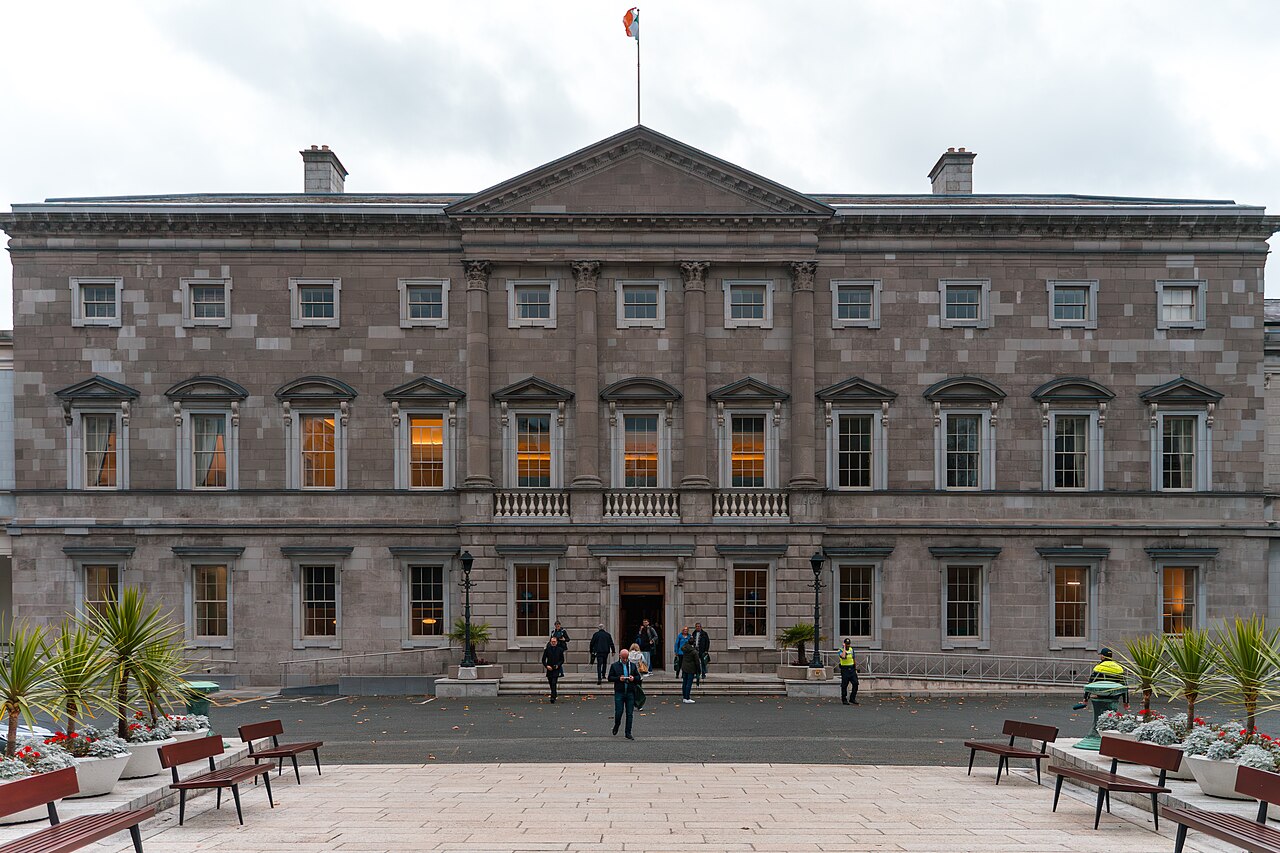
Featured image: Leinster House in Dublin, seat of the Oireachtas by David Kernan, CC BY 4.0, via Wikimedia Commons.