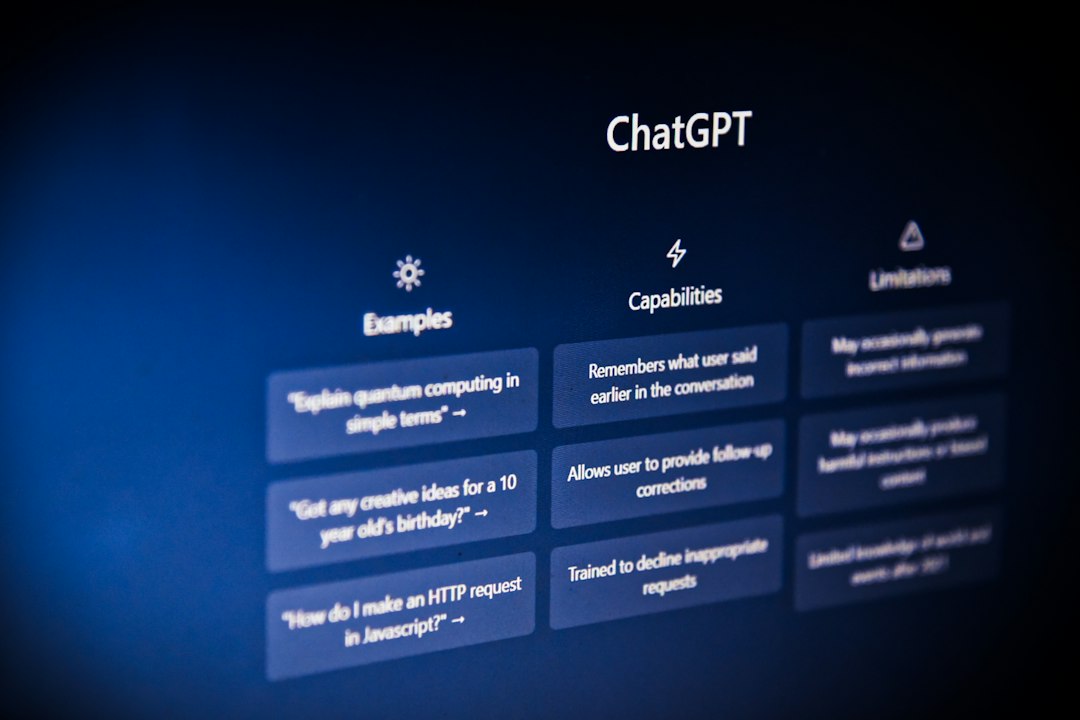
OpenAI, the company behind ChatGPT, has set up a dedicated election “war room” to monitor misuse of its artificial intelligence tools around next week’s US midterm elections. The move, first reported by Politico, comes amid growing concern about AI-generated fake images and foreign disinformation in the run-up to the vote on Tuesday 3 November.
What OpenAI is doing
The new unit is called the Election Operations Center. According to reports citing Politico, OpenAI is assigning hundreds of employees to it. Runtime Wire reported that the centre was due to begin operating this week and to continue until votes have been counted.
Its job is to track suspected misuse of OpenAI’s models, including ChatGPT’s role in political activity, and to enforce the company’s usage policies, Mashable reported. Runtime Wire said the team will also monitor the voter-information features ChatGPT is adding for the election.
Josh Lawson, OpenAI’s head of civic and strategic risk, told Politico that the centre builds on years of earlier election work and that the team would “respond quickly to emerging issues”, according to Mashable’s account of the interview.
The newsletter Transformer reported that OpenAI is also steering election-related image requests towards cartoon-style results, in an effort to limit photorealistic deepfakes of candidates.
Why AI companies are under pressure
The announcement follows a run of critical research. Mashable reported that the misinformation watchdog NewsGuard found OpenAI’s ChatGPT Images 2.5 repeatedly produced lifelike images of political candidates when prompted. A separate report from the Brennan Center for Justice found that guardrails in Google’s Gemini and Meta AI were failing to block fake election images, with ChatGPT the only model tested to show some improvement.
READ MORE
- Europe’s AI rebel Mistral gives away trillion-parameter ‘Le Chonk’ as Google locks its new cyber AI away
- OpenAI-backed Thrive swoops for ADT in shock $15.3bn deal to put AI inside home alarms
NewsGuard has also reported a rise in disinformation campaigns linked to foreign governments, mostly on X, and found that X’s Community Notes fact-checking system missed more than 93 per cent of such posts, according to Mashable.
Other incidents have added to the nervous atmosphere. Transformer reported that hackers targeted the Federal Election Commission’s filing system days before the vote, disrupting campaign finance disclosures. The Neuron’s daily digest also listed Google’s launch of a cybersecurity-focused model, Gemini 4 Carbon, which is going through voluntary US government testing before wider release, a sign of how closely AI and security are now intertwined.
Is AI really a voter issue?
For all the industry anxiety, few Americans say AI is what will decide their vote. Transformer, citing a New York Times/Siena poll, reported that fewer than 0.5 per cent of voters nationally named AI or data centres as their most important issue, while a Reuters/Ipsos poll put the figure at 3 per cent. Even so, AI has crept into campaigning: Democrats are attacking Republicans over tax breaks for power-hungry data centres, and AI-focused political groups have spent a combined $78.5 million on federal candidates this cycle, Transformer said.
What it means for you
For readers in Ireland and Europe, the US experiment is worth watching. Under the EU’s Digital Services Act and AI Act, large platforms and AI providers face growing obligations around election integrity and labelling of AI-generated content. How well OpenAI’s war room performs in the US is likely to feed into debates about what tech companies should be doing ahead of European votes.
In the meantime, the usual advice applies: be sceptical of dramatic images or audio of politicians that appear suddenly online, check whether reputable news outlets are reporting the same thing, and look up official electoral bodies for voting information rather than relying on a chatbot.
What happens next
The Election Operations Center is expected to run through polling day on 3 November and the counting period that follows. OpenAI has not said whether it will publish a report on what the team finds, but the company has previously released periodic reports on influence operations it has disrupted. Rivals including Google and Meta are likely to face questions about whether they have made similar preparations.
Sources
- Mashable via Yahoo News: OpenAI launching election ‘war room’ (28 October 2026)
- Runtime Wire: OpenAI assigns hundreds of employees to election monitoring ahead of midterms (28 October 2026)
- Transformer: Was this the AI election? (30 October 2026)
- The Neuron: Everything that happened in AI today, Thursday 29 October (29 October 2026)
Featured image: photo by Levart_Photographer on Unsplash.