
Andy Burnham has ruled out a general election next year and conceded that his government’s first Budget was not the one he would have chosen, as the new Prime Minister faces criticism from all sides over a package rivals have dismissed as timid.
In an interview with ITV News broadcast on Friday, two days after Chancellor John Healey delivered the Budget, Mr Burnham said volatile economic conditions had left the government with less room for manoeuvre than he had hoped. Asked about calls from the Conservative leader, Kemi Badenoch, for an early election, he was unequivocal: “No election in 2027.”
A breathing-space Budget
Mr Burnham became Prime Minister on 20 July after Keir Starmer resigned, and Wednesday’s statement was the first from his new Chancellor. Mr Healey, previously defence secretary, presented what ITV described as a breathing-space Budget at a time of high inflation and rising energy costs, driven in large part by the US-Israeli war with Iran and disruption in the Strait of Hormuz.
According to LBC’s summary, the measures included a £100 energy payment for households, an increase in the minimum wage, a new gambling tax, a time-limited rise in taxes on banks, continued support for Ukraine and a £5 billion defence investment drive, with military spending pledged to reach 3 per cent of GDP by 2030. Ahead of the statement, Al Jazeera reported that the government had already announced a national care service offering free personal care for older people, to be introduced in phases and funded partly by scrapping the state pension triple lock.
The backdrop is stark. UK government debt passed £3 trillion for the first time in September, and the country spends around £100 billion a year on debt interest, Al Jazeera reported. Energy analysts Cornwall Insight have forecast that the household price cap will rise by about 16 per cent in January.
Burnham: radical plan still to come
In the ITV interview, Mr Burnham said he had avoided adding to uncertainty at a volatile moment, pointing to recent protests in France as a warning. He promised a ten-year plan by the end of the year that he said would mark a radical moment, focused on public control of essential areas such as energy, and on reindustrialisation.
He said the government was working flat out to bring down the welfare bill, and did not want to see people in their twenties on benefits unless disability or similar reasons prevented them from working. But he rejected the Institute for Fiscal Studies’ view that the Budget paves the way for severe spending cuts, arguing instead for support for young people’s mental health and technical routes into work.
On the election timetable, he said he wanted to set out his long-term plan, begin delivering it and then seek a mandate at the right moment. He also said he remained on good terms with Sir Keir and had recently been in touch with the former chancellor Rachel Reeves.
Opposition fury
Rivals were scathing. Mrs Badenoch mocked the scale of the package, singling out a cut of a few pence in the price of gherkins, and attacked higher borrowing, tax rises and welfare spending, warning that the tax burden would reach a record high next year. Liberal Democrat leader Ed Davey called for a growth plan with Europe at its heart, urging the government to join the EU single market and a customs union.
Green Party leader Zack Polanski accused the government of being unwilling to take on power and wealth, while Rupert Lowe of Restore Britain said ministers were tinkering as the economy struggled. The TaxPayers’ Alliance said the tax burden had been pushed to another record, and landlords’ representatives warned that renters would be hit.
Business reaction was more mixed. Small Business Britain welcomed recognition of entrepreneurs, while UK Finance said higher bank taxes were not the best way to deliver growth but welcomed the fact that the increase is temporary.
The Budget lands with Labour under pressure in the polls. Reform UK, led by Nigel Farage, has consistently led national surveys in recent months, while Labour has also been losing ground to the Greens.
What happens next
Mr Burnham’s promised ten-year plan, due before the end of the year, is now the key test of whether his premiership can deliver the bigger changes he has promised. With an election ruled out for 2027, the next general election would by law have to be held no later than 2029. Viewers will get a closer look at his first months in Downing Street in an ITV documentary, Burnham: Inside The First 100 Days, airing on Tuesday 3 November.
For Irish households and businesses, the direction of UK energy and trade policy, including Mr Burnham’s plan to renegotiate parts of the post-Brexit trade deal at an EU-UK summit in Brussels in November, will be closely watched in Dublin.
Sources
- ITV News: Andy Burnham admits first Budget as prime minister was ‘not ideal’ (30 October 2026)
- LBC: Budget 2026 reaction: What have people said in response to John Healey’s first speech? (28 October 2026)
- Al Jazeera: Burnham’s government unveils its first UK budget: What to expect (28 October 2026)
- PBS NewsHour / AP: Starmer is on the precipice as pressure builds for the UK leader to resign (21 June 2026, background)
- Al Jazeera: UK PM Andy Burnham vows to renegotiate post-Brexit trade deal with EU (12 October 2026)
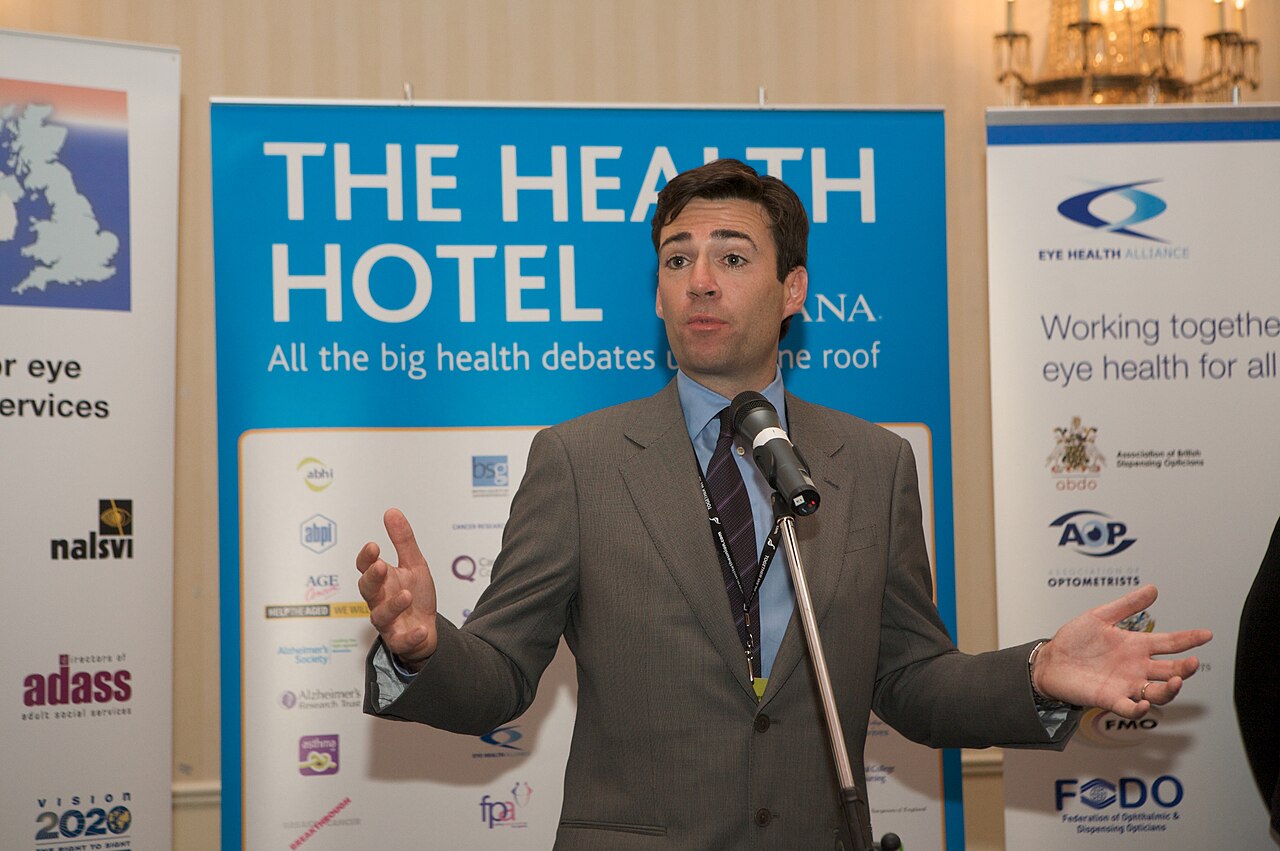
Featured image: Andrew Burnham, September 2009 3 by Credit: http://www.acumenimages.com. Uploaded to Flickr by The Health Hotel., CC BY-SA 2.0, via Wikimedia Commons.
Leave a Reply