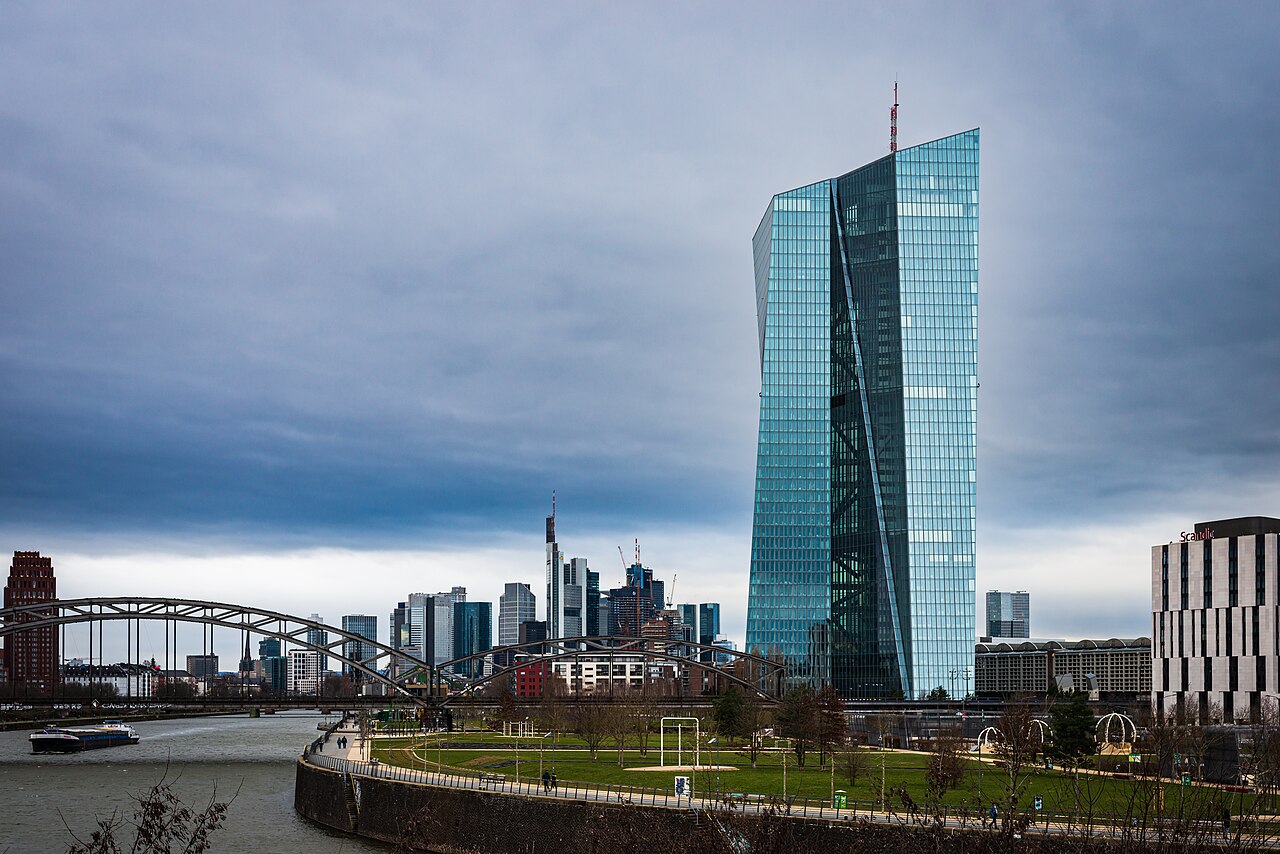
The European Central Bank has paused its run of interest rate rises, but the decision was quickly overshadowed by news that its president, Christine Lagarde, will leave the job early. For Irish households already squeezed by soaring energy bills, the message from Frankfurt was mixed: no increase in borrowing costs this time, but no promise that the tightening is over either.
What the ECB decided
At its meeting on Thursday 29 October, the ECB’s Governing Council left its three key rates unchanged. The deposit rate stays at 2.5%, the main refinancing rate at 2.65% and the marginal lending rate at 2.9%, according to Eunews. Policymakers discussed another increase but agreed unanimously to hold, citing heightened uncertainty and broadly stable underlying inflation, RTÉ reported, citing Reuters.
The pause follows two rate rises in the previous five months, which the bank introduced to stop a surge in energy prices linked to the Iran war from feeding through into wider inflation. In its statement the ECB warned that energy prices had continued to climb, creating upside risks for inflation and downside risks for growth.
The numbers explain the caution. Euro zone inflation rose to 3.8% in September from 3.2% in August, with energy prices up close to 19% on a year earlier, Eunews reported. The Irish Times noted that inflation could top 4%, roughly double the ECB’s target. Oil remains a key driver: Brent crude was trading near $112 a barrel on Friday amid conflict in the Middle East, according to Yahoo Finance.
At the same time, the economy is cooling. Private-sector activity in the euro zone grew at its weakest pace in four months in October, and borrowing costs in bond markets have climbed sharply. France is now paying its highest premium over Germany on ten-year debt in decades amid budget worries and political gridlock, RTÉ reported. Lagarde said the bank had tools to respond to disorderly market moves, though strict conditions apply.
READ MORE
- Mortgage squeeze begins: PTSB and MoCo hike home loan rates as brokers warn of a ‘tough winter’ for borrowers
- Pay rise showdown looming? Twice as many big firms now brace for staff demanding more money, ECB survey reveals
- WINTER BILLS WARNING: Irish inflation hits 4% as energy prices soar 18% in a year
Lagarde’s surprise early exit
Lagarde told reporters she would step down in February, about nine months before her eight-year term was due to end, The Irish Times reported. She said she wanted more freedom to speak on issues beyond monetary policy, and that she was uncomfortable with the neutrality the role demands. Her comments have prompted speculation that she could play a part in French politics ahead of next spring’s presidential election. Reuters, as reported by RTÉ, said the World Economic Forum could name her as its chair as early as November. Neither suggestion has been confirmed.
Former Dutch central bank governor Klaas Knot and former Spanish central bank governor Pablo Hernández de Cos are seen as front-runners to succeed her, according to The Irish Times. The ECB’s leadership is set for wider change: executive board member Isabel Schnabel is leaving early in January to join the IMF, and the term of chief economist Philip Lane, a former governor of the Central Bank of Ireland, ends in May.
What it means for Irish households
For Irish mortgage holders on tracker loans, the hold means no immediate change to repayments, since tracker rates move with the ECB’s main refinancing rate. Variable and fixed-rate customers are less directly affected, but lenders’ pricing tends to follow the direction of ECB policy and wholesale borrowing costs, both of which have been rising this year. Savers, by contrast, have seen deposit rates edge up.
The bigger pressure on Irish budgets is energy. The CSO’s flash estimate published at the start of October put annual inflation in Ireland at 3.9%, a three-year high, with energy prices up more than 15% on a year earlier. Deloitte Ireland’s Kate English told RTÉ at the time that energy costs were likely to stay high through the winter, and that knock-on effects on food prices could begin to appear from late October. The CSO’s flash estimate for October is due in the coming days.
What happens next
The ECB’s next policy meeting is in December, and Lagarde stressed that Thursday’s hold did not rule out a further increase. Markets are still pricing in a December hike and possibly another early next year, while most economists polled by Reuters expect one or two more rises before the cycle ends. Bloomberg Economics analysts, quoted by The Irish Times, expect Lagarde to end the hiking cycle in December, leaving her successor a clearer run. EU leaders will now begin the process of choosing the next president, a decision with significant consequences for borrowers across the euro zone, including in Ireland.
Sources
- The Irish Times: ECB pauses rate hikes as Lagarde announces early exit (29 October 2026)
- RTÉ News: ECB keeps rates unchanged but points to inflation risk (29 October 2026)
- Eunews: The ECB leaves interest rates unchanged, but high energy prices are a concern (29 October 2026)
- RTÉ News: Rising energy prices pushes inflation up to 3.9% – CSO (1 October 2026)
- Yahoo Finance: Stock market today, October 30 (30 October 2026)
Featured image: European Central Bank Frankfurt Germany 18 Feb 2023.jpg by Norbert Nagel, CC BY-SA 4.0, via Wikimedia Commons.