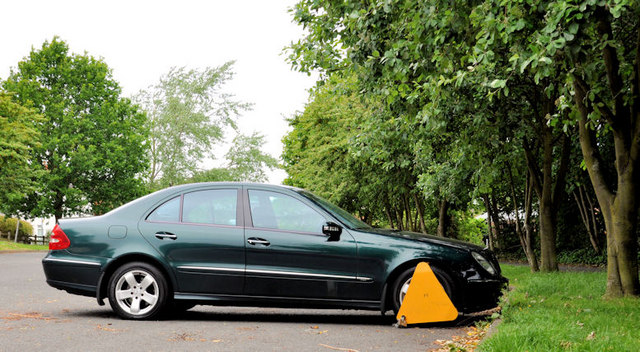
Dublin drivers who have spent two decades dreading the sight of a yellow clamp on their wheel are about to get a very different kind of shock: a tow truck.
A new parking enforcement regime for Dublin city came into force on Sunday, 1 November, as Dublin City Council’s five-year, €51 million contract with Apcoa Parking Ireland took effect. It replaces Dublin Street Parking Services (DSPS), the Q-Park-owned company that had clamped cars in the capital since 2004.
The headline change is simple. Clamping vans will all but vanish from the city centre, and the emphasis there shifts to fines and towing. But in the suburbs, the opposite could happen.
What is actually changing?
The parking rules themselves are not changing. Green Party councillor Feljin Jose, a member of the council’s transport committee, made the point on RTÉ Radio 1’s This Week programme: what changes is how the rules are enforced, not the rules.
Under the new contract, the council area has been divided into six patrol zones, each with at least one dedicated enforcement officer during peak hours and its own enforcement plan. According to RTÉ and The Irish Times, the zones work broadly like this:
- Zones 1 to 4 (residential areas and suburbs): the priority is responding quickly to complaints from the public about illegal parking and obstructions. Clamping may actually increase here.
- Zone 5 (inside the canals, outside the core business district): the focus is on keeping traffic moving, so expect more towing and relocating of cars blocking bus lanes or obstructing traffic.
- Zone 6 (the most central area): foot patrols issuing fines, closer to the old-fashioned traffic warden model, because heavy traffic makes it hard for vehicle-based crews to get around.
The council has said the model gives a clearer structure for a more balanced patrol presence across the city and a better response to public complaints.
Why ditch the clamp?
The logic is straightforward. A car clamped in a bus lane is still in the bus lane. Councillor Jose summed it up in September when the contract was announced, telling The Irish Times that clamping a car in place in a bus lane does not make things any better.
READ MORE
Supporters say the new approach should mean clearer footpaths, cycle lanes and bus stops, quicker bus journeys and a more accessible city for wheelchair users and parents with buggies.
The scale of the old system was significant: The Irish Times has reported that more than 56,000 cars were clamped in the capital last year.
Bad news for the suburbs?
Not everyone outside the city centre will welcome extra attention. Jason Cullen of the Dublin Commuter Coalition told TheJournal.ie that outer areas are likely to see more clamping under the zonal system, and raised concerns about the financial burden of release fees on motorists. Overall, though, he welcomed the wider spread of enforcement beyond the city centre, with parking black spots across the council area now getting attention.
That matters for residents who have long complained about cars parked on footpaths, across driveways or on double yellow lines in their estates, but who rarely saw a clamping van. Under the new contract, public complaints are meant to be given priority.
What it means for you
If you drive into Dublin, the practical message is this: an illegally parked car in the city centre is now more likely to be fined or towed than clamped. Penalties depend on both the zone and the offence. A towed car means a trip to retrieve it, which is likely to be more inconvenient than paying to have a clamp removed.
If you live in the suburbs and are fed up with obstructive parking, the new system is designed to respond to your complaints faster. And if you are the one parking on the footpath outside the school gate, you may now be more likely to be caught.
We could not find the new fine and tow release charges in the coverage we reviewed; drivers should check Dublin City Council’s parking pages for the current fees.
What happens next
The council’s parking enforcement officer, Kenneth Murphy, told RTÉ in September to expect a period of transition over the coming months, with the new system fully in place by 2027. A legal challenge to the contract by Q-Park was withdrawn, according to the council. Expect the first test of the system to come in the busy Christmas shopping weeks, when city-centre traffic and illegal parking traditionally peak.
Sources
- TheJournal.ie: Parking enforcement overhaul begins with greater focus on towing and fines (1 November 2026)
- RTÉ News: Fines, towing focus of plan to tackle parking in Dublin (9 September 2026)
- The Irish Times: Clamping in Dublin city centre to largely be replaced by towing and fines (9 September 2026)
Featured image: Clamped car, Belfast – geograph.org.uk – 2437176 by Albert Bridge, CC BY-SA 2.0, via Wikimedia Commons.