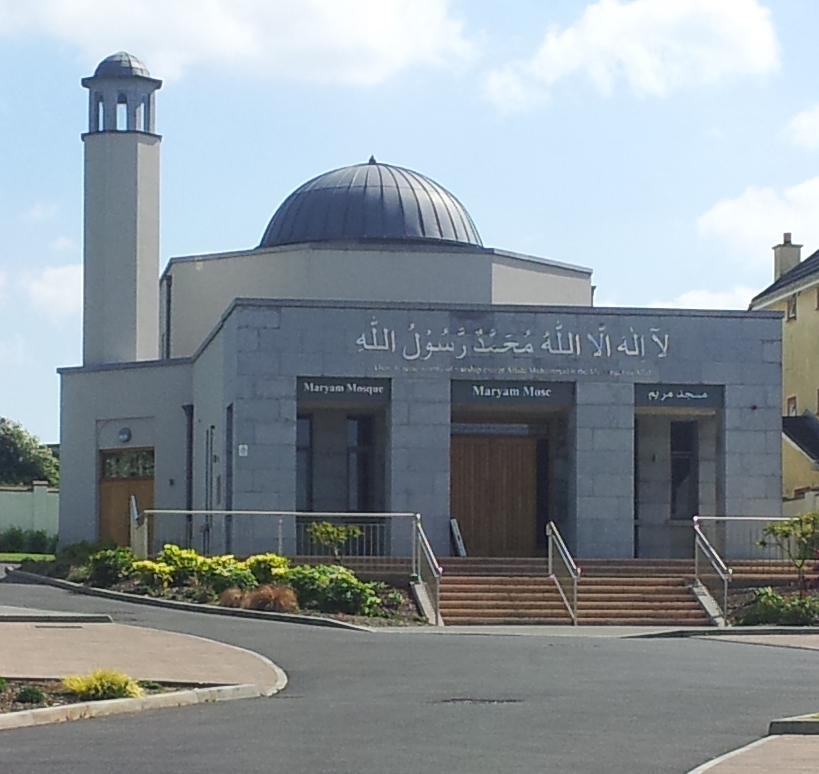
Three men who plotted to attack a Galway mosque with improvised explosive devices have been jailed at the Special Criminal Court in Dublin, in a case the presiding judge said had brought shame on the whole country.
Garrett Pollock (36), of Kilhorne Greene, Annalong, Co Down, was sentenced on Friday to ten and a half years in prison, with the final year suspended. Karolis Peckauskas (39), of Newfoundwell Road, Drogheda, Co Louth, and Darren Gorman (34), of O’Moore Place, Portlaoise, Co Laois, each received eight years, also with the final year suspended. All three had pleaded guilty to attempting to engage in terrorist activity aggravated by hatred, under the Criminal Justice (Terrorist Offences) Act 2005, between 4 and 5 November 2025.
The target was the Maryam Mosque on the Monivea Road in Galway city, which sits among houses and apartments.
A plan to bomb a place of worship
The court heard the men were members of a self-styled group called the Irish Defence Army, which gardaí described as a violent, right-wing, anti-immigration organisation. It formed in October 2025 after splitting from an online group, and its members communicated through an encrypted Signal chat. The group had its own crest, manifesto and oath.
According to evidence reported by RTÉ and the Irish Examiner, the plan was for some members to smash the mosque’s windows with sledgehammers while others threw pipe bombs inside, before fleeing and destroying the car and tools used. The group had also recorded a video in which masked men in tactical clothing, standing before an Irish flag, threatened further attacks on mosques, on centres housing international protection applicants and on people who helped provide that accommodation. The video was intended to be sent to media organisations after the attack.
READ MORE
- JIHADI JAILED: Self-styled extremist who torched Conor McGregor’s pub and stabbed a garda gets six and a half years
- ‘Utterly reprehensible’: West Cork man jailed over armed ‘straightener’ at Bray playground where father of seven was stabbed to death
- Paid just €400 a run: Cork cocaine mule caught on M8 with €242,000 stash at her feet is jailed for three years
The court found Pollock was the leader. He devised the group’s name and manifesto, wrote its oath, produced a manual on making explosives, which the Irish Examiner reported he designed with the help of artificial intelligence, and tested an incendiary device. The judge said it was not possible to separate Peckauskas and Gorman in terms of culpability.
Foiled by chance
The plot was uncovered on the night of 4 November 2025, when gardaí from the Laois drugs unit stopped a car in Portlaoise during a routine operation. Inside they found bomb-making materials, weapons including hatchets and knives, balaclavas, around five litres of a chemical that can be used to make explosives, and a statement written in the past tense claiming responsibility for bombing the mosque. A later search of Pollock’s van, parked outside Peckauskas’s home in Drogheda, uncovered four improvised explosive devices hidden in a concealed drawer.
Ms Justice Caroline Biggs, presiding over the three-judge court, said the attack had been stopped by good Garda work, not by any change of heart on the part of those involved. She said the offending was driven by hatred and intended to send a sinister message, and that the devices could have caused enormous and irreversible harm. The plot, she said, had caused profound distress to Ireland’s Muslim communities and to the country as a whole, and the men’s actions “bring shame and embarrassment on all of us”.
The judge rejected the argument that the men had simply been radicalised by social media, noting that many people see the same material without acting on it. She said the defendants had made their own choices and had picked thuggery over any genuine patriotism. She also described as disturbing the men’s belief in a ranking of immigrants, observing that Peckauskas, who moved to Ireland from Lithuania, had himself become part of Irish society.
Mitigation
In mitigation, the court accepted that all three had pleaded guilty, expressed genuine remorse and apologised, and that none had relevant previous convictions or any history of terrorist involvement. Pollock and Peckauskas had been in custody since their arrest and had used that time constructively, while Gorman had taken steps to address a drug addiction. The judge noted that all three have children who will be without their fathers for years.
What happens next
With the final year of each sentence suspended, Pollock faces nine and a half years in custody and his co-accused seven years each, with credit expected for time already spent in custody. On release, all three will be subject to probation supervision during the suspended portion of their sentences. The case is likely to sharpen debate about online radicalisation and the threat from far-right extremism in Ireland, an issue gardaí have repeatedly flagged since the anti-immigration unrest of recent years. In Galway, the sentencing brings a measure of closure for a mosque community that, as the court heard, was targeted for nothing more than worshipping there.
Sources
- RTÉ News: Three men behind plot to bomb Galway mosque jailed (30 October 2026)
- The Irish Times: Galway mosque bomb plot trio have brought ‘shame and embarrassment on all of us’, judge says (30 October 2026)
- Irish Examiner: Mosque bomb plotters brought ‘shame and embarrassment’ to Ireland (30 October 2026)
- Galway Bay FM: Galway Mosque bomb plotters sentenced at Special Criminal Court (30 October 2026)
Featured image: Ahmadiyya Muslim Community Maryam Mosque, Galway – geograph.org.uk – 5407197 by DeeEmm, CC BY-SA 2.0, via Wikimedia Commons.