
Out on the bogs and hillsides of Connemara, a small, dark, hairy bee is making one of the most remarkable foods in Ireland.
It’s the native Irish black bee, Apis mellifera mellifera, a bee that has lived on this island since the last Ice Age. Every August, when the ling heather turns the hills purple, it gets to work on a dark, thick honey that scientists say carries more antioxidants than famous Manuka.
And you don’t need to fly to New Zealand to get it. It’s being made in Spiddal, Oughterard and Renvyle, by a handful of local beekeepers who are working hard to keep the native bee alive.
Video: Prof. Grace McCormack of University of Galway on protecting Ireland’s honey bees / National Honey Show, YouTube
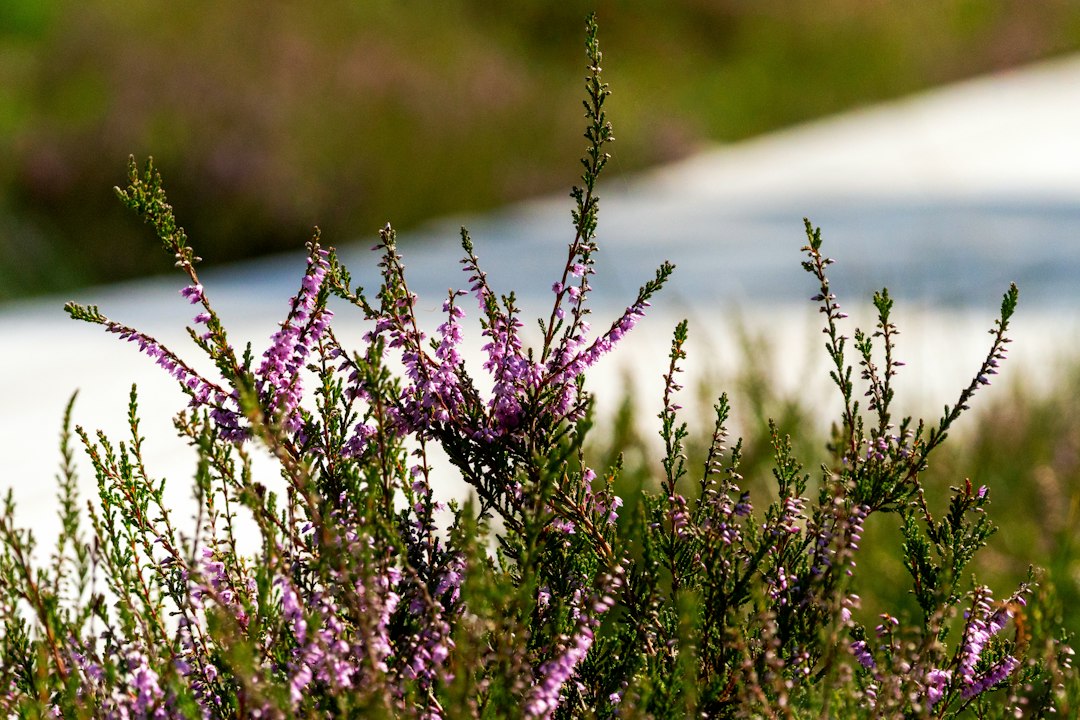
Connemara honey: what makes it different
Much of the cheaper honey on supermarket shelves is a blend of honeys from several countries, often filtered and warmed so it stays runny.
Connemara honey is a different animal. The small producers here sell it raw: strained, not heated, and straight from the hive. It comes from bees foraging on wild heather, hedgerow blossom and gorse, so the flavour changes with the landscape and the season.
Heather honey is the prize. Unlike most honey, it sets into a thick, jelly-like texture, and beekeepers often have to work it out of the comb rather than simply spin it. It’s harder to harvest, there’s less of it, and that’s a big part of why it’s special.
The bee that survived the Ice Age
The star of the story is the bee itself.
In October 2024, a University of Galway team led by Professor Grace McCormack confirmed that the native Irish honeybee is a distinct, genetically diverse subspecies, adapted to Ireland’s cool, damp climate. The researchers measured genetic variation across 505 colonies sampled from beekeepers around the country, and published the findings in the Journal of Apicultural Research.
The native bee looks different too. According to the research, it has a smaller body, a broader and hairier abdomen, shorter hind legs and tongue, and longer front wings than other European honeybees. Those extra hairs and that compact build help it cope with Atlantic weather that would ground other bees.
“Our Native Irish Honeybee is different from all other honeybees,” Prof McCormack said when the findings were published.
But she also gave a stark warning. Pure native bees are still common in Ireland, but cross-breeding with imported bees is a real threat. “If we don’t act it will go extinct eventually here as it has done elsewhere,” she said.
READ MORE
Meet the Connemara beekeepers
Spiddal: honey with a view of Galway Bay
On a hillside farm overlooking Galway Bay in Lippa, Spiddal, a family of three runs Connemara Honey (Charin Honeybee Products) with native black bees.
They keep a “bee-centric”, natural approach, and their honey is only put through a coarse strainer, never heated. They sell run honey, cut comb and section honey, in both blossom and heather varieties. Their heather honey comes from ling heather on the farm, collected between mid-August and mid-September, and sells for €15 through their online shop.
They also make candles and soaps from their own beeswax. Locals can collect orders at the farm on Friday evenings, from 5pm to 8pm, and they deliver across Ireland.
Oughterard: from medicine to the hives
In Oughterard, Steve Watson came home to Galway after more than 20 years working in medicine and set up Owenriff Honey in 2018, named after the river that runs through the area.
His apiaries are spread around Oughterard and Connemara, and he works only with the native Irish black bee. His bees are never fed sugar syrup and never treated with chemicals, and the honey is raw, unpasteurised and unfiltered.
He has gone back to the books too, with a Master’s in Agricultural Innovation from the University of Galway and work towards a Diploma in Apiculture there.
Steve’s bees have also had a famous address. In 2022 he was looking after four hives of native black bees in the grounds of Renvyle House, foraging across the hotel’s gardens, woods, orchards and meadows. That autumn’s harvest filled 220 jars of “100% Pure Renvyle Honey”.
The man with 100 hives
Near Oughterard, farmer David Geoghegan keeps about 100 hives, and every one of them holds the native black bee.
He told RTÉ the bees are “a dark brown/black. They wouldn’t be jet black”, and that they have adapted to Connemara’s weather in a way bees in the milder south haven’t had to. In a good year, the output can be huge: one of his hives produced 140lb of honey in 2017.
He’s also known for something unusual: a “bee bed”, a narrow bed set on top of three hives, where you lie and listen to the colonies below. “It’s like lying beside a waterfall or the ocean, it’s this constant kind of hum,” he said. (Claims that bee beds ease stress or breathing haven’t been proven.)
An island refuge on Inishbofin
Seven miles off the coast, Connemara beekeeper Paddy Ó Fiannachta and his friend Johnny O’Halloran have been bringing black bees to Inishbofin. The idea is to create a safe haven where the native bee can live without crossing with imported yellow bees. His story was told in the TG4 documentary Paddy na Meachain.
Is Irish heather honey really as good as Manuka?
It’s the claim every honey lover wants to hear, so here’s what the science actually says.
In 2018, researchers at Trinity College Dublin and Dublin City University tested 131 Irish honeys from 78 locations. The study, published in Food Chemistry, found that Irish heather honey had the highest level of phenolic compounds (antioxidants) of all the Irish single-flower honeys, and a higher level than the Manuka honeys it was compared with.
That’s a big result, but there are two caveats. Only three heather samples were tested, and the study measured antioxidant content in the honey, not health effects in people. So it’s fair to say Irish heather honey is packed with antioxidants. It isn’t a medicine, and nobody should treat it like one.
One more surprise from the same study: honey from urban hives had more antioxidants than honey from rural ones, likely because of the wider mix of flowers in gardens and parks.
1,400 years of Irish beekeeping
Connemara’s beekeepers are carrying on one of the oldest traditions in the country. Ireland has its own early law on bees, the Bechbretha (“bee-judgements”), usually dated to the mid-7th century. It covered everything from disputes with neighbours, to stolen swarms, to who pays when a bee stings someone. One case even deals with a king, Congal Cáech, who was blinded by a bee; he was awarded a hive in compensation.
University of Galway researchers say beeswax has been found at Irish sites dating back to 3000 BC.
The local group keeping it going
Since 2010, the Connemara Beekeepers Association has been helping new and experienced beekeepers across the region. Founded by a group led by Gerard Coyne and Seán Finnerty, it has apiaries in Letterfrack, Maam and Baile na hAbhainn, and works with the Native Irish Honey Bee Society to protect the native dark bee. It runs meetings, field days and workshops for anyone thinking of keeping bees.
How to buy real Connemara honey
If you want the real thing, and to help the native bee while you’re at it:
- Buy direct from local beekeepers. Connemara Honey in Spiddal and Owenriff Honey in Oughterard both sell online, and you can collect from the Spiddal farm on Friday evenings.
- Check the label. Look for a named local producer and place, not “a blend of EU and non-EU honeys”.
- Ask for raw honey. Unheated honey keeps more of its natural character.
- Try the heather. Look for it from late summer and autumn. It’s limited and often sells out.
- Think local for Christmas. A jar of Connemara heather honey or a beeswax candle makes a great gift. See our guide to Christmas markets in Ireland 2026 for where to find local producers.
Every jar bought from a local beekeeper helps pay for hives of native bees, and those bees pollinate the wildflowers, hedgerows and orchards all over Connemara.
That’s honey worth getting excited about.
Do you keep bees or make local food in Connemara or Galway? We want to hear from you. Contact the Connemara Journal at connemarajournal.ie/contact-us.
Sources: University of Galway; Trinity College Dublin; RTÉ; Connemara Honey; Owenriff Honey; Renvyle House; Connemara Beekeepers Association; Galway Daily.
Leave a Reply